 Essential oils
 Aroma lamps
 Aroma Diffusers
 Vegetables
 Herbs and spices
 Ornamental Plant Seeds
 Grass mixtures
 Sprouts and microgreens
 Exotic Fruit and Vegetables
 Exotic herbs
 Exotic trees and shrubs
 Ornamental exotic plants
 Espresso coffee
 Ecological coffee preparation
 Thermal mugs and coffee cups
 Aeropress
 Thermos flasks and thermal mugs for coffee and tea
 Moka pot
 Filter coffee
 Coffee blends
 Water filtration
 Coffee grinders
 Cleaning the Coffee Maker
 Ecological Cleaning of Coffee Machines
 Coffee makers
 Coffee Preparation
 Coffee Accessories
 For wildlife and pets
 Chocolate and others
 Hemp food products
 Hemp cosmetics
 Bongs - water pipes
 Blunts and tubes
 E-liquids with Terpenes and CBD
 Grinders and Mills
 Papers and filters
 Smoking accessories
 Vaporizers
 Air fresheners
 CBD sprays
 CBD and CBN crystals
 CBD body and facial care
 Weeds
 CBD suppositories and capsules
 CBD oils and drops
 CBG oils and drops
 Fashion and Decoration
 Kitchen essentials and cooking
 Christmas Decorations and Accessories
 Gift Sets
 Bird feeders
 Seasonal and Special Tools

 Our products
 Aromatherapy - essential oils
 Seeds
 Growing supplies
 Cultivation and Gardening Supplies
 Hydroponics and indoor growing
 Protective equipment and gardening tools
 Exotic plants
 Roasted coffee
 Accessories for coffee makers
 Food products
 Natural cosmetics
 Smoking supplies
 CBD and CBG products
 House and garden

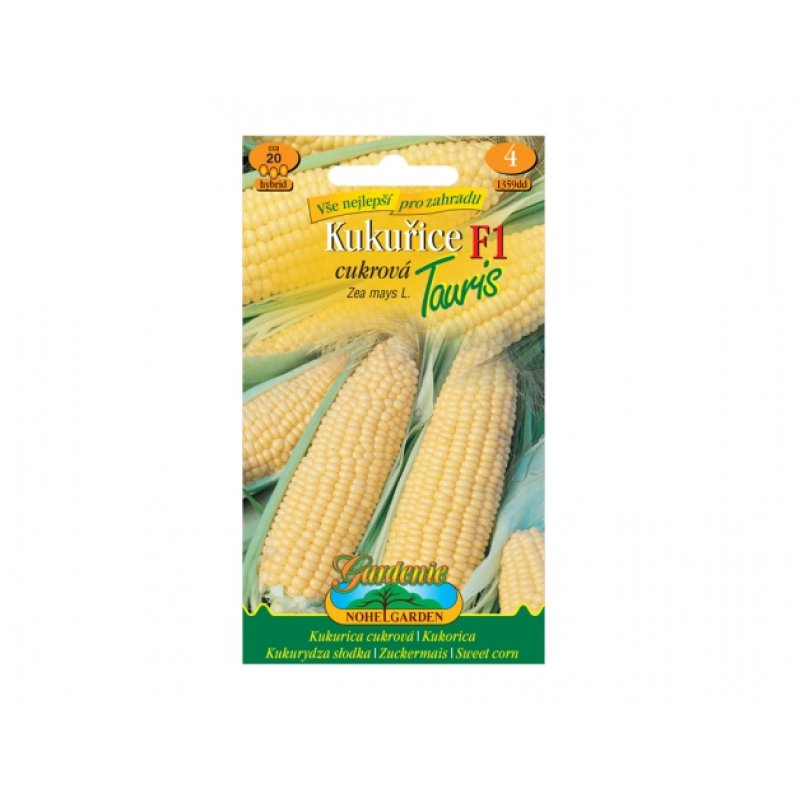
The ears of this variety are large and the kernels are super sweet! Suitable for fresh consumption, canning and freezing.
 Wide range of quality products
Seeds, essential oils, growing supplies and exotic plants in one place
 Eco-friendly range
We prefer natural and gentle products
 Expert advice
We help you grow – guides, blog and personal support
 Delivery across the EU
PPL, DPD, GLS and local carriers – pickup point or home delivery
Boiled, salted or even roasted. Corn is always delicious! It originates from the tropical and subtropical regions of South and Central America. Plants grow over 2.5 m tall. Roots penetrate to a depth of 1.5 - 3.0 m. Stalks have 8 - 10 nodes. Leaves are arranged oppositely. The male inflorescence is a tassel that grows from the last node of the stalk. The female inflorescence is a cob. Corn varieties differ primarily in plant height, cob shape, grain colour, taste and growing purpose.
Sweet corn (Zea mays L. var. Saccharata) is an important type of gourmet vegetable. Seeds contain plenty of sugar, vitamin B and fibre. Dent corn (Zea mays indentata) is grown extensively in fields for grain. Flint corn (Zea mays indurata) has a different grain shape - shorter, harder and rounder. It is not grown in our region. Popcorn (Zea mays everta) is known primarily from popcorn consumption. Flour corn (Zea mays amylacea) has soft grains. It is used to produce flour for special pastries - tortillas etc. Indian corn is a variety with smaller ears and multicoloured grains. This is ornamental corn used as decoration.
Corn grains have a high content of B vitamins, especially thiamine (B1), as well as biotin (B3), pantothenic acid (B5) and folic acid (B9). All these vitamins are essential for the proper function of our organs and metabolic processes. Among minerals, corn contains mainly iron, magnesium, zinc, manganese and selenium - again indispensable trace elements.
Never plant different types of corn in close proximity - cross-pollination may occur and grains of sweet corn, for example, lose their pleasant sweetness! Plants require warm and moist soils. Sunny location. Windy positions are not suitable.
Sow seeds from mid-April to the end of May directly at the site. Rows should be approximately 70 cm apart. After emergence, thin to 25 cm spacing. Sowing depth is 60 - 90 mm (depending on the hybrid used and soil type).
Requires warm, deep, sandy-loam soils. Requires deeply worked soils.
Organic fertilizers are commonly used for corn fertilization. Autumn application is suitable; spring fertilization can only be tolerated on light soils. Rates: N 100 kg/ha, P 25 kg/ha P2O5 and K 90 kg/ha K2O.
Sweet corn requires soil fertilized with farmyard manure or compost in autumn at a rate of 30 to 60 kg per 10m2. Before sowing in spring, fertilize the soil with 300 g potassium salt and 300 g superphosphate per 10m2.
In June, side-dress sweet corn with 200 g calcium nitrate and 250 g superphosphate per 10m2, or twice with 200 g NPK fertilizer (in June and early July). Foliar feeding is also suitable.
Among fungal diseases, corn smut occurs on corn. It causes spherical tumours on the plant that should be removed and burned before they burst. Rust may occasionally appear, with sorrel as its alternate host. Elimination of the alternate host and chemical protection are appropriate. Treat plants preventively with fungicides and treat seeds.
Among animal pests, European corn borer may appear on plants. Its caterpillars damage plants by feeding. Another pest that appears in June and July is the corn earworm. Treat plants against pests with specialized insecticides.
Viral infections may also appear on corn - stunted growth, red leaves. In this case, destroy the plants.
Sweet corn is suitable for consumption at the transition from milk to dough stage. Grains are still soft, but when you press them with a fingernail, milky juice no longer flows out. Harvest popcorn when the seed surface is glassy and smooth.
Data sheet
Specific References
Your review appreciation cannot be sent
Report comment
Report sent
Your report cannot be sent
Write your review
Review sent
Your review cannot be sent
The ears of this variety are large and the kernels are super sweet! Suitable for fresh consumption, canning and freezing.
check_circle
check_circle