
 Our products
 Aromatherapy - essential oils
 Essential oils
 Aroma lamps
 Aroma Diffusers
 Seeds
 Vegetables
 Herbs and spices
 Ornamental Plant Seeds
 Grass mixtures
 Sprouts and microgreens
 Growing supplies
 Cultivation and Gardening Supplies
 Hydroponics and indoor growing
 Protective equipment and gardening tools
 Exotic plants
 Exotic Fruit and Vegetables
 Exotic herbs
 Exotic trees and shrubs
 Ornamental exotic plants
 Roasted coffee
 Espresso coffee
 Ecological coffee preparation
 Thermal mugs and coffee cups
 Aeropress
 Thermos flasks and thermal mugs for coffee and tea
 Moka pot
 Filter coffee
 Coffee blends
 Accessories for coffee makers
 Water filtration
 Coffee grinders
 Cleaning the Coffee Maker
 Ecological Cleaning of Coffee Machines
 Coffee makers
 Coffee Preparation
 Coffee Accessories
 Food products
 For wildlife and pets
 Chocolate and others
 Hemp food products
 Natural cosmetics
 Hemp cosmetics
 Smoking supplies
 Bongs - water pipes
 Blunts and tubes
 E-liquids with Terpenes and CBD
 Grinders and Mills
 Papers and filters
 Smoking accessories
 Vaporizers
 Air fresheners
 CBD and CBG products
 CBD sprays
 CBD and CBN crystals
 CBD body and facial care
 Weeds
 CBD suppositories and capsules
 CBD oils and drops
 CBG oils and drops
 House and garden
 Fashion and Decoration
 Kitchen essentials and cooking
 Christmas Decorations and Accessories
 Gift Sets
 Bird feeders
 Seasonal and Special Tools
The shii-take (shiitake) mushroom is known for its healing effects, particularly on lifestyle diseases. In Asian cuisine, especially Japanese cooking, it is used to prepare many dishes because it has a very distinctive mushroom flavor. The Japanese even call it the "pearl among mushrooms."
Shii-take (Lentinus edodes), also known as shiitake mushroom, is a wood-decay fungus originating from China.
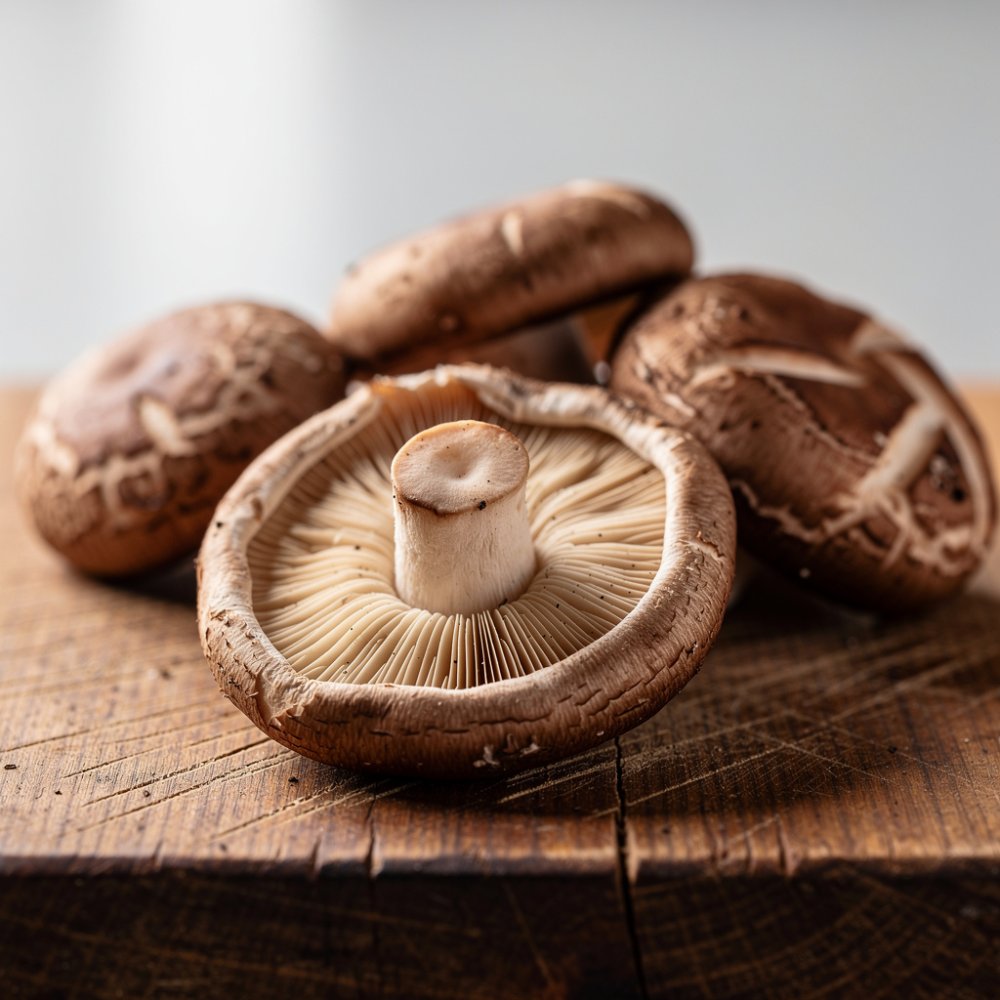
The name shii-take (shiitake, shitake) can be loosely translated as mushroom from the oak tree. As its name suggests, this mushroom grows on hardwood deciduous trees, especially on oak and beech. In our geographical latitudes, it cannot be found growing wild, but it can be cultivated at home.
Although shiitake is not yet very well known in our regions, globally it is the second most cultivated mushroom right after button mushrooms. It finds its use in preparing vegetarian and meat-based main dishes, soups and sauces.
Shii-take in the Kitchen
This interesting mushroom is particularly popular with the Japanese, which is why we encounter it primarily in Japanese and Asian cuisine. However, we can also use it very well to flavour traditional dishes or prepare it as a main course.
Its distinctive taste and aroma easily transfer to other ingredients. It pairs exceptionally well with fish, chicken and rabbit meat. It is also often used in vegetarian and vegan cuisine.
The mushrooms themselves can be used as a spice in powder form or used fresh or dried. Dried mushrooms need to be soaked in water before preparation. From fresh ones, only the caps are used, the tough stem is cut off. Thanks to the mushroom's strong flavour, there is no need to season dishes containing it.
Shiitake can also be prepared like classic mushrooms - make scrambled eggs with them, braise them (it is not recommended to add too much liquid to these mushrooms), fry them with caraway seeds or breaded. They are also excellent mixed with fresh vegetables quickly stir-fried in a pan. Rice generally works well as a side dish for meals containing shiitake.
If you enjoy grilling and would like to try something new, shiitake mushroom is one option. Grilled mushroom caps can be basted with a mixture of oil, garlic and salt; for a more spicy flavour, we can add a few drops of lemon juice.
Shii-take can be part of a dietary regime. The mushroom itself contains almost no calories, yet it is filling and provides the body with plenty of essential vitamins and minerals.
When Shiitake Can Help
In Asia, this mushroom has been known and used as medicine for almost 2,000 years. Thanks to its effects, it has earned nicknames such as "elixir of life" or "mushroom of longevity."
Shiitake strengthens immunity, has significant antibacterial and antiviral effects (it can stop a cold or flu in its early stages), helps lower blood pressure and cholesterol levels.
Shii-take helps regulate blood sugar levels in diabetics and excess hormone levels, works against arteriosclerosis and generally in cardiovascular diseases.
It helps with skin problems such as acne, eczema, and aphthous ulcers. In some cases, it has also proven effective in treating fungal and yeast infections.
Great attention is paid to the anti-cancer effects of shiitake mushroom. It works not only as prevention against tumor growth, but its effect on already developed tumors is also being researched. In Japan, it has become a standard part of stomach cancer treatment and is beginning to be tested for its effects in patients after breast cancer surgery.
Its anti-cancer properties are mentioned in ancient preserved herbals. The carrier of the anti-cancer effect is a substance called lentinan, which is contained in the fruiting bodies of this mushroom.
Growing Shiitake
The mushroom comes from the subtropical rainforests of Asia, so it requires warmth and high relative air humidity.
For home cultivation, we can use hardwood logs (preferably oak, beech, or birch) about two months after felling, or straw cut into short pieces.
Holes need to be drilled into the wood and spawn inserted into them; for straw, it just needs to be lightly pressed in. Then we place the straw or wood with spawn into a plastic bag to maintain moisture (make several holes in it for air) and position it at normal room temperature around 20 degrees Celsius.
For fruiting body formation, it's better to later reduce the temperature below 18 degrees and allow at least some light access. You can plant shiitake year-round, and you'll be harvesting fruiting bodies for at least three, sometimes up to six years.
You can now order shiitake mushroom spawn in our e-shop!