 Essential oils
 Aroma lamps
 Aroma Diffusers
 Vegetables
 Herbs and spices
 Ornamental Plant Seeds
 Grass mixtures
 Sprouts and microgreens
 Exotic Fruit and Vegetables
 Exotic herbs
 Exotic trees and shrubs
 Ornamental exotic plants
 Espresso coffee
 Ecological coffee preparation
 Thermal mugs and coffee cups
 Aeropress
 Thermos flasks and thermal mugs for coffee and tea
 Moka pot
 Filter coffee
 Coffee blends
 Water filtration
 Coffee grinders
 Cleaning the Coffee Maker
 Ecological Cleaning of Coffee Machines
 Coffee makers
 Coffee Preparation
 Coffee Accessories
 For wildlife and pets
 Chocolate and others
 Hemp food products
 Hemp cosmetics
 Bongs - water pipes
 Blunts and tubes
 E-liquids with Terpenes and CBD
 Grinders and Mills
 Papers and filters
 Smoking accessories
 Vaporizers
 Air fresheners
 CBD sprays
 CBD and CBN crystals
 CBD body and facial care
 Weeds
 CBD suppositories and capsules
 CBD oils and drops
 CBG oils and drops
 Fashion and Decoration
 Kitchen essentials and cooking
 Christmas Decorations and Accessories
 Gift Sets
 Bird feeders
 Seasonal and Special Tools

 Our products
 Aromatherapy - essential oils
 Seeds
 Growing supplies
 Cultivation and Gardening Supplies
 Hydroponics and indoor growing
 Protective equipment and gardening tools
 Exotic plants
 Roasted coffee
 Accessories for coffee makers
 Food products
 Natural cosmetics
 Smoking supplies
 CBD and CBG products
 House and garden


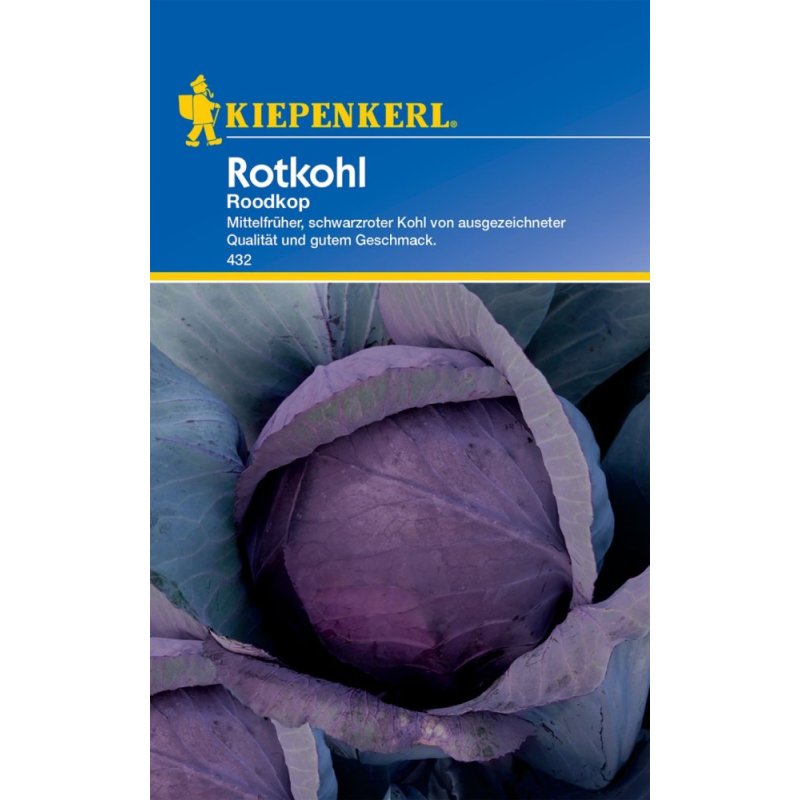
Medium-early red-purple variety of excellent quality and good taste. Make your own homemade sauerkraut!
 Wide range of quality products
Seeds, essential oils, growing supplies and exotic plants in one place
 Eco-friendly range
We prefer natural and gentle products
 Expert advice
We help you grow – guides, blog and personal support
 Delivery across the EU
PPL, DPD, GLS and local carriers – pickup point or home delivery
Cabbage is one of the most popular types of vegetables. It belongs to the Brassicaceae family, making it a close relative of broccoli, kohlrabi, kale, and cauliflower. It originates from the Mediterranean region. This biennial plant is grown for its leaves, which form the characteristic head. It is very tasty and also very healthy. It contains vitamins C, B, provitamin A, and minerals, particularly potassium and sulfur.
Requires a sunny location. Water cabbage abundantly and regularly throughout the growing season. Both excess and lack of water are harmful. Don't forget to practice regular crop rotation.
Sow early cultivars in mid-April in a cold frame or in peat pellets. Sow late varieties at the same time directly in the bed; in cooler areas, it's better to start sowing after the last frost in mid-May. Transplant developed seedlings from the cold frame to the bed from mid-May onwards.
Well-draining soil rich in nutrients is suitable.
In autumn, before planting in the designated field (bed), dig everything thoroughly and fertilize with farmyard manure mixed with compost and finely chopped grass. Fertilize with special fertilizer for brassicas, which should not contain too much nitrogen.
Plants are affected by Alternaria leaf spot, cabbage root fly, cabbage aphid, large cabbage white butterfly, small cabbage white butterfly, cabbage moth, diamondback moth, turnip sawfly, and weevils.
Alternaria leaf spot (Alternaria brassicicola) appears on young plants on cotyledon leaves, where it creates small sunken brownish-black to black streak-like spots that later merge. With severe infestation, plants die. Heavily affected leaves turn yellow, become necrotic, and fall off. Prevention includes using certified seed from healthy seed crops, adequate crop rotation, timely removal of affected plant parts and post-harvest residues.
Cabbage root fly is a species of fly. Its white, legless, and headless larvae nibble on the rootlets of young plants, and later also the main root of cabbage. Non-chemical protection includes protective collars. Treat plants after transplanting with insecticide DURSBAN 10 G.
Cabbage aphids live in colonies on the underside of leaves of most brassica plants, where they suck the leaves. As a result of aphid feeding, leaves become deformed, turn yellow, and with severe infestation, dry out. RELDAN 40 EC can be used for treatment.
Large cabbage white butterfly lays eggs in groups, and its typically yellow-green caterpillars with black spots eat leaves from the edges, leaving only the veins. Suitable insecticidal preparations include BIOBIT WP, DIMILIN 48 SC, NOMOLT 15 SC, STEWARD.
Cabbage moth and diamondback moth damage plants. On damaged plants, feeding damage and dark green piles of droppings are visible. Suitable insecticidal preparations include BIOBIT WP, DIMILIN 48 SC, NOMOLT 15 SC, STEWARD.
Weevils cause root damage. They gnaw galleries in the roots and lay eggs in them. The infestation then looks similar to clubroot. It's advisable to treat the crop with ZOLONE 35 EC, MOSPILAN 20 SP, CALYPSO 480 SC.
Harvest early cabbage 120–130 days after transplanting, semi-early cabbage 130–140 days after transplanting, semi-late varieties 150–160 days after sowing, and late cabbage 180 days after sowing.
Data sheet
Specific References
Your review appreciation cannot be sent
Report comment
Report sent
Your report cannot be sent
Write your review
Review sent
Your review cannot be sent
Medium-early red-purple variety of excellent quality and good taste. Make your own homemade sauerkraut!
check_circle
check_circle