 Essential oils
 Aroma lamps
 Aroma Diffusers
 Vegetables
 Herbs and spices
 Ornamental Plant Seeds
 Grass mixtures
 Sprouts and microgreens
 Exotic Fruit and Vegetables
 Exotic herbs
 Exotic trees and shrubs
 Ornamental exotic plants
 Espresso coffee
 Ecological coffee preparation
 Thermal mugs and coffee cups
 Aeropress
 Thermos flasks and thermal mugs for coffee and tea
 Moka pot
 Filter coffee
 Coffee blends
 Water filtration
 Coffee grinders
 Cleaning the Coffee Maker
 Ecological Cleaning of Coffee Machines
 Coffee makers
 Coffee Preparation
 Coffee Accessories
 For wildlife and pets
 Chocolate and others
 Hemp food products
 Hemp cosmetics
 Bongs - water pipes
 Blunts and tubes
 E-liquids with Terpenes and CBD
 Grinders and Mills
 Papers and filters
 Smoking accessories
 Vaporizers
 Air fresheners
 CBD sprays
 CBD and CBN crystals
 CBD body and facial care
 Weeds
 CBD suppositories and capsules
 CBD oils and drops
 CBG oils and drops
 Fashion and Decoration
 Kitchen essentials and cooking
 Christmas Decorations and Accessories
 Gift Sets
 Bird feeders
 Seasonal and Special Tools

 Our products
 Aromatherapy - essential oils
 Seeds
 Growing supplies
 Cultivation and Gardening Supplies
 Hydroponics and indoor growing
 Protective equipment and gardening tools
 Exotic plants
 Roasted coffee
 Accessories for coffee makers
 Food products
 Natural cosmetics
 Smoking supplies
 CBD and CBG products
 House and garden

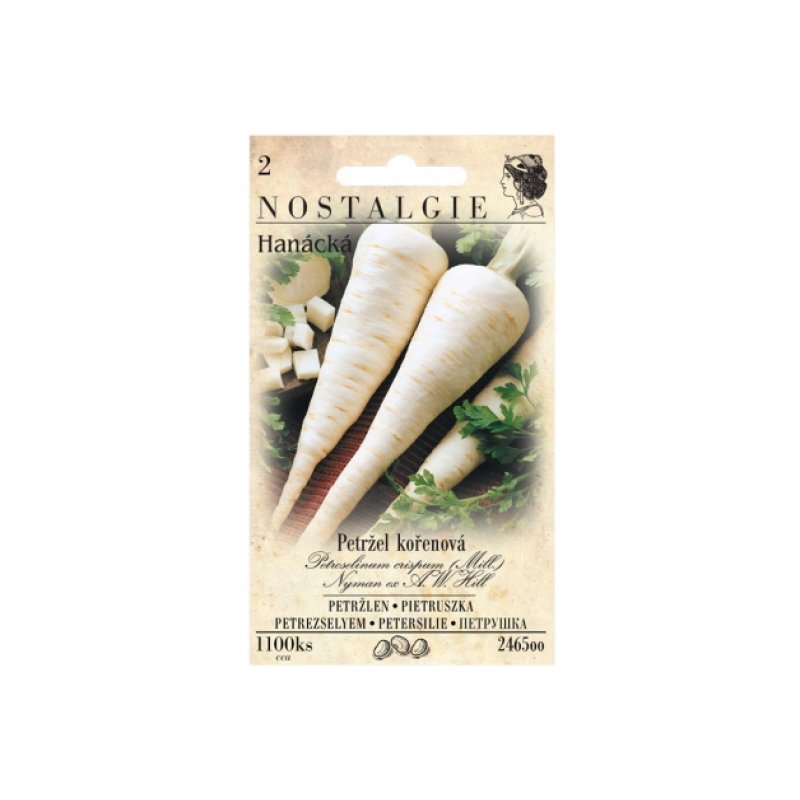
Late-season variety suitable for storage due to its high resistance to diseases that accompany storage. Also resistant to rust. Roots are medium-long, 14-17cm, triangular-shaped. The flesh is creamy white, very aromatic. Package contains 1100 seeds.
 Wide range of quality products
Seeds, essential oils, growing supplies and exotic plants in one place
 Eco-friendly range
We prefer natural and gentle products
 Expert advice
We help you grow – guides, blog and personal support
 Delivery across the EU
PPL, DPD, GLS and local carriers – pickup point or home delivery
A root vegetable that belongs to biennial plants. It is a source of provitamin A and vitamins B, C, E, and minerals such as potassium, magnesium, iron, calcium, sodium and phosphorus. In the first year, the plant develops a white taproot and glossy, long-stalked, richly lobed leaves. In the second year, it flowers in summer. Parsley is divided into root and leaf types. Leaf parsley is then divided into flat-leaf and curly varieties. Curly parsley is used in soups and salads. Flat-leaf parsley is used primarily as a seasoning and for tea, which stimulates appetite. The leaf form is also used to decorate cold dishes and for flavoring. It can also be dried and frozen. The root form is very suitable for heat treatment, especially in soups, salads and also for frying. It is also suitable for storage.
Root parsley requires plenty of light, curly parsley tolerates partial shade well. During dry periods, it needs regular watering. During the growing season, parsley requires regular watering and fertilizing. During drought periods, regular irrigation is essential! During the cultivation of root parsley, the plot should be weeded.
Early varieties of root parsley are sown in beds in October to November, late varieties of parsley are sown in early spring when the soil is still saturated with water from melting snow. Leaf parsley is sown in beds in March, April and then again in August. Seeds of both types of parsley are sown at a depth of 2 cm.
Parsley is grown in deeply worked soils that are light. The optimal pH is 6.
When over-fertilized with nitrogen, it suffers from rust. It does not tolerate salinization. Never fertilize beds before planting with manure! High nitrogen content causes subsequent poor storability. During the growing season, fertilize with complex NPK fertilizer with lower nitrogen content and avoid using fertilizers containing chlorine. For fertilizing, we can use Cererit or Kristalon.
Parsley is attacked by leafhoppers that suck on the plants. The sucked tissue becomes deformed and dries out. Flowers and young fruits gradually fall off. Plants can be protected with Decis Mega.
If whitish, powdery fungal coatings appear on the plants, which gradually turn dirty gray-brown, they have been attacked by powdery mildew of umbellifers. Treat the stand with Kumulus WG or Ortiva.
The most serious storage rot of parsley roots is black rot. It is transmitted by seeds and especially by post-harvest residues. It spreads in wet weather and by watering on root crowns. Protection consists primarily in sowing quality seed treated with fungicide.
Aphids or spider mites can be eliminated with Pirimor or Decis.
Roots are occasionally attacked by nematodes. A safe protection is to plant African Marigolds (Tagetes) in the surrounding area.
Rust may also appear on plants. Treat them with a suitable fungicide.
Leaf parsley is harvested as needed. Root parsley is harvested when it reaches the desired size. The main harvest time is October.
Data sheet
Specific References
Your review appreciation cannot be sent
Report comment
Report sent
Your report cannot be sent
Write your review
Review sent
Your review cannot be sent
Late-season variety suitable for storage due to its high resistance to diseases that accompany storage. Also resistant to rust. Roots are medium-long, 14-17cm, triangular-shaped. The flesh is creamy white, very aromatic. Package contains 1100 seeds.
check_circle
check_circle