 Essential oils
 Aroma lamps
 Aroma Diffusers
 Vegetables
 Herbs and spices
 Ornamental Plant Seeds
 Grass mixtures
 Sprouts and microgreens
 Exotic Fruit and Vegetables
 Exotic herbs
 Exotic trees and shrubs
 Ornamental exotic plants
 Espresso coffee
 Ecological coffee preparation
 Thermal mugs and coffee cups
 Aeropress
 Thermos flasks and thermal mugs for coffee and tea
 Moka pot
 Filter coffee
 Coffee blends
 Water filtration
 Coffee grinders
 Cleaning the Coffee Maker
 Ecological Cleaning of Coffee Machines
 Coffee makers
 Coffee Preparation
 Coffee Accessories
 For wildlife and pets
 Chocolate and others
 Hemp food products
 Hemp cosmetics
 Bongs - water pipes
 Blunts and tubes
 E-liquids with Terpenes and CBD
 Grinders and Mills
 Papers and filters
 Smoking accessories
 Vaporizers
 Air fresheners
 CBD sprays
 CBD and CBN crystals
 CBD body and facial care
 Weeds
 CBD suppositories and capsules
 CBD oils and drops
 CBG oils and drops
 Fashion and Decoration
 Kitchen essentials and cooking
 Christmas Decorations and Accessories
 Gift Sets
 Bird feeders
 Seasonal and Special Tools

 Our products
 Aromatherapy - essential oils
 Seeds
 Growing supplies
 Cultivation and Gardening Supplies
 Hydroponics and indoor growing
 Protective equipment and gardening tools
 Exotic plants
 Roasted coffee
 Accessories for coffee makers
 Food products
 Natural cosmetics
 Smoking supplies
 CBD and CBG products
 House and garden

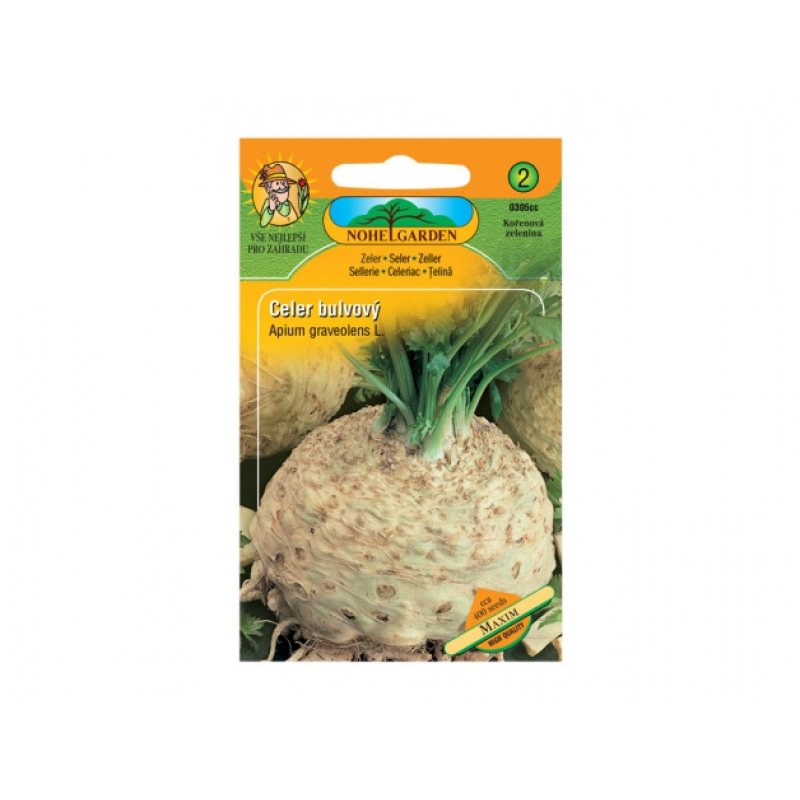
This high-yielding variety produces impressive bulbs with an average weight of 540 grams, making it an excellent choice for gardeners seeking abundant harvests.
Package contains 400 seeds.
 Wide range of quality products
Seeds, essential oils, growing supplies and exotic plants in one place
 Eco-friendly range
We prefer natural and gentle products
 Expert advice
We help you grow – guides, blog and personal support
 Delivery across the EU
PPL, DPD, GLS and local carriers – pickup point or home delivery
Celery originates from the Mediterranean. It is grown in three forms - celeriac for fleshy roots, stalk celery for fleshy leaf stalks, or as a leaf form for rich leaf rosette.
This biennial plant comes from the Apiaceae family. The fruits, like the entire plant, contain many aromatic substances. Celery is a source of vitamins, especially vitamin C (the leaf form contains up to 10 times more vitamin C than bulbs), as well as B1, B2 and a whole range of minerals. Its strong aroma and taste come from essential oils.
In the kitchen, it is used for cold and hot dishes, suitable for salads and soups. Many people are bothered by its essential oils and they cause allergies - legislation therefore lists it as an allergenic plant.
We consume stalk celery raw, in salads, or we can snack on it with meat. It gives our body the most benefits in the form of juice for breakfast. Leaf celery is used to make salads, the stalks are consumed cooked, and raw juice is pressed from it.
Celery likes sunny locations; conversely, it grows poorly in shade, is not aromatic, and can be more easily affected by fungal diseases. It needs sufficient watering throughout the growth period. Watering is important during planting and in the second half of the vegetation period when the bulb is growing. Celeriac needs to be regularly hoed.
The long vegetation period can be shortened by pre-cultivation. Seedlings do not need to be grown in a heated room. For pre-cultivation until planting time, a greenhouse or conservatory is suitable. February or March sowing applies to celeriac, leaf and stalk celery. We do not plant celery before mid-May at the final location.
Celeriac requires pre-cultivation of seedlings under glass. The ideal time for planting is early May, at the latest mid-June.
For stalk celery, we sow seeds in a greenhouse or hotbed. Planting is done in May in beds, at 30×30 cm spacing. During growth, we earth up the stalks to blanch them.
We sow leaf celery in February in a greenhouse or hotbed and plant out in May.
Seeds germinate in two to three weeks at temperatures between fifteen and twenty degrees.
It is demanding in terms of nutrients and calcium content in the soil. It requires loamy, humus-rich soils. Leaf and stalk celery need more sandy-loam soil. Optimal pH is 6.5 – 7.5.
During vegetation, we fertilize with multi-component fertilizer. Root vegetable fertilizer is suitable.
Among pests, celery is primarily attacked by carrot fly and celery fly. We treat celery with Basudin (carrot fly) and Sumithion Super (celery fly) preparations.
Septoria leaf spot of celery appears on celery leaf blades, where small gray-brown spots with a yellow border and a large number of very small black dots appear. The centers of the spots later turn brown and dry out.
Celeriac scab appears as brown spots that enlarge. The affected tissue becomes corky and cracks. This is followed by rotting decay of the bulb. We prevent the disease by not growing celery on the same plot for at least 3 years. Partial protection is the use of borax at a dose of about 20g per 10m2.
Celery leaf spot appears on older leaves with yellowish, later yellow-brown spots. Leaves dry out and die. We carry out preventive protection with Kuprikol.
Smaller celery bulbs can be harvested in July. Celery leaves are harvested by thinning, so that sufficient leaf area remains.
Leaf celery begins to be harvested gradually from July, and only at the end of September do we carry out a one-time harvest.
Data sheet
Specific References
Your review appreciation cannot be sent
Report comment
Report sent
Your report cannot be sent
Write your review
Review sent
Your review cannot be sent
This high-yielding variety produces impressive bulbs with an average weight of 540 grams, making it an excellent choice for gardeners seeking abundant harvests.
Package contains 400 seeds.
check_circle
check_circle