 Essential oils
 Aroma lamps
 Aroma Diffusers
 Vegetables
 Herbs and spices
 Ornamental Plant Seeds
 Grass mixtures
 Sprouts and microgreens
 Exotic Fruit and Vegetables
 Exotic herbs
 Exotic trees and shrubs
 Ornamental exotic plants
 Espresso coffee
 Ecological coffee preparation
 Thermal mugs and coffee cups
 Aeropress
 Thermos flasks and thermal mugs for coffee and tea
 Moka pot
 Filter coffee
 Coffee blends
 Water filtration
 Coffee grinders
 Cleaning the Coffee Maker
 Ecological Cleaning of Coffee Machines
 Coffee makers
 Coffee Preparation
 Coffee Accessories
 For wildlife and pets
 Chocolate and others
 Hemp food products
 Hemp cosmetics
 Bongs - water pipes
 Blunts and tubes
 E-liquids with Terpenes and CBD
 Grinders and Mills
 Papers and filters
 Smoking accessories
 Vaporizers
 Air fresheners
 CBD sprays
 CBD and CBN crystals
 CBD body and facial care
 Weeds
 CBD suppositories and capsules
 CBD oils and drops
 CBG oils and drops
 Fashion and Decoration
 Kitchen essentials and cooking
 Christmas Decorations and Accessories
 Gift Sets
 Bird feeders
 Seasonal and Special Tools

 Our products
 Aromatherapy - essential oils
 Seeds
 Growing supplies
 Cultivation and Gardening Supplies
 Hydroponics and indoor growing
 Protective equipment and gardening tools
 Exotic plants
 Roasted coffee
 Accessories for coffee makers
 Food products
 Natural cosmetics
 Smoking supplies
 CBD and CBG products
 House and garden

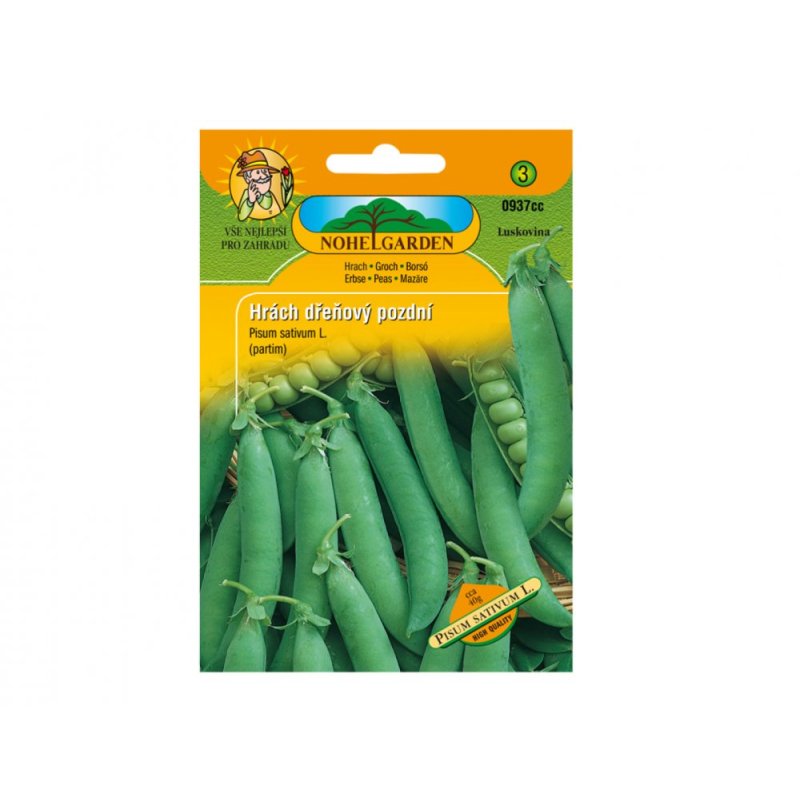
Semi-late variety, approximately 80 centimeters tall, with green pods and very sweet kernels. The grains are juicy. Package contains 200 seeds.
 Wide range of quality products
Seeds, essential oils, growing supplies and exotic plants in one place
 Eco-friendly range
We prefer natural and gentle products
 Expert advice
We help you grow – guides, blog and personal support
 Delivery across the EU
PPL, DPD, GLS and local carriers – pickup point or home delivery
Peas have been cultivated since the Neolithic period and are now grown almost worldwide. They contain many vitamins and active substances. They are also a source of protein and vitamins C, B, calcium, potassium, phosphorus, magnesium, and more. They belong to annual crops. This legume vegetable belongs to the Fabaceae family. The flowers are white and the fruit is a pod. The seeds can be light to dark green.
Peas can be divided into three cultivation groups. Shelling peas whose seeds are suitable for freezing and fresh preparation in the kitchen. Sugar snap peas, where the entire pod including seeds is used for consumption. Round-seeded peas, which have a high starch content. They are suitable for heat processing, e.g. in soups. According to cultivation earliness, we distinguish very early varieties, early, mid-early, mid-late and late varieties.
They require a bright location, but not direct scorching sun. Peas are among cool-season plants. They thrive best at temperatures of 13 – 18 °C. This doesn't mean they can tolerate frost. Water abundantly especially during flowering and pod setting. The soil should never dry out completely. Drought doesn't suit peas. Peas are climbing plants, so they need to be provided with support. If we grow peas in rows - we stretch string between them. Peas will make do with any support - fence, pergola, wooden slat. Regularly loosen the soil around the planting and remove weeds.
Sowing is done early in spring, preferably at the end of March to early April. Shelling peas are sown from April to June. We sow in prepared soil in rows spaced 15 - 30 cm apart, with seeds 4 - 6 cm apart. Seeds are sown at a depth of 5 - 7 cm.
The soil should be permeable, well-worked with a sufficient dose of nutrients. It shouldn't dry out quickly, but at the same time must not remain waterlogged for long.
Before planting, fertilize the soil with mature compost or rotted manure.
Apply phosphorus and potassium fertilizers as needed. Dose 20 kg N, 50 kg P, K 120 kg per hectare. If the soil was properly fertilized before sowing, there is no need to add fertilizer during vegetation.
Pea weevil - its larvae drill holes in the seeds. Only one larva lives in each seed. The larvae damage the seeds, reducing yield, quality and germination of peas. Adult beetles eat pollen, corolla petals or pea stamens. Chemical protection is spraying during flowering, when the first two flowers on the stem finish blooming and the first pod begins to form. Prevention is suitable preventive earlier sowing of peas.
Pea leaf weevil - damages leaves. Leaf blades are regularly nibbled from the edges. The larvae of this beetle also damage plants, living in nodular tumors on the roots and destroying them. Suitable protection is spraying with Karate or Sumithion preparations and arsenic preparations.
Wireworms - larvae of click beetles. Plants wilt in rows or patches. Sown seeds don't germinate at all. Roots are damaged, visible tunnels can be seen. Larvae are cylindrical and hard, shiny, yellow-brown and about three centimeters in size. Chemical protection is not very suitable. If wireworms appear, regularly and deeply dig the soil and don't leave it undisturbed even after harvest. Fertilizing with nitrogen lime also helps.
Another enemy of peas are birds, especially jays and pigeons. In this case, we apply scarers, traps or nets.
Harvest takes place approximately from mid-June to mid-July depending on the earliness of sown varieties.
Early varieties are harvested from 12 weeks after planting.
Sugar snap peas are harvested when the pods contain sweet large peas. It's advisable to simply try one pod to see if they are sufficiently ripe.
Data sheet
Specific References
Your review appreciation cannot be sent
Report comment
Report sent
Your report cannot be sent
Write your review
Review sent
Your review cannot be sent
Semi-late variety, approximately 80 centimeters tall, with green pods and very sweet kernels. The grains are juicy. Package contains 200 seeds.
check_circle
check_circle