 Essential oils
 Aroma lamps
 Aroma Diffusers
 Vegetables
 Herbs and spices
 Ornamental Plant Seeds
 Grass mixtures
 Sprouts and microgreens
 Exotic Fruit and Vegetables
 Exotic herbs
 Exotic trees and shrubs
 Ornamental exotic plants
 Espresso coffee
 Ecological coffee preparation
 Thermal mugs and coffee cups
 Aeropress
 Thermos flasks and thermal mugs for coffee and tea
 Moka pot
 Filter coffee
 Coffee blends
 Water filtration
 Coffee grinders
 Cleaning the Coffee Maker
 Ecological Cleaning of Coffee Machines
 Coffee makers
 Coffee Preparation
 Coffee Accessories
 For wildlife and pets
 Chocolate and others
 Hemp food products
 Hemp cosmetics
 Bongs - water pipes
 Blunts and tubes
 E-liquids with Terpenes and CBD
 Grinders and Mills
 Papers and filters
 Smoking accessories
 Vaporizers
 Air fresheners
 CBD sprays
 CBD and CBN crystals
 CBD body and facial care
 Weeds
 CBD suppositories and capsules
 CBD oils and drops
 CBG oils and drops
 Fashion and Decoration
 Kitchen essentials and cooking
 Christmas Decorations and Accessories
 Gift Sets
 Bird feeders
 Seasonal and Special Tools

 Our products
 Aromatherapy - essential oils
 Seeds
 Growing supplies
 Cultivation and Gardening Supplies
 Hydroponics and indoor growing
 Protective equipment and gardening tools
 Exotic plants
 Roasted coffee
 Accessories for coffee makers
 Food products
 Natural cosmetics
 Smoking supplies
 CBD and CBG products
 House and garden

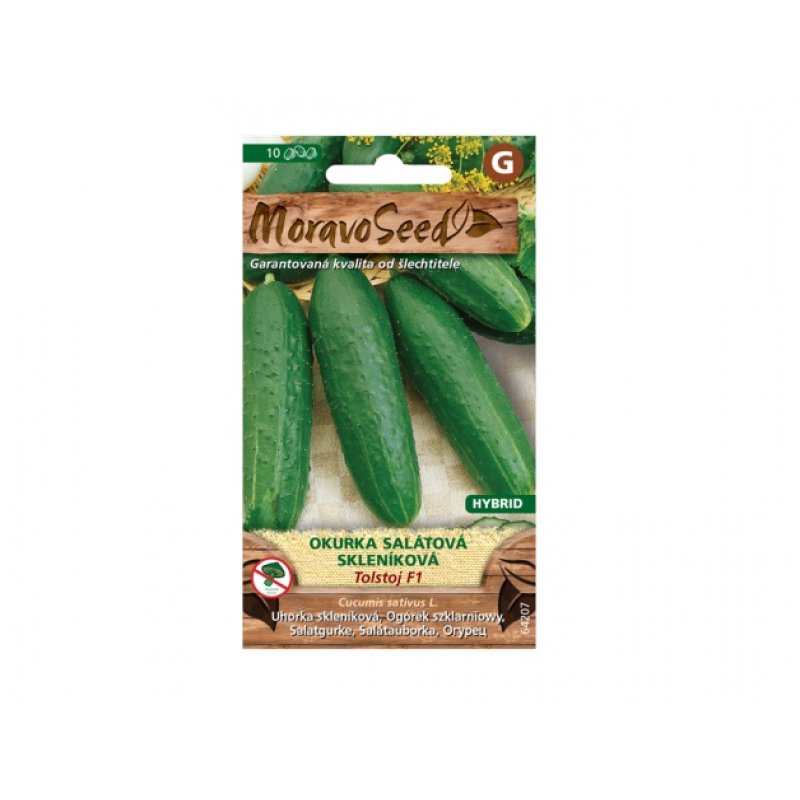
The fruits reach a length of around 8 cm. The variety is disease-resistant. The fruits are dark green with coarse warts. The package contains 10 seeds.
 Wide range of quality products
Seeds, essential oils, growing supplies and exotic plants in one place
 Eco-friendly range
We prefer natural and gentle products
 Expert advice
We help you grow – guides, blog and personal support
 Delivery across the EU
PPL, DPD, GLS and local carriers – pickup point or home delivery
Cucumbers are undoubtedly among the most popular types of vegetables. Pickling cucumbers or salad cucumbers are probably the most commonly grown vegetable variety. Everyone knows the long snake cucumbers. The fruits measure over thirty centimeters, are smooth, non-bitter, and suitable for cultivation in greenhouses and polytunnel covers. Cucumbers originate from India, where they have been cultivated for 3000 years. The plant grows up to 2 meters long and is climbing. Characteristically, it has large, deeply lobed, alternately growing leaves. Cucumbers produce large yellow unisexual flowers - male and female - which are pollinated by insects. The fruit is a cucumber - a berry.
Cucumbers contain the enzyme erepsin, which breaks down proteins. Vitamin E protects cells against free radicals. When consuming cucumbers, a feeling of satiety sets in quickly, which helps with weight loss diets.
Besides basic culinary preparations of cucumbers, such as salads or for pickling, cucumbers can also be used to make various cream salads, as well as cocktails and various smoothies.
It is not advisable to plant cucumbers where potatoes or strawberries were previously grown. On the other hand, beds after peas, onions, beets, or beans are suitable. Cucumbers require a bright, warm location that is sheltered from wind. We keep the soil around the emerged seedlings loose and clean. Cucumbers are shallow-rooted, so we don't hoe deeply. We pinch plants at the six-leaf stage after the fifth leaf and later also pinch side shoots after fruit set. Pinching speeds up harvest by at least fourteen days. Watering during hot sun is not suitable, as plants suffer from scorch and downy mildew. Leaves must be dry at night, so afternoon watering is completely unsuitable and we water only in the morning. For growing cucumbers, it is advisable to use PVC film which protects seedlings from possible temperature drops. Black non-woven fabric is most suitable.
Cucumber seeds can be sown directly in the bed around May 20th. Cucumbers are quite susceptible to temperature shocks, so temperatures should not drop below 8°C.
Another option is pre-cultivation, where we avoid cucumber downy mildew. Sowing can be done from mid-April. We sow seeds in sowing substrate, one seed per pot or seedling tray. We can pre-cultivate behind a window indoors or in a greenhouse. Seedlings are pre-cultivated for 12-16 days and the suitable temperature for seed germination is 15-18°C. Waterlogging doesn't suit seeds or young seedlings very well, they could easily die. Again, we place seedlings in their final location only after May 20th.
They require quality, fertilized, deeply worked soil.
It is good to fertilize the site before planting with well-rotted manure or matured compost. This should be left to settle for another 2 to 3 weeks. During vegetation, you can fertilize with diluted cow manure with fermented chicken manure. You can also use artificial fertilizer Cucumin, designed specifically for cucumbers. We can also apply Cererit or Floran.
Sucking pests such as aphids, whiteflies, or spider mites can significantly weaken our cultivated plants when heavily infested. Among fungal diseases, mainly mildews such as cucumber downy mildew, black fruit rot, powdery mildew. It is advisable to use ROCK EFFECT as prevention, not only against sucking pests but also against fungal diseases. To treat fungal diseases, we can use products Acrobat MZ WG, Aliette 80 WG, also Dithane DG Neotec, Champion 50 WP, Kuprikol 50, Ortiva, Previcur Energy, Ridomil Gold MZ Pepite, and Plíseň STOP.
Symptoms of cucumber mosaic virus can be observed in approximately month-and-a-half-old plants. Greener irregular spots begin to form on the leaves, which yellow over time. Leaves wrinkle and deform. The disease is transmitted by pests such as aphids or whiteflies. Protection involves eliminating sucking pests that transmit the disease and destroying plants in case of infestation.
We harvest cucumbers at least two to three times a week. When harvesting, we take care not to tear the cucumber seedlings and damage the shoots. We harvest ripe fruits.
Data sheet
Specific References
Your review appreciation cannot be sent
Report comment
Report sent
Your report cannot be sent
Write your review
Review sent
Your review cannot be sent
The fruits reach a length of around 8 cm. The variety is disease-resistant. The fruits are dark green with coarse warts. The package contains 10 seeds.
check_circle
check_circle