 Essential oils
 Aroma lamps
 Aroma Diffusers
 Vegetables
 Herbs and spices
 Ornamental Plant Seeds
 Grass mixtures
 Sprouts and microgreens
 Exotic Fruit and Vegetables
 Exotic herbs
 Exotic trees and shrubs
 Ornamental exotic plants
 Espresso coffee
 Ecological coffee preparation
 Thermal mugs and coffee cups
 Aeropress
 Thermos flasks and thermal mugs for coffee and tea
 Moka pot
 Filter coffee
 Coffee blends
 Water filtration
 Coffee grinders
 Cleaning the Coffee Maker
 Ecological Cleaning of Coffee Machines
 Coffee makers
 Coffee Preparation
 Coffee Accessories
 For wildlife and pets
 Chocolate and others
 Hemp food products
 Hemp cosmetics
 Bongs - water pipes
 Blunts and tubes
 E-liquids with Terpenes and CBD
 Grinders and Mills
 Papers and filters
 Smoking accessories
 Vaporizers
 Air fresheners
 CBD sprays
 CBD and CBN crystals
 CBD body and facial care
 Weeds
 CBD suppositories and capsules
 CBD oils and drops
 CBG oils and drops
 Fashion and Decoration
 Kitchen essentials and cooking
 Christmas Decorations and Accessories
 Gift Sets
 Bird feeders
 Seasonal and Special Tools

 Our products
 Aromatherapy - essential oils
 Seeds
 Growing supplies
 Cultivation and Gardening Supplies
 Hydroponics and indoor growing
 Protective equipment and gardening tools
 Exotic plants
 Roasted coffee
 Accessories for coffee makers
 Food products
 Natural cosmetics
 Smoking supplies
 CBD and CBG products
 House and garden

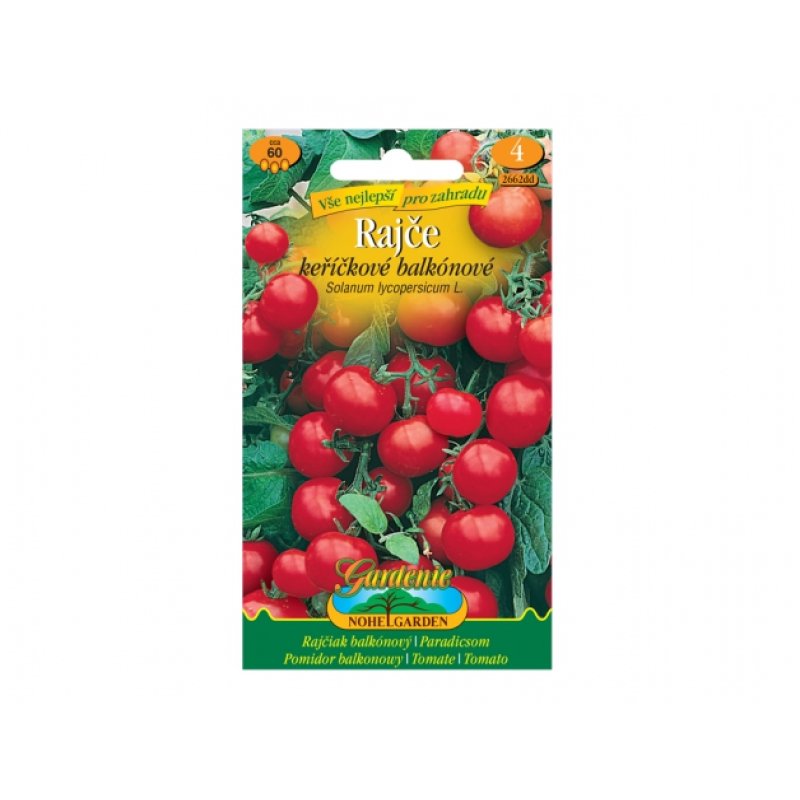
A highly productive variety of low bush tomato, designed for small-scale growers. Suitable for growing in containers and boxes on balconies, where it looks very decorative. The fruits are small, red, round, weighing 15-20 g.
 Wide range of quality products
Seeds, essential oils, growing supplies and exotic plants in one place
 Eco-friendly range
We prefer natural and gentle products
 Expert advice
We help you grow – guides, blog and personal support
 Delivery across the EU
PPL, DPD, GLS and local carriers – pickup point or home delivery
Belongs to the nightshade family. Originates from Central and South America. Plants grow up to 2m tall, covered with fine hairs. The leaves are deeply lobed and pinnate. The inflorescence is a cyme with three to twenty bisexual flowers that are yellow in color. The fruit is a berry, or tomato. Indeterminate or bush varieties of tomatoes are grown, producing red, yellow, orange, pink, and white fruits.
Besides being very healthy, they also have their specific taste. Their use in culinary preparations is manifold. They contain vitamins C, E, A, potassium, iron, carotene, and large amounts of fiber. They support blood formation and benefit skin, hair, and nails. They strengthen the organism. Plants can be grown not only in the traditional way in the garden, but also in containers, for example on a terrace or balcony!
They require a sunny and sheltered location. Ideal temperature conditions for growing are between 21 and 24°C. Growing tomatoes in a greenhouse or polytunnel is also a possible option, but we should be aware that at temperatures above 27 degrees Celsius tomatoes do not grow. Higher temperatures even cause them to dry out. Generous watering is also necessary. We avoid watering the leaves, as plants could be attacked by molds. Regularly pinch out side shoots to support fruit growth. For indeterminate tomatoes and tomatoes that grow to larger sizes, it is essential to place a support and tie them up to prevent the plants from breaking.
Tomatoes are sown at the earliest in mid-February, but better at the beginning of March into substrate for sowing and propagation. After 1-2 weeks we must prick out the plants into seedling trays - the substrate is the same. After 3-4 weeks we transplant the plants into pots with minimum dimensions of 8×8cm with horticultural substrate. Low temperature and lighter watering are suitable for growing tomatoes. For plants in pots, a temperature up to 15°C is sufficient. We harden off plants very early - we ventilate or place them outside during the day. We plant in polytunnels in April, and in open ground in May after the last frosts.
Plants are demanding in organic matter and nutrients, so it is necessary to additionally mix manure into the growing substrate. It is suitable to use granulated - we add 300-400g per plant to the substrate.
Tomatoes grown in beds require soil preparation before planting. On good and humus-rich soils it is not necessary to apply manure or compost. On poor soils we work 2-4 kg per m2 of well-rotted compost or manure into the soil in autumn.
We regularly fertilize plants. Application in the form of liquid fertilizer with Kristalon Start or Fruit and Flower is suitable. We fertilize with Kristalon START mainly at the beginning of plant growth, once plants start to flower, we can start using Kristalon FRUIT and FLOWER. We prepare doses according to the instructions on the product packaging.
The most common disease occurring in tomatoes is tomato blight (potato blight). It is recognized by characteristic brown spots on leaves, stems, and fruits. This disease needs to be tackled preventively. If we expect rainy weather, we treat plants with preparations like Acrobat, Aliette, Ridomil, Kuprikol, etc.
Blossom end rot in tomatoes is a nutritional disorder in the plant - calcium deficiency. It affects fruits which then become deformed and a black spot appears at the tip of the fruit. We regularly fertilize plants. If the disorder appears, we treat plants with preparations for calcium nutrition, such as InCa.
Sucking pests such as aphids or spider mites attack tomatoes very often. Against fungal diseases and sucking pests, it is also suitable to use the preparation Agro NATURA Symphony 3 in 1.
For tomato blight, the preparation DITHANE is suitable. For organic farming, the preparations Bioton and Bioan are suitable.
Bush varieties of tomatoes are harvested approximately 8 weeks after planting. Indeterminate types are harvested from week 10 to 12. We always follow the appearance of the harvested fruit. Tomatoes should be red, firm, and not overripe.
Data sheet
Specific References
Your review appreciation cannot be sent
Report comment
Report sent
Your report cannot be sent
Write your review
Review sent
Your review cannot be sent
A highly productive variety of low bush tomato, designed for small-scale growers. Suitable for growing in containers and boxes on balconies, where it looks very decorative. The fruits are small, red, round, weighing 15-20 g.
check_circle
check_circle