 Essential oils
 Aroma lamps
 Aroma Diffusers
 Vegetables
 Herbs and spices
 Ornamental Plant Seeds
 Grass mixtures
 Sprouts and microgreens
 Exotic Fruit and Vegetables
 Exotic herbs
 Exotic trees and shrubs
 Ornamental exotic plants
 Espresso coffee
 Ecological coffee preparation
 Thermal mugs and coffee cups
 Aeropress
 Thermos flasks and thermal mugs for coffee and tea
 Moka pot
 Filter coffee
 Coffee blends
 Water filtration
 Coffee grinders
 Cleaning the Coffee Maker
 Ecological Cleaning of Coffee Machines
 Coffee makers
 Coffee Preparation
 Coffee Accessories
 For wildlife and pets
 Chocolate and others
 Hemp food products
 Hemp cosmetics
 Bongs - water pipes
 Blunts and tubes
 E-liquids with Terpenes and CBD
 Grinders and Mills
 Papers and filters
 Smoking accessories
 Vaporizers
 Air fresheners
 CBD sprays
 CBD and CBN crystals
 CBD body and facial care
 Weeds
 CBD suppositories and capsules
 CBD oils and drops
 CBG oils and drops
 Fashion and Decoration
 Kitchen essentials and cooking
 Christmas Decorations and Accessories
 Gift Sets
 Bird feeders
 Seasonal and Special Tools

 Our products
 Aromatherapy - essential oils
 Seeds
 Growing supplies
 Cultivation and Gardening Supplies
 Hydroponics and indoor growing
 Protective equipment and gardening tools
 Exotic plants
 Roasted coffee
 Accessories for coffee makers
 Food products
 Natural cosmetics
 Smoking supplies
 CBD and CBG products
 House and garden


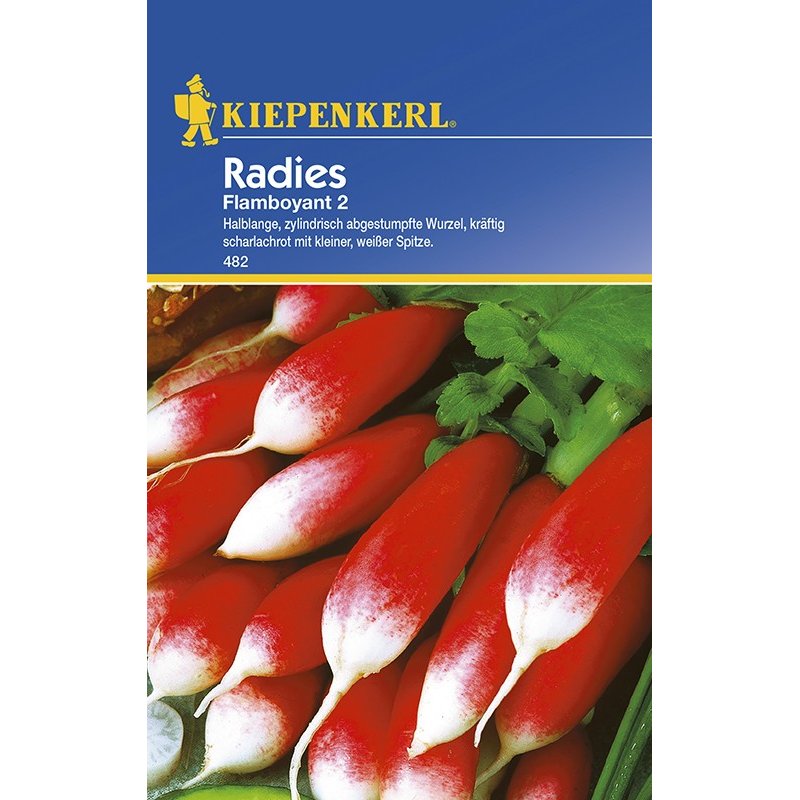
Early cylindrical red and white radish. Suitable for herb sauces, vegetable dishes and salads, with rosemary and sage it's ideal for fish dishes.
 Wide range of quality products
Seeds, essential oils, growing supplies and exotic plants in one place
 Eco-friendly range
We prefer natural and gentle products
 Expert advice
We help you grow – guides, blog and personal support
 Delivery across the EU
PPL, DPD, GLS and local carriers – pickup point or home delivery
Radish is a root vegetable originating from Japan. It is characterized by its distinctive taste and is undemanding to grow. Its spicy flavour comes from mustard oil. Radishes contain large amounts of vitamin C and folic acid. They also contain calcium, sulphur, carotene, potassium and vitamin B. Moreover, they are suitable for diets because they contain minimal fat. They are very popular in the kitchen. They are best when consumed fresh, for example in salads and spreads.
For early sowing in open ground, it is advisable to choose sunny locations, for summer rather shaded ones. We water radishes in the morning and evening. To prevent bulb cracking, it is advisable to limit soil moisture fluctuations through watering. During vegetation, we remove weeds from radish beds and carefully hoe them.
Spring sowing in beds is carried out as soon as the soil dries. We sow in rows 15-20 cm apart and to a depth of 1 cm. After germination and formation of cotyledon leaves, we thin out to 3-4 cm.
Radishes can be pre-grown in a warm greenhouse or cold frame from February. In this case, we sow in rows approximately 10 cm apart. After germination, we also thin out the plants.
For growing radishes, permeable, lighter to medium-heavy, deeply worked soil that is rich in humus and has sufficient soil moisture is suitable.
We do not fertilize radishes with farmyard manure. They would accumulate nitrates, which are dangerous to the human body. We do not fertilize radishes during vegetation. It is advisable to use them as a preceding crop.
In overcrowded sowings, there is a risk of attack by the fungal disease of seedling necks known as damping off. The affected neck turns brown and the seedlings die. We establish sparse sowing and maintain only moderate moisture.
Irregular watering is associated with bulb cracking, which develops for example during rains after a long period of drought.
Root flies, whose larvae create tunnels in the root heads, are a significant pest of radishes. Non-woven fabric will prevent root fly flies from laying eggs on radish root necks. For chemical protection, it is advisable to use Sumithion Super. Regular watering also prevents attack by flea beetles, which nibble the leaves.
We harvest radishes as needed when they are ripe. We recognize ripeness by the size of the bulb.
Data sheet
Specific References
Your review appreciation cannot be sent
Report comment
Report sent
Your report cannot be sent
Write your review
Review sent
Your review cannot be sent
Early cylindrical red and white radish. Suitable for herb sauces, vegetable dishes and salads, with rosemary and sage it's ideal for fish dishes.
check_circle
check_circle