 Essential oils
 Aroma lamps
 Aroma Diffusers
 Vegetables
 Herbs and spices
 Ornamental Plant Seeds
 Grass mixtures
 Sprouts and microgreens
 Exotic Fruit and Vegetables
 Exotic herbs
 Exotic trees and shrubs
 Ornamental exotic plants
 Espresso coffee
 Ecological coffee preparation
 Thermal mugs and coffee cups
 Aeropress
 Thermos flasks and thermal mugs for coffee and tea
 Moka pot
 Filter coffee
 Coffee blends
 Water filtration
 Coffee grinders
 Cleaning the Coffee Maker
 Ecological Cleaning of Coffee Machines
 Coffee makers
 Coffee Preparation
 Coffee Accessories
 For wildlife and pets
 Chocolate and others
 Hemp food products
 Hemp cosmetics
 Bongs - water pipes
 Blunts and tubes
 E-liquids with Terpenes and CBD
 Grinders and Mills
 Papers and filters
 Smoking accessories
 Vaporizers
 Air fresheners
 CBD sprays
 CBD and CBN crystals
 CBD body and facial care
 Weeds
 CBD suppositories and capsules
 CBD oils and drops
 CBG oils and drops
 Fashion and Decoration
 Kitchen essentials and cooking
 Christmas Decorations and Accessories
 Gift Sets
 Bird feeders
 Seasonal and Special Tools

 Our products
 Aromatherapy - essential oils
 Seeds
 Growing supplies
 Cultivation and Gardening Supplies
 Hydroponics and indoor growing
 Protective equipment and gardening tools
 Exotic plants
 Roasted coffee
 Accessories for coffee makers
 Food products
 Natural cosmetics
 Smoking supplies
 CBD and CBG products
 House and garden

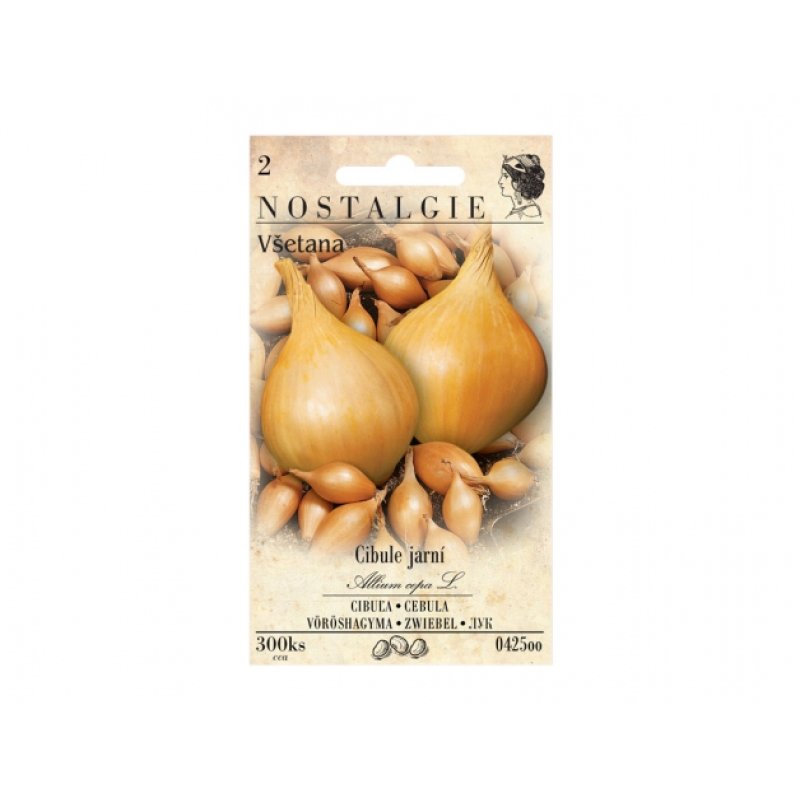
Traditional proven semi-early variety. The flesh is white to yellowish, with a fine, sweet taste. The package contains 300 seeds.
 Wide range of quality products
Seeds, essential oils, growing supplies and exotic plants in one place
 Eco-friendly range
We prefer natural and gentle products
 Expert advice
We help you grow – guides, blog and personal support
 Delivery across the EU
PPL, DPD, GLS and local carriers – pickup point or home delivery
Onion is an ancient vegetable originating from Central Asia, known even to the ancient Egyptians and Sumerians. It contains many elements - iron, zinc, magnesium, phosphorus, potassium, sodium, calcium, copper, sulfur and even a little iodine. It also contains folic acid, vitamin C, E and a range of B vitamins.
We know several types of onions - winter onions, shallots, pearl onions or the mentioned culinary onion. Just choose and start growing!
Requires a sunny location, but not direct sunlight. The soil should be permeable, well-worked with a sufficient dose of nutrients. Shade doesn't suit it. The plant has the greatest watering requirements after sowing and during bulb formation. In wet weather, we don't recommend watering in the evening. There is a risk of downy mildew infection. We don't recommend growing onions in the same bed for 4-5 years to reduce pest and disease attacks.
Direct sowing: spring sowing begins from March to April. Rows should be 20-30 cm apart, sowing depth 15-20 mm. Sowing of winter varieties is done from August 20th to the end of the month. The onion should develop 3-4 leaves before winter. Winter varieties are harvested from May to June.
Sowing sets: onions are not peeled. Before planting, they must be soaked in e.g. Rovral 50WP or Rovral FLO. Planting is done at the end of March. We plant in rows 25-30 cm apart. The distance in rows should be 10 cm, sowing depth 4-6 cm.
Onions thrive best on permeable, fertile sandy-loam soils. Optimal pH 6.5.
Onions have a short growing season and therefore don't need many nutrients. They don't tolerate direct fertilization with farmyard manure. Before sowing or planting, fertilize with 80g N, 30g P and 100g K. In the 2-3 leaf development phase, 30g N as nitrate. During the first fertilization - before sowing - we apply the most nitrogen, but the lowest proportion of P2O5 and K2O. Onions are demanding of sulfur, which we apply in the form of potassium sulfate. We can use special fertilizers designed for sulfur-containing plants.
Plants are attacked by onion flies, which lay eggs at the plant's neck. The hatched larvae devour the plant. We eliminate them with Diazinon or Sumithion preparations. Onions grown from sets are sensitive to attack by leek moth. It lays eggs on the leaves of emerging onions. They then curl and the plant gradually dies. We preventively counter this pest already during planting by covering the bed with non-woven fabric. If we haven't applied fabric, one of the preparations Sumithion, Karate or Dragon will help.
In wet weather, there is a risk of downy mildew infection. It manifests itself by yellowing of leaves and brown spots. The leaves die off and the onion rots. We eliminate the disease with Novozir or Kuprikol.
We harvest onions when the foliage begins to yellow. The stems begin to bend to the ground. Then we pull the onion out by the foliage and can leave them to dry on the bed for one to two weeks.
Data sheet
Specific References
Your review appreciation cannot be sent
Report comment
Report sent
Your report cannot be sent
Write your review
Review sent
Your review cannot be sent
Traditional proven semi-early variety. The flesh is white to yellowish, with a fine, sweet taste. The package contains 300 seeds.
check_circle
check_circle