 Essential oils
 Aroma lamps
 Aroma Diffusers
 Vegetables
 Herbs and spices
 Ornamental Plant Seeds
 Grass mixtures
 Sprouts and microgreens
 Exotic Fruit and Vegetables
 Exotic herbs
 Exotic trees and shrubs
 Ornamental exotic plants
 Espresso coffee
 Ecological coffee preparation
 Thermal mugs and coffee cups
 Aeropress
 Thermos flasks and thermal mugs for coffee and tea
 Moka pot
 Filter coffee
 Coffee blends
 Water filtration
 Coffee grinders
 Cleaning the Coffee Maker
 Ecological Cleaning of Coffee Machines
 Coffee makers
 Coffee Preparation
 Coffee Accessories
 For wildlife and pets
 Chocolate and others
 Hemp food products
 Hemp cosmetics
 Bongs - water pipes
 Blunts and tubes
 E-liquids with Terpenes and CBD
 Grinders and Mills
 Papers and filters
 Smoking accessories
 Vaporizers
 Air fresheners
 CBD sprays
 CBD and CBN crystals
 CBD body and facial care
 Weeds
 CBD suppositories and capsules
 CBD oils and drops
 CBG oils and drops
 Fashion and Decoration
 Kitchen essentials and cooking
 Christmas Decorations and Accessories
 Gift Sets
 Bird feeders
 Seasonal and Special Tools

 Our products
 Aromatherapy - essential oils
 Seeds
 Growing supplies
 Cultivation and Gardening Supplies
 Hydroponics and indoor growing
 Protective equipment and gardening tools
 Exotic plants
 Roasted coffee
 Accessories for coffee makers
 Food products
 Natural cosmetics
 Smoking supplies
 CBD and CBG products
 House and garden

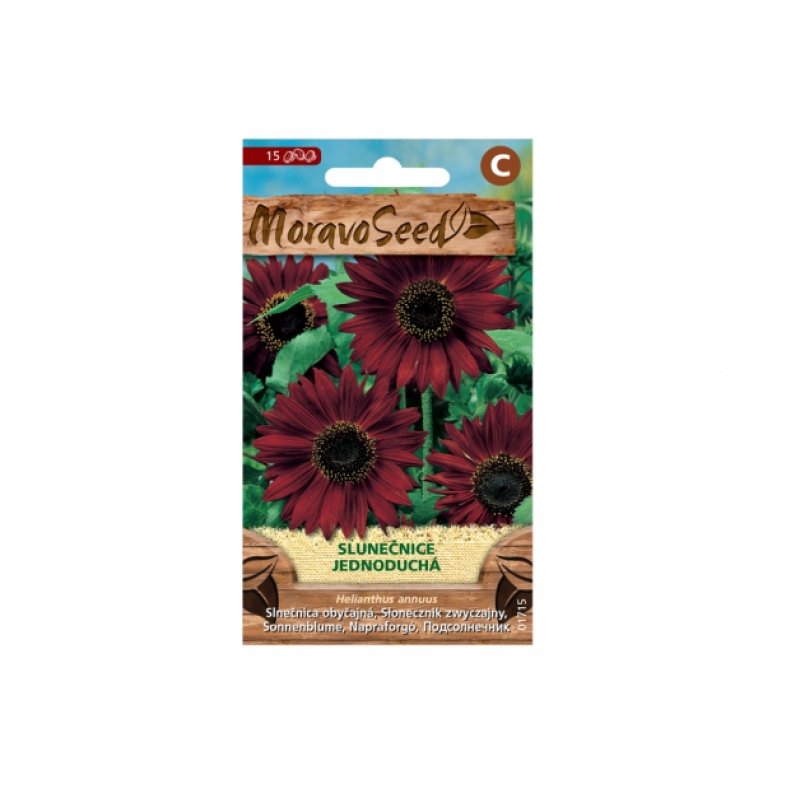
Sunflowers cloaked in carmine red color. Their unconventional color makes them an excellent specimen in mixed plantings. Package contains 15 seeds.
 Wide range of quality products
Seeds, essential oils, growing supplies and exotic plants in one place
 Eco-friendly range
We prefer natural and gentle products
 Expert advice
We help you grow – guides, blog and personal support
 Delivery across the EU
PPL, DPD, GLS and local carriers – pickup point or home delivery
Native to North America. Sunflower is an annual plant that grows up to 4 metres tall and has only one large flower. There are also varieties as short as 30 cm with multiple stems and flowers. The flower heads reach a diameter between 10 and 40 cm. These varieties have more refined flowers, with both single and double-flowered cultivars available. It blooms from July until autumn.
The sunflower turns its flower towards the sun during the day. This phenomenon is called heliotropism. The seeds contain about 45% vegetable oil, proteins, glycerides, sterols and other elements. Sunflower oil is produced from them, which contains mainly linoleic and oleic acid. The seeds are edible. They are added to bread, pastries, salads, but can also be consumed on their own.
Sunflowers require a sunny, warm location that is sheltered from wind. It should be south or southwest facing. They require consistently moist soil that should never dry out. The plant may not recover and could die. The plants don't root deeply, so it's better to provide support near the stem to prevent breaking. Once the seeds begin to ripen in the faded flower heads, cut off the entire flower - this can extend the flowering period.
Sow seeds at the end of April to early May directly into the soil at a depth of about 2.5 cm and spacing of about 20 cm. You can also pre-grow seedlings at home in seed trays and plant young plants into beds.
Well-drained loamy-sandy soil that is well supplied with nutrients is suitable.
Apply complete NPK fertilisers once every 14 days. For example, you can use Kristalon or Cererit.
Very humid conditions result in stem blackening. Waterlogging and insufficient support can cause uprooting or stem breaking. Aphids are the most common pests on these plants. Immediately treat affected plants with Decis.
Data sheet
Specific References
Your review appreciation cannot be sent
Report comment
Report sent
Your report cannot be sent
Write your review
Review sent
Your review cannot be sent
Sunflowers cloaked in carmine red color. Their unconventional color makes them an excellent specimen in mixed plantings. Package contains 15 seeds.
check_circle
check_circle