 Essential oils
 Aroma lamps
 Aroma Diffusers
 Vegetables
 Herbs and spices
 Ornamental Plant Seeds
 Grass mixtures
 Sprouts and microgreens
 Exotic Fruit and Vegetables
 Exotic herbs
 Exotic trees and shrubs
 Ornamental exotic plants
 Espresso coffee
 Ecological coffee preparation
 Thermal mugs and coffee cups
 Aeropress
 Thermos flasks and thermal mugs for coffee and tea
 Moka pot
 Filter coffee
 Coffee blends
 Water filtration
 Coffee grinders
 Cleaning the Coffee Maker
 Ecological Cleaning of Coffee Machines
 Coffee makers
 Coffee Preparation
 Coffee Accessories
 For wildlife and pets
 Chocolate and others
 Hemp food products
 Hemp cosmetics
 Bongs - water pipes
 Blunts and tubes
 E-liquids with Terpenes and CBD
 Grinders and Mills
 Papers and filters
 Smoking accessories
 Vaporizers
 Air fresheners
 CBD sprays
 CBD and CBN crystals
 CBD body and facial care
 Weeds
 CBD suppositories and capsules
 CBD oils and drops
 CBG oils and drops
 Fashion and Decoration
 Kitchen essentials and cooking
 Christmas Decorations and Accessories
 Gift Sets
 Bird feeders
 Seasonal and Special Tools

 Our products
 Aromatherapy - essential oils
 Seeds
 Growing supplies
 Cultivation and Gardening Supplies
 Hydroponics and indoor growing
 Protective equipment and gardening tools
 Exotic plants
 Roasted coffee
 Accessories for coffee makers
 Food products
 Natural cosmetics
 Smoking supplies
 CBD and CBG products
 House and garden

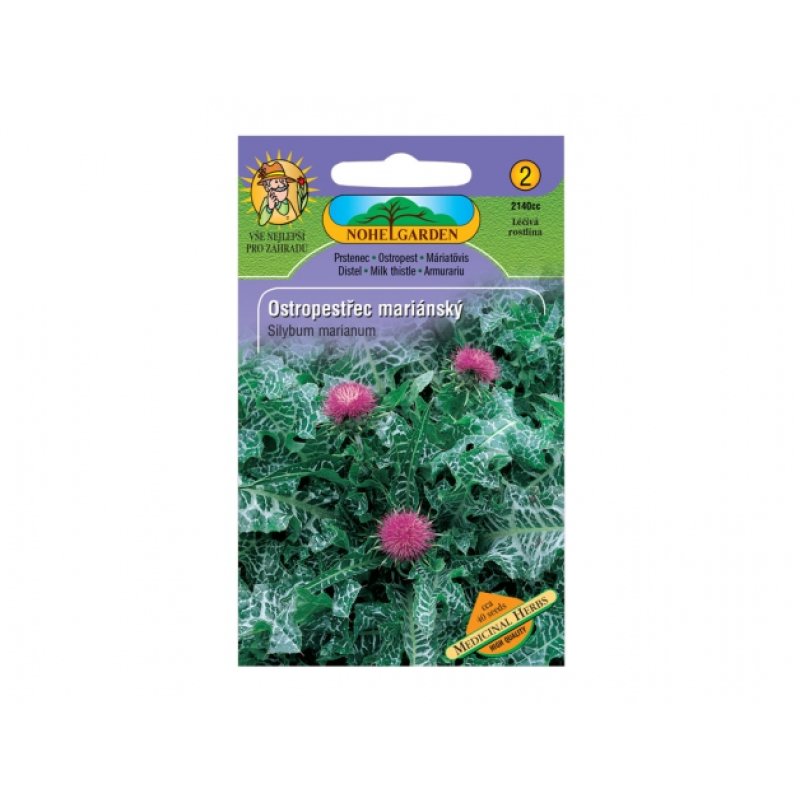
A beautiful plant that is not only medicinal but also ornamental. The package contains 40 seeds.
 Wide range of quality products
Seeds, essential oils, growing supplies and exotic plants in one place
 Eco-friendly range
We prefer natural and gentle products
 Expert advice
We help you grow – guides, blog and personal support
 Delivery across the EU
PPL, DPD, GLS and local carriers – pickup point or home delivery
A well-known annual or biennial herb. It is grown as an annual and produces fruit in the second year. It comes from the Asteraceae family. It grows up to 2 m tall. In the second year after planting, spiny leaves with white veins appear. At the end of June, milk thistle blooms purple. At first glance, it is very similar to common thistle. At the end of summer, the flowers turn into fruits, which are then harvested, dried and utilized.
It contains flavonolignans silybinin, silydianin and silychristin (silycristin), collectively called silymarin. Its seeds are a significant source of silymarin. Today, in addition to the seeds themselves, teas, oils, tinctures, ointments, tablets and capsules are used.
It can be used as an ornamental solitary plant. Its majesty and colourfulness stand out best. It can also be grown in beds alone or in mixed plantings. The flowers also look beautiful in a vase.
It requires a place where there is plenty of light, but not too dry and the place is protected from wind. During the growing season in the bed, we remove weeds from the milk thistle and water and fertilize regularly.
Seeds are sown directly at the site. The most suitable time is to sow seeds from April to May. Before sowing, soak the seeds in warm water. We sow to a depth of 2 to 3 cm in rows that are 40 - 50 cm apart. Seeds germinate in about 20 days. In the rows, we thin the plants to a distance of 20 cm, i.e. to a spacing of 40 x 20 cm.
The soil should be high quality, loamy with a neutral reaction, rich in calcium.
Basic fertilization consists of incorporating well-aged compost in autumn into the bed where milk thistle will be grown. During the growing season, you can fertilize in the form of watering with liquid water-soluble fertilizer, e.g. Cererit, Kristalon.
A health problem, especially in sub-mountain areas, is grey mould. Prevention against this disease is early sowing. In warm regions, Fusarium fungi cause damage. From time to time, the occurrence of chicory powdery mildew is recorded, and recently also leaf spot caused by species of the genus Alternaria and Septoria. It is worth treating seeds with e.g. Fundazol and using biologically suitable seeds. Among animal pests, aphids, caterpillars of polyphagous pests and thistle moths cause damage.
Whole flower heads are harvested before ripening. Then they are left to ripen and dry in a warm, airy and dark place and then cleared of fluff and sorted.
Data sheet
Specific References
Your review appreciation cannot be sent
Report comment
Report sent
Your report cannot be sent
Write your review
Review sent
Your review cannot be sent
A beautiful plant that is not only medicinal but also ornamental. The package contains 40 seeds.
check_circle
check_circle