
 Our products
 Aromatherapy - essential oils
 Essential oils
 Aroma lamps
 Aroma Diffusers
 Seeds
 Vegetables
 Herbs and spices
 Ornamental Plant Seeds
 Grass mixtures
 Sprouts and microgreens
 Growing supplies
 Cultivation and Gardening Supplies
 Hydroponics and indoor growing
 Protective equipment and gardening tools
 Exotic plants
 Exotic Fruit and Vegetables
 Exotic herbs
 Exotic trees and shrubs
 Ornamental exotic plants
 Roasted coffee
 Espresso coffee
 Ecological coffee preparation
 Thermal mugs and coffee cups
 Aeropress
 Thermos flasks and thermal mugs for coffee and tea
 Moka pot
 Filter coffee
 Coffee blends
 Accessories for coffee makers
 Water filtration
 Coffee grinders
 Cleaning the Coffee Maker
 Ecological Cleaning of Coffee Machines
 Coffee makers
 Coffee Preparation
 Coffee Accessories
 Food products
 For wildlife and pets
 Chocolate and others
 Hemp food products
 Natural cosmetics
 Hemp cosmetics
 Smoking supplies
 Bongs - water pipes
 Blunts and tubes
 E-liquids with Terpenes and CBD
 Grinders and Mills
 Papers and filters
 Smoking accessories
 Vaporizers
 Air fresheners
 CBD and CBG products
 CBD sprays
 CBD and CBN crystals
 CBD body and facial care
 Weeds
 CBD suppositories and capsules
 CBD oils and drops
 CBG oils and drops
 House and garden
 Fashion and Decoration
 Kitchen essentials and cooking
 Christmas Decorations and Accessories
 Gift Sets
 Bird feeders
 Seasonal and Special Tools
Natural skin care is experiencing a huge boom – and no wonder. More and more people are looking for gentle yet effective alternatives to conventional cosmetics and medications. Essential oils attract attention not only for their potency but also for their ability to support skin going through various troubles. Scientific studies and practical experience suggest they can help with acne, eczema, psoriasis, or irritation. In this article, we'll look at how specific oils work, what research says, and how to safely use them in everyday skin care.
In short: Essential oils such as tea tree, lavender, chamomile or frankincense are used as complementary aromatic care for acne-prone, dry, flaky or irritated skin, not as a treatment. Always dilute them to 1–2 % (1–2 drops per 5 ml of carrier oil) and do a 24-hour patch test first.
| Recommended dilution | 1–2 drops per 5 ml of carrier oil (1–2 %) |
|---|---|
| Patch test | 24 hours on the inner wrist |
| Bath | 3–5 drops mixed in a tablespoon of milk, honey or vegetable oil |
| Photosensitising oils | bergamot, lemon, grapefruit |
| Common carrier oils | jojoba, sweet almond, rosehip, coconut |
Do you have sensitive skin? Are you troubled by acne, eczema, psoriasis, or frequent skin irritation? You're not alone. Many of us struggle with similar issues. And while the first steps often lead to the pharmacy or dermatologist, many people are also looking for gentle complementary care options. One of these options is essential oils, which are traditionally used in aromatherapy as part of skincare.
In this article, we'll look at how essential oils are used in aromatherapy for different skin types, how to safely incorporate them into your daily routine, and what to watch out for. Dive into the world of scents with us and discover how natural aromatic care can complement your everyday skincare.
Table of Contents
- What are essential oils and how do they work?
- Common skin problems and aromatic care with essential oils
- Using carrier oils when applying essential oils
- How to use essential oils
- Conclusion: Discover the power of essential oils for healthy and beautiful skin
- Frequently asked questions about using essential oils on skin
What are essential oils and how do they work?
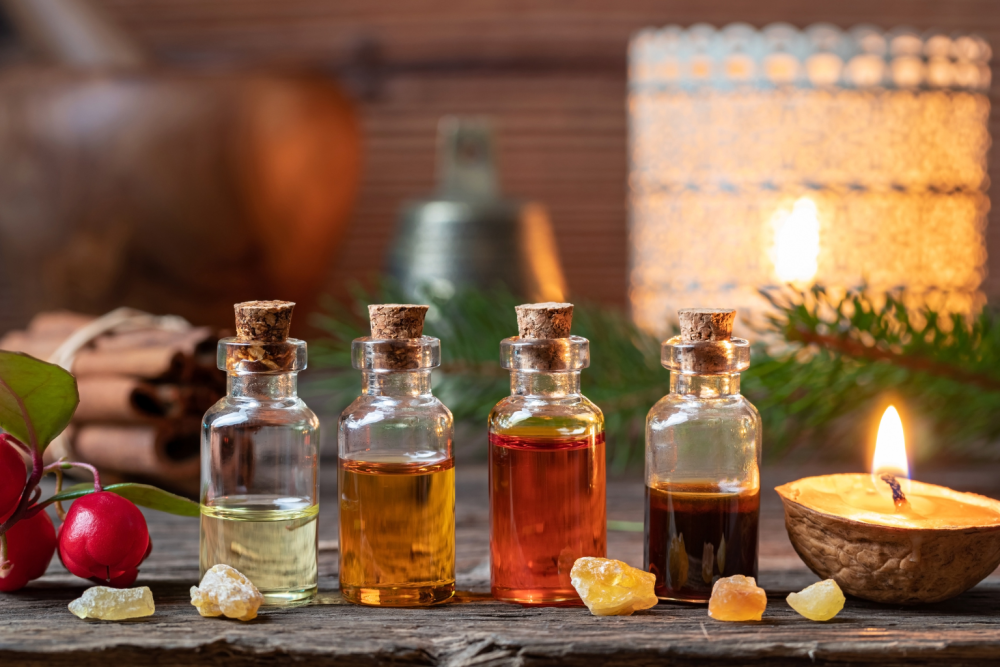
Essential oils are fragrant essences extracted from plants – from flowers, leaves, bark, seeds, or roots. They are highly concentrated and contain aromatic compounds that naturally serve for protection and regeneration in plants. In aromatherapy, these compounds are attributed with a range of properties that can complement regular skincare.
As part of complementary care, essential oils are often incorporated where the skin is tense, reddened, or prone to imperfections. Many users utilize them in skincare prone to excessive sebum production or when experiencing dryness and discomfort.
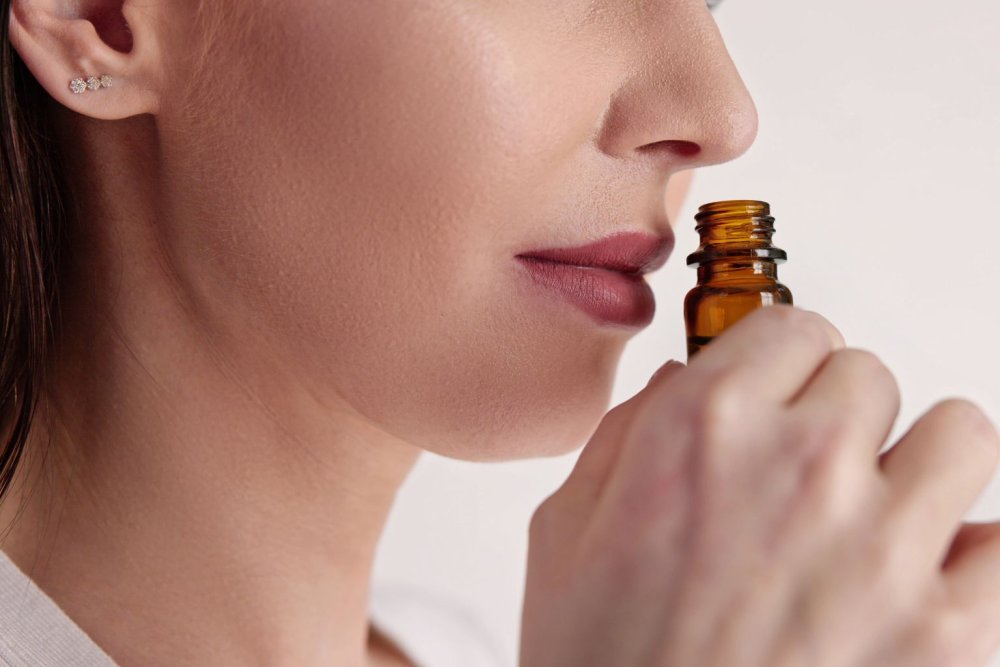
Besides direct use in skincare, essential oils are also applied in aromatherapy. Their scents affect our psyche – they can contribute to relaxation, induce a sense of calm, or conversely invigorate. Stress and psychological discomfort can also influence how our skin feels and looks. Aromatherapy can therefore be an interesting complement to overall skincare.
💡Get inspired by our article: 5 Best Essential Oils for Relaxation and Calming
Common Skin Issues and Aromatic Care with Essential Oils
Essential Oils and Acne
Acne is a chronic inflammatory skin condition caused by excessive activity of sebaceous glands. It manifests as pimples, inflamed spots and often oily skin as well. Basic treatment should always be in the hands of a specialist, but some people also incorporate essential oils as complementary aromatic care for skin prone to imperfections.
In aromatherapy, oils with refreshing, herbal and "clean" scents are particularly often mentioned for this skin type:
- Tea tree – popular in care for problematic and oily skin
- Lavender – associated with calming care for irritated skin
- Thyme – distinctive herbal scent, traditionally used in cleansing blends
- Sage – often included in blends for skin prone to imperfections
- Chamomile – gentle herbal choice for sensitive and tense skin
Essential Oils and Eczema (Atopic Dermatitis)
Eczema and other forms of dermatitis represent inflammatory skin conditions that manifest as dryness, redness, itching and flaking. They always belong in the competence of a doctor or dermatologist. As part of complementary care, however, people often reach for gentle preparations and aromatic care intended to give the skin a feeling of comfort.
In aromatherapy, the following are often mentioned in this context:
- Chamomile – traditionally associated with calming and gentle care, often chosen even for sensitive skin
- Calendula – popular in products for stressed, cracked and dry skin
- Frankincense – used in care for skin that appears tense and reddened
- Lavender – often included in blends for dry and sensitive skin prone to itching
💡Practical tip: Mix 2 drops of lavender and 1 drop of chamomile into 1 teaspoon of shea butter – many users have grown fond of this gentle blend as overnight care for dry, stressed areas on the skin.
Essential Oils and Psoriasis
Psoriasis is an autoimmune condition that causes excessive production of skin cells. The result is reddened, scaly and often itchy patches. Basic treatment should always be in the hands of a doctor. As part of complementary aromatic care, blends are sometimes used that aim to give the skin a feeling of softness and relief.
In aromatherapy, the following are particularly mentioned in this context:
- Geranium – popular in care for tense and scaly skin
- Frankincense – often included in blends for skin prone to redness
- Lavender – used in care for skin prone to discomfort and itching
- Chamomile – a gentle choice for skin that needs a calming touch

Essential Oils and Cold Sores
Cold sores are viral infections that manifest as painful blisters, usually on the lips or around the mouth. It's always advisable to follow your doctor's recommendations. As part of accompanying care, some people use gently diluted essential oils on the skin around the lips to give it a feeling of cleanliness and freshness.
In aromatherapy, the following are often mentioned in this context, for example:
- Tea tree – intense herbal scent, popular in cleansing blends for skin
- Peppermint – cooling, refreshing fragrance that may bring a pleasant feeling of relief
- Oregano – distinctive herbal aroma, mentioned in professional literature in connection with skin care
- Eucalyptus – fresh, "clean" scent, often used in inhalation blends
- Clove – spicy fragrance traditionally used in oral care and around the lips
💡Recommendation: At the first signs of tension or discomfort around the lips, some users gently apply very diluted tea tree oil in a carrier oil only to the surrounding skin. Such care may support a feeling of cleanliness and greater skin comfort. However, always ensure gentle dilution and avoid contact with mucous membranes.
Essential oils and hives, irritation and rash
Many skin problems manifest as rashes, redness or itching – they may be a reaction to allergens, stress or chemicals. Basic diagnosis and treatment belongs to a doctor. However, in complementary care, people often look for gentle fragrances and plant oils that give the skin a feeling of calm and care.
- Rose – very gentle floral scent, popular in sensitive skin care
- Lavender – often chosen for its calming aroma and pleasant "herbal" character
- Chamomile – suitable where skin is tense and sensitive
- Geranium – harmonizing scent that people have come to love when experiencing redness and discomfort
- Eucalyptus – fresh cooling fragrance, often used in refreshing blends
Essential oils and fungal infections
Fungal infections (such as foot mycoses, nail infections or skin candidiasis) are a common problem that should always be assessed by a doctor. However, in aromatherapy, essential oils with a distinctive herbal and "cleansing" scent are often mentioned in connection with foot and nail care.
In professional literature, antimycotic properties are described for some oils, but in practice they are mainly used as complementary aromatic care:
- Tea tree – frequently included in blends for foot and nail skin care
- Oregano – distinctive herbal scent, mentioned in literature in connection with skin care
- Thyme – strongly aromatic oil, often used in cleansing blends
- Sage – popular in skin care that needs a feeling of freshness
- Lavender – complements blends for stressed skin with a gentler floral scent
Types of Essential Oil Properties in Skin Care
Soothing and Caring Properties
Some essential oils, such as lavender or chamomile, are associated in aromatherapy with a calming scent and gentle care for reddened or tense skin. Many people incorporate them where they want to give their skin a sense of relief and comfort.
Cleansing and Refreshing Properties
Tea tree, oregano, thyme, and sage are typical representatives of oils with a distinctive herbal scent that people seek out when caring for skin prone to imperfections, in the foot area, or nails. In literature, they are often mentioned for their cleansing and refreshing properties.
Care for Stressed Skin
Lavender or sage oil are typically included in blends for skin that is mechanically stressed, irritated, or dry. However, this is always complementary care – in cosmetic recipes, you'll find them in balms or massage oils, for example.
Aromatherapeutic Calming
Peppermint, chamomile, or rose are popular for moments when we long for overall calming – their scent can contribute to a feeling of relaxation and well-being. When our psyche is in balance, our skin often "feels" better too.
| Type of care / area | What people most commonly address | Oil scents traditionally used in aromatherapy | Properties users describe |
|---|---|---|---|
| Care for acne-prone skin | Pimples, oily skin, feeling of inflammation | Tea tree, lavender, thyme, sage, chamomile | Cleansing, soothing care, feeling of "cleaner" skin |
| Care for dry and tight skin | Dryness, flakes, itching | Chamomile, calendula, frankincense, lavender | Soothing, softening and comfortable feeling on the skin |
| Care for skin prone to flaking | Scales, tension, feeling of inflammation | Geranium, frankincense, lavender, chamomile | Feeling of smoothness, calming and greater comfort |
| Care for skin around the lips | Blisters, tightness, burning | Tea tree, peppermint, oregano, eucalyptus, clove | Refreshing, cleansing and soothing feeling on the skin |
| Care for irritated and sensitive skin | Redness, itching, sensitivity | Rose, geranium, eucalyptus, lavender, chamomile, birch | Gentle, soothing and refreshing care |
| Care for foot and nail skin | Stressed skin, feeling of moisture, discomfort | Tea tree, oregano, thyme, sage, lavender | Cleansing, refreshing care, feeling of "lighter" feet |
Using carrier oils when applying essential oils
Essential oils are highly concentrated substances that should never be applied to the skin undiluted. To prevent irritation while ensuring gentle absorption of aromatic compounds, we use so-called carrier (vegetable) oils. These serve as a gentle base – we evenly disperse the essential oil in them, facilitate its application, and simultaneously support skin nourishment.
The most commonly used carrier oils include:
- Jojoba oil – lightweight, highly stable, popular for oily and acne-prone skin care
- Sweet almond oil – nourishing and gentle on sensitive skin, often used in children's care (when properly diluted)
- Rosehip oil – popular for caring for stressed skin that needs a regenerating touch
- Coconut oil – has a pleasant texture, spreads easily and leaves skin feeling soft
The typical dilution of essential oil is 1–2 drops per 5 ml of carrier oil (approximately one teaspoon). For children, pregnant women and sensitive individuals, we recommend using an even lower concentration.
How to Use Essential Oils?
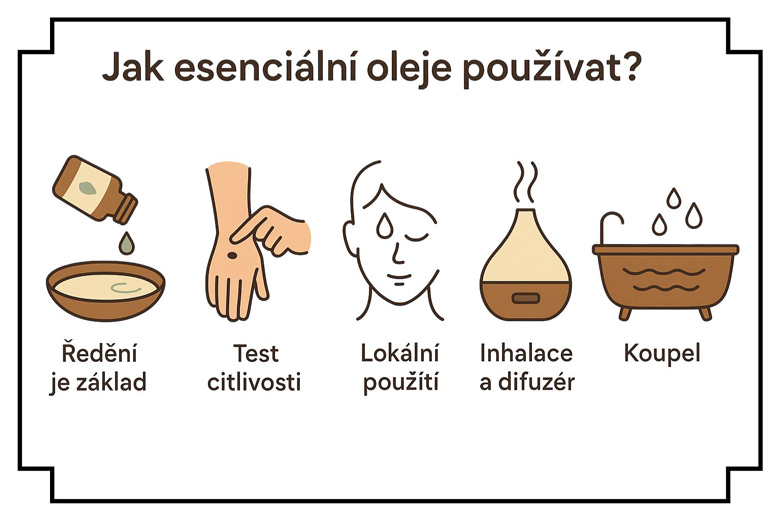
- Dilution is key: Never use essential oils undiluted directly on the skin. Mix them with a carrier oil – for example, coconut, almond, or jojoba oil. The recommended dilution for skin is 1–2% (1–2 drops per teaspoon of carrier oil).
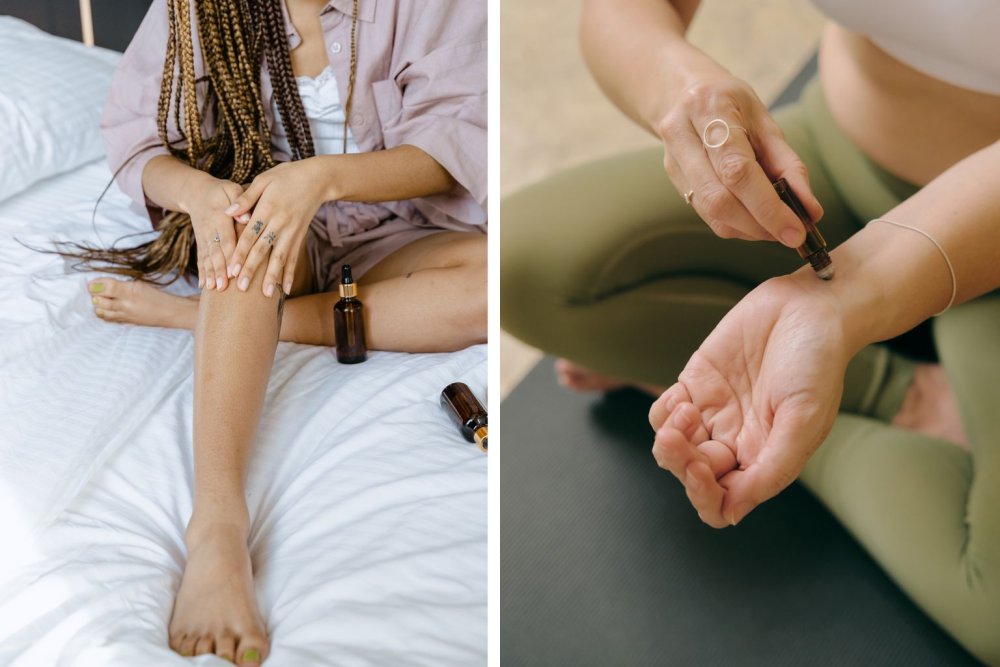
- Sensitivity test: Before you start, perform a patch test on a small area of skin (e.g., inner wrist). If no redness, itching, or stinging appears within 24 hours, use is likely safe.
- Topical application: Apply the mixture directly to a specific area (for example, a single blemish, irritated spot, or dry patch). Don't use it over the entire face, especially with strongly aromatic oils.
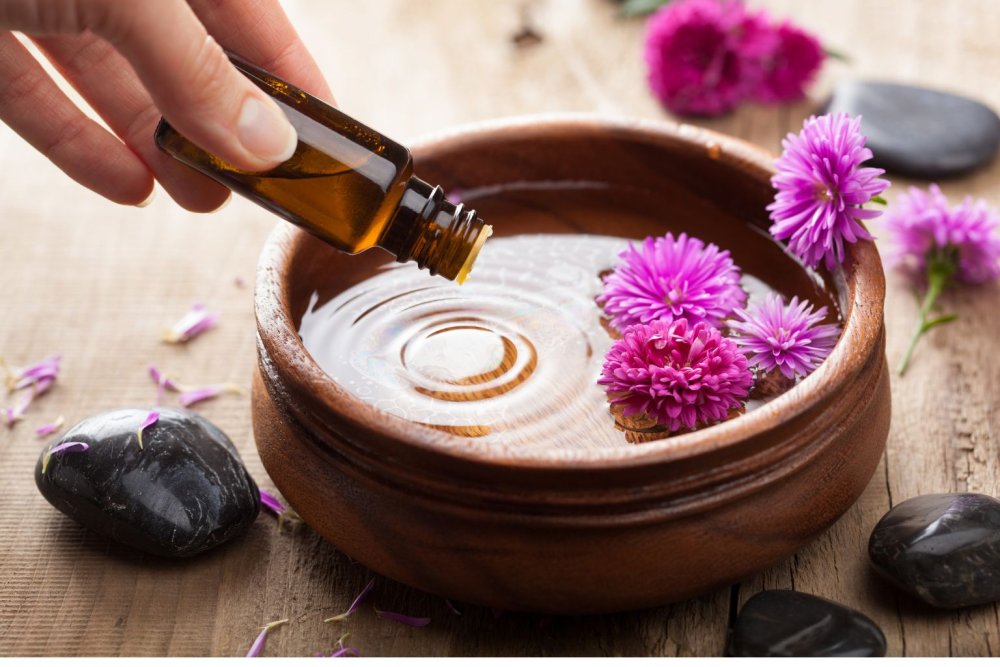
- Inhalation and diffuser: Using a diffuser, oils can be inhaled to influence mood, stress levels, and subjective perception of skin issues.
- Bath with oils: Add 3–5 drops of oil mixed in a tablespoon of milk, honey, or vegetable oil to your bath. Not only will it scent the bath, but it can also complement overall skin care.
- Beware of citrus oils: Oils such as bergamot, lemon, or grapefruit can cause photosensitivity (skin may be more sensitive to sun). After using them, don't expose your skin to sunlight. We recommend using such oils ideally in the evening.
💡Get inspired by our article: Guide to Using Essential Oils
Conclusion: Discover the Power of Essential Oils for Healthy and Beautiful Skin
Essential oils can be a pleasant natural complement to skin care – whether it's sensitive, dry, oily, or problematic. When used correctly, they can contribute to a feeling of greater comfort, give your skin a scent you love, and make your daily rituals more enjoyable. Moreover, their aroma can positively influence our mood – helping us calm down, relax, or boost energy. And that's where their magic lies.
Why Include Essential Oils in Your Routine?
- Natural composition – without synthetic fragrance
- Wide range of uses – for different skin types and needs
- Aromatherapeutic benefits – positive effect on mental wellbeing
- Universal application – in baths, massage oils, facial blends and diffusers
While essential oils are excellent helpers, they need to be approached with respect. Remember that they are highly concentrated and it's important to use them with caution. Before adding a new oil to your routine, do a small tolerance test. If you have sensitive skin or suffer from skin conditions, it's worth consulting an expert about their use.
Discover our range of essential oils and find the scent and type of care that will best suit your skin and needs.
Warning: Essential oils are not medicine and do not replace medical care. The information in this article is for educational purposes only and does not replace diagnosis or individual expert recommendations. In case of serious or long-term skin problems, we always recommend consultation with a dermatologist or doctor.