 Essential oils
 Aroma lamps
 Aroma Diffusers
 Vegetables
 Herbs and spices
 Ornamental Plant Seeds
 Grass mixtures
 Sprouts and microgreens
 Exotic Fruit and Vegetables
 Exotic herbs
 Exotic trees and shrubs
 Ornamental exotic plants
 Espresso coffee
 Ecological coffee preparation
 Thermal mugs and coffee cups
 Aeropress
 Thermos flasks and thermal mugs for coffee and tea
 Moka pot
 Filter coffee
 Coffee blends
 Water filtration
 Coffee grinders
 Cleaning the Coffee Maker
 Ecological Cleaning of Coffee Machines
 Coffee makers
 Coffee Preparation
 Coffee Accessories
 For wildlife and pets
 Chocolate and others
 Hemp food products
 Hemp cosmetics
 Bongs - water pipes
 Blunts and tubes
 E-liquids with Terpenes and CBD
 Grinders and Mills
 Papers and filters
 Smoking accessories
 Vaporizers
 Air fresheners
 CBD sprays
 CBD and CBN crystals
 CBD body and facial care
 Weeds
 CBD suppositories and capsules
 CBD oils and drops
 CBG oils and drops
 Fashion and Decoration
 Kitchen essentials and cooking
 Christmas Decorations and Accessories
 Gift Sets
 Bird feeders
 Seasonal and Special Tools

 Our products
 Aromatherapy - essential oils
 Seeds
 Growing supplies
 Cultivation and Gardening Supplies
 Hydroponics and indoor growing
 Protective equipment and gardening tools
 Exotic plants
 Roasted coffee
 Accessories for coffee makers
 Food products
 Natural cosmetics
 Smoking supplies
 CBD and CBG products
 House and garden


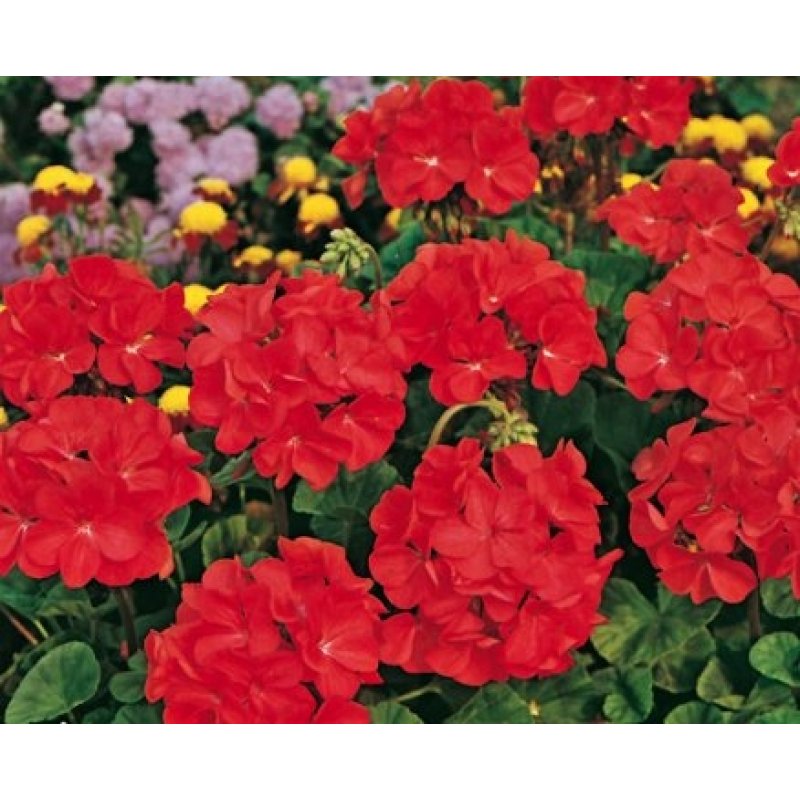
If you want a richly flowering balcony next year, definitely go for pelargoniums! They'll delight you with their blooms all summer long until frost. There's plenty to choose from! Pack contains 10 seeds.
 Wide range of quality products
Seeds, essential oils, growing supplies and exotic plants in one place
 Eco-friendly range
We prefer natural and gentle products
 Expert advice
We help you grow – guides, blog and personal support
 Delivery across the EU
PPL, DPD, GLS and local carriers – pickup point or home delivery
These are subshrubs and herbaceous plants from the Geraniaceae family, which have many hybrid forms. They naturally occur in tropical and subtropical areas, primarily in South Africa. Pelargonium is used as an ornamental flower, but also in cosmetics, as a dye plant, or for flavoring dishes. They form 4 large basic groups. Large-flowered pelargoniums (P. grandiflorum) are characterized by their large flowers (from white, through pink-red, to almost black, but also multicolored). They have lobed leaves with finely toothed edges. Ivy-leaved pelargoniums (P. peltatum) originate from peltate pelargonium and also have various forms with single or double flowers on long flower stems. A creeping stem is characteristic for them. They are used to beautify balconies. Zonal pelargoniums (P. zonale) have beautiful variegated leaves and flowers. Scented pelargoniums contain essential oils in their leaves, therefore they have a strong specific scent. They have light green leaves, deeply cut and small flowers, from white to purple color.
The abundance and persistence of flowering is legendary. Trailing geraniums are suitable for decoration on balconies, windows and terraces. They are undemanding to grow and are also resistant to pests. They bloom abundantly throughout the summer until October.
The location must be sufficiently bright and sunny in spring and summer. In late autumn and winter, we then place geraniums in a cooler room with temperatures between 10-15 degrees Celsius. We water geraniums daily, especially when they are in full sun. In winter we reduce watering, we don't fertilize the plants at all and allow them vegetative rest. In spring we remove dead parts and weak shoots from the plants. We cut back other overgrown shoots to a length of 15-25 centimeters.
Seeds are usually sown from January to February. We use purchased substrate designed for sowing and propagation. We sow seeds on the surface of the substrate. They germinate in light, so we must also provide them with enough light. Sowings are very sensitive to maintaining suitable temperature - ideal temperature is 20-24°C day and night. They usually germinate within 7-14 days. After germination we transplant plants into individual pots. We plant pelargoniums outdoors after the last frost.
It is suitable to use special substrates for pelargoniums. Generally they require nutrient-rich substrate.
Regular fertilization from late spring to early autumn is necessary. The most advantageous method of fertilization is to water plants with heavily diluted extract from good compost or chicken manure. It is also possible to use special fertilizers designed for geraniums. We apply fertilizer every week.
Geraniums grown from seed are more resistant especially to viruses. Viruses manifest in various shape and color anomalies of leaves (yellowing, ring patterns, deformation) and flowers. Overall stunting of plants is apparent. The only protection is immediate removal of affected plants.
Leaf edema appears in trailing geraniums. The cause is excess water in the soil or high air humidity. It manifests as enlargement of surface cells and formation of small green swellings. Protection is preventive - ensure balanced watering without waterlogging of the substrate.
Bacterial rot and wilting is the most serious disease of geraniums. Symptoms first appear on older leaves in the form of small oily or translucent spots, which gradually enlarge, merge together and dry out. Leaves gradually die from the oldest upwards. Affected plants must be destroyed. After removing infected plants, treat the crop with 0.2% Kuprikol 50 or Cuprocaffaro. We treat two to three times at seven-day intervals.
Pythium root rot of geranium manifests as blackening of the stem base and root rot. Black-brown spots may appear on stems. The disease mainly affects plant cuttings. Diseased cuttings must be continuously removed. Remaining healthy plants are treated with irrigation of 0.05% Polyversum (4 l/water/m²) or 0.25% Proplant (2-4 l/water/m²).
Rust only occurs on zonal geraniums. Yellow small spots first appear on leaves, on whose undersides raised brown spore deposits form, often arranged in circles. With stronger infestation, leaves dry out and fall off. Heavily infested plants must be destroyed, and for lighter occurrences, spraying with broad-spectrum fungicides based on sulfur or zinc helps.
Data sheet
Specific References
Your review appreciation cannot be sent
Report comment
Report sent
Your report cannot be sent
Write your review
Review sent
Your review cannot be sent
If you want a richly flowering balcony next year, definitely go for pelargoniums! They'll delight you with their blooms all summer long until frost. There's plenty to choose from! Pack contains 10 seeds.
check_circle
check_circle