 Essential oils
 Aroma lamps
 Aroma Diffusers
 Vegetables
 Herbs and spices
 Ornamental Plant Seeds
 Grass mixtures
 Sprouts and microgreens
 Exotic Fruit and Vegetables
 Exotic herbs
 Exotic trees and shrubs
 Ornamental exotic plants
 Espresso coffee
 Ecological coffee preparation
 Thermal mugs and coffee cups
 Aeropress
 Thermos flasks and thermal mugs for coffee and tea
 Moka pot
 Filter coffee
 Coffee blends
 Water filtration
 Coffee grinders
 Cleaning the Coffee Maker
 Ecological Cleaning of Coffee Machines
 Coffee makers
 Coffee Preparation
 Coffee Accessories
 For wildlife and pets
 Chocolate and others
 Hemp food products
 Hemp cosmetics
 Bongs - water pipes
 Blunts and tubes
 E-liquids with Terpenes and CBD
 Grinders and Mills
 Papers and filters
 Smoking accessories
 Vaporizers
 Air fresheners
 CBD sprays
 CBD and CBN crystals
 CBD body and facial care
 Weeds
 CBD suppositories and capsules
 CBD oils and drops
 CBG oils and drops
 Fashion and Decoration
 Kitchen essentials and cooking
 Christmas Decorations and Accessories
 Gift Sets
 Bird feeders
 Seasonal and Special Tools

 Our products
 Aromatherapy - essential oils
 Seeds
 Growing supplies
 Cultivation and Gardening Supplies
 Hydroponics and indoor growing
 Protective equipment and gardening tools
 Exotic plants
 Roasted coffee
 Accessories for coffee makers
 Food products
 Natural cosmetics
 Smoking supplies
 CBD and CBG products
 House and garden

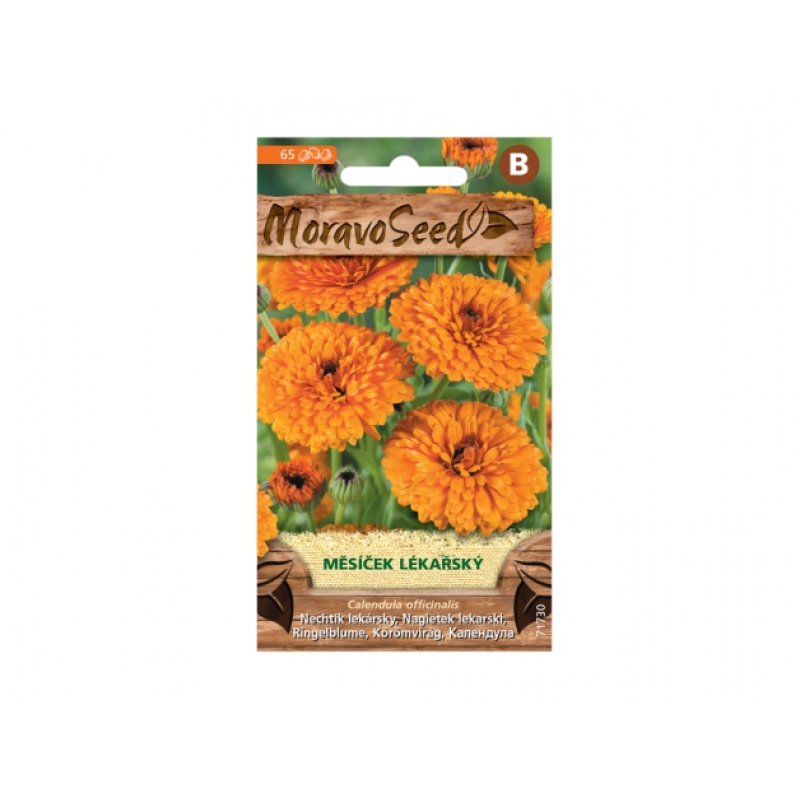
The beautiful marigold will be a decoration for any flower bed. In addition to its medicinal effects in the form of compresses and infusions, it can also be consumed and used to decorate salads. The package contains 65 seeds.
 Wide range of quality products
Seeds, essential oils, growing supplies and exotic plants in one place
 Eco-friendly range
We prefer natural and gentle products
 Expert advice
We help you grow – guides, blog and personal support
 Delivery across the EU
PPL, DPD, GLS and local carriers – pickup point or home delivery
Pot marigold, also known as common marigold, is one of about twenty species of calendula. This annual reaches a height of 25-60 cm, though low-growing varieties are also cultivated. The flower is a composite head. Calendula flowers can be single, double, or semi-double. The stem is hairy and sticky. The plant is rich in the natural dye calendulin. Calendula contains essential oils, carotenoids (in the flowers) and other organic dyes, flavonoids, bitter substances, mucilaginous substances, triterpene saponins, polysaccharides, salicylic acid, and vitamin C. In the form of oils or infusions, it is used for skin care. In the kitchen, calendula is used as a food colouring for cheeses, yoghurts, butter, soups, sauces, dairy dishes, rice, omelettes and baked goods. It is also widely used in cosmetics.
Calendula requires a fully sunny location. It does not grow in shade. Overly dense perennial beds limit its growth, with the risk that other plants will completely suppress its development. Removing faded flower heads will extend the flowering period. The soil should be constantly moist, not waterlogged.
Calendula seeds can be sown directly in the bed from March onwards. The best method is to scatter them across the entire bed where you want them to grow. Then thin out the young plants to a distance of 20-30 cm.
Not demanding on soil. Well-drained soil that is not permanently waterlogged is suitable. Rather calcareous.
It is advisable to fertilise the planting site with well-rotted compost or manure. In spring, before sowing, work approximately 100 kg of ammonium sulphate or calcium ammonium nitrate and about 200 kg of superphosphate per hectare shallowly into the soil.
The plant does not suffer from pests or diseases.
Harvest whole flower heads including calyxes, or just the ray florets, which are plucked from the head. Do not collect wilted flower heads.
Data sheet
Specific References
Your review appreciation cannot be sent
Report comment
Report sent
Your report cannot be sent
Write your review
Review sent
Your review cannot be sent
The beautiful marigold will be a decoration for any flower bed. In addition to its medicinal effects in the form of compresses and infusions, it can also be consumed and used to decorate salads. The package contains 65 seeds.
check_circle
check_circle