
 Our products
 Aromatherapy - essential oils
 Essential oils
 Aroma lamps
 Aroma Diffusers
 Seeds
 Vegetables
 Herbs and spices
 Ornamental Plant Seeds
 Grass mixtures
 Sprouts and microgreens
 Growing supplies
 Cultivation and Gardening Supplies
 Hydroponics and indoor growing
 Protective equipment and gardening tools
 Exotic plants
 Exotic Fruit and Vegetables
 Exotic herbs
 Exotic trees and shrubs
 Ornamental exotic plants
 Roasted coffee
 Espresso coffee
 Ecological coffee preparation
 Thermal mugs and coffee cups
 Aeropress
 Thermos flasks and thermal mugs for coffee and tea
 Moka pot
 Filter coffee
 Coffee blends
 Accessories for coffee makers
 Water filtration
 Coffee grinders
 Cleaning the Coffee Maker
 Ecological Cleaning of Coffee Machines
 Coffee makers
 Coffee Preparation
 Coffee Accessories
 Food products
 For wildlife and pets
 Chocolate and others
 Hemp food products
 Natural cosmetics
 Hemp cosmetics
 Smoking supplies
 Bongs - water pipes
 Blunts and tubes
 E-liquids with Terpenes and CBD
 Grinders and Mills
 Papers and filters
 Smoking accessories
 Vaporizers
 Air fresheners
 CBD and CBG products
 CBD sprays
 CBD and CBN crystals
 CBD body and facial care
 Weeds
 CBD suppositories and capsules
 CBD oils and drops
 CBG oils and drops
 House and garden
 Fashion and Decoration
 Kitchen essentials and cooking
 Christmas Decorations and Accessories
 Gift Sets
 Bird feeders
 Seasonal and Special Tools
Avocado oil in cosmetics: when it suits skin and hair, why it is richer than other oils and when to choose jojoba, marula or Kalahari melon oil instead. Practical tips, a comparison and a simple guide to recognising a cosmetic oil for external use.
In short: Avocado oil is pressed from the flesh of the fruit, so it is richer and stays on the skin longer. It suits dry, strained or mature skin, ideally in the evening – 2–3 drops on slightly damp skin are enough. For combination skin and daily use, choose a lighter jojoba, marula or Kalahari melon oil.
| Dose for the skin | 2–3 drops on slightly damp skin, ideally in the evening |
|---|---|
| Oil cleansing | gentle massage for 30–60 seconds, then wipe off with a warm damp cloth |
| Hair mask before washing | leave on for 30–60 minutes, then wash with shampoo |
| Hair, daily | 1–2 drops on the lengths and ends only |
| Popular blends | avocado + jojoba 1:1, avocado + marula 1:2 |
| Dry hands | 1 drop in your usual cream in the palm |
Avocado oil is one of the most nourishing vegetable oils in cosmetics, which is why there is often confusion around it. Is it suitable for every day? Does it suit combination skin too? And when is it better to reach for a lighter oil such as jojoba, marula or Kalahari melon oil?
In this article we will explain it simply and practically. We will show why avocado oil is richer, who it makes sense for and how to tell that you are holding a cosmetic oil. At the end you will also find quick tips on how to combine oils so that your skin looks content – not over-greased.
Contents
- Why avocado oil is richer than other oils
- When avocado oil makes sense in cosmetics
- When it is better to choose a lighter oil
- Comparison: avocado vs. lighter vegetable oils
- How to tell that an oil is suitable for the skin (and not for the kitchen)
- Practical tips for using avocado oil
- 10 reasons to use avocado oil
- Conclusion: how to choose an oil that really suits your skin
Why avocado oil is richer than other oils
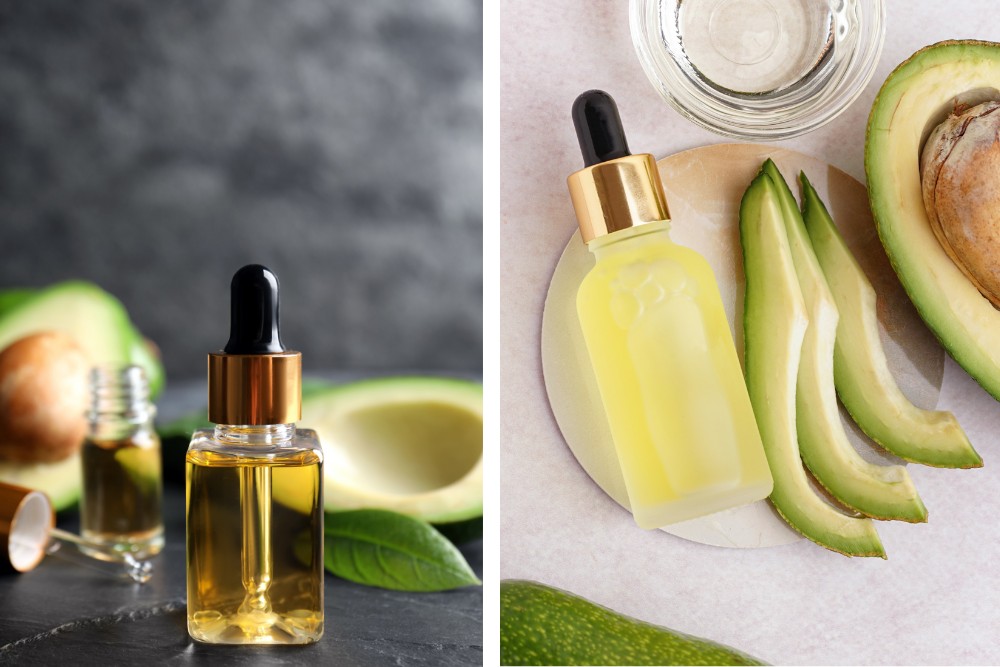
Avocado oil is pressed from the flesh of the avocado fruit, not from the seeds. And that matters. It is the flesh that naturally contains more "nourishing" fats, which make the oil feel richer to the touch.
You may have noticed that omega-9 and omega-6 fatty acids are often mentioned in connection with it. In lay terms: these are fats that help the oil stay on the skin longer and not absorb as quickly as some lighter oils.
Did you know that a richer oil sometimes behaves like a pleasant "duvet"? It forms a light film on the skin so that the skin does not feel so tight and the drier areas do not "pull" as much – especially in winter, after a shower or when the skin is tired.
When avocado oil makes sense in cosmetics
Avocado oil is great when your skin calls for more nourishing care. That is, not "just a few drops to feel good", but something that leaves the skin truly comfortable.
You will typically appreciate it when the skin is dry, strained or loses moisture easily (for example after a shower, in frost, with frequent hand washing or after time outdoors).
It suits, for example:
- dry and strained skin as a more nourishing oil in your routine,
- as a base for homemade oil serums and blends,
- in the care of mature skin when you want a richer feel to the touch,
- on dry hair lengths and in hair wraps.
It is not a universal oil for everyone. Its charm is that it is honest and nourishing – and that is exactly why it can be really pleasant for dry skin.
When it is better to choose a lighter oil
Lighter oils are great when you want quick absorption and a clean feel on the skin. Often in the morning, under make-up or on days when richer oils simply do not suit you.
If you have normal to combination skin, or your skin gets shiny easily in the T-zone, avocado oil may feel too rich. That does not mean you cannot use it at all. It just suits the evening better, or only the drier areas.
In such cases, for example, the following make sense:
- Jojoba oil – light, absorbs quickly and often suits combination skin too.
- Marula oil – gentle and pleasant, popular for more sensitive skin types.
- Kalahari melon oil – very light, suits a daily routine when you do not want an oily film.
Lighter oils often work as a base layer too, and you can then use avocado only locally. For example on dry areas or as an evening addition.
Mini rough test: what is your skin telling you?
It also helps to notice signals during the day. If you are shiny within an hour of application, you will probably be happier with a lighter oil. If, on the contrary, your skin feels tight after a while, a more nourishing variant or a combination will suit it.
Comparison: avocado vs. lighter vegetable oils
If you are only getting your bearings with oils, this comparison will save you a lot of trial and error. It is not about the best oil. It is about the one that suits your skin and your daily rhythm.
| Oil | Feel on the skin | When it makes sense |
|---|---|---|
| Avocado | Richer, nourishing | Dry, mature skin, winter, evening, hair wraps |
| Jojoba | Light, quick | Combination skin, daily routine, under make-up |
| Marula | Gentle, soft | Gentle everyday care, suitable for more sensitive skin types too |
| Kalahari melon oil | Very light | Daily care when you want a light oil without an oily-film feel |
How to tell that an oil is suitable for the skin (and not for the kitchen)
This is where most misunderstandings arise. Someone types "avocado oil" into a search engine and everything possible comes up – from kitchen oils to cosmetic raw materials. Yet the difference can be fundamental.
A cosmetic vegetable oil should be clearly labelled as an oil for external use. Ideally you will also see information about processing (for example cold pressing) and a pure composition without additives.
- Is cosmetic use / "for external use" stated?
- Does it say how the oil was obtained (ideally cold pressing)?
- Does it have a clear composition (e.g. INCI) without unnecessary ingredients?
Practical tips for using avocado oil
Avocado oil can be used in surprisingly many ways. You will most often come to like it when you want nourishment and comfort – and not just a "light layer" that disappears in a moment. If avocado on its own is too rich for you, simply soften it with a lighter oil (for example jojoba or marula).
1) Face: a simple evening ritual
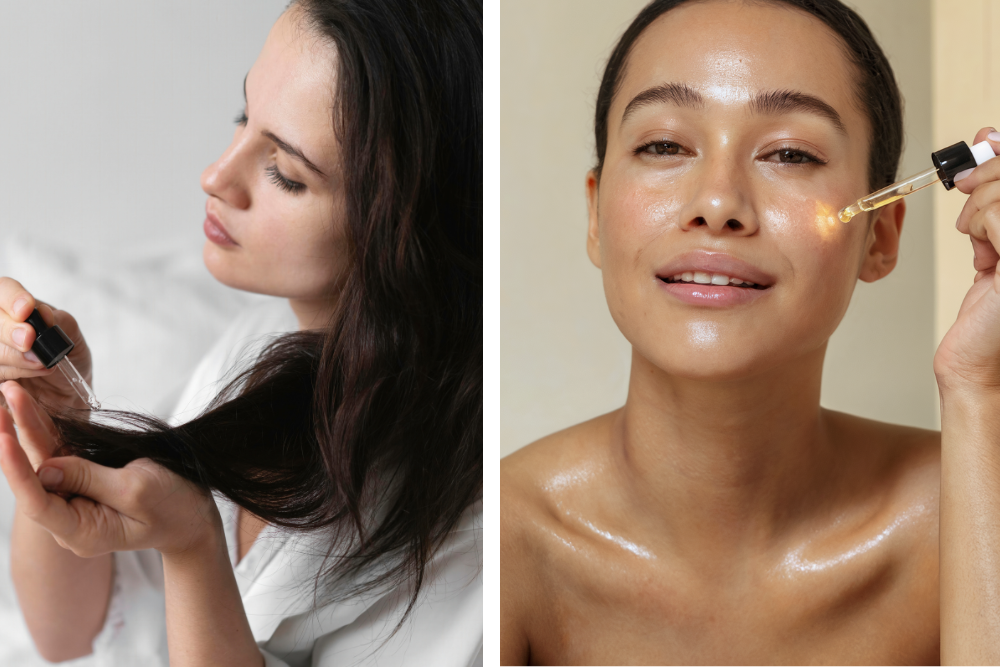
Try it on your face mainly in the evening. It is ideal to apply the oil to slightly damp skin (after floral water, toner or a shower) – it then spreads more easily and often feels nicer. Start with 2–3 drops, warm them in your palms and gently "press" them onto the skin.
If you have skin prone to clogged pores, watch how you feel after avocado. If it is too much for you, try using it only on drier areas or as part of a blend.
2) Make-up removal and oil cleansing
Oil cleansing is a gentle way to remove make-up and impurities from the skin without a feeling of tightness. Lightly dampen the skin, put a small amount of oil into your palms, massage gently for 30–60 seconds and then wipe off with a warm damp towel or cloth. If you are used to it, you can follow up with a gentle gel.
3) Body: after a shower and on dry areas
On the body, avocado oil is good mainly after a shower. Focus on elbows, shins, hands or areas that dry out easily in winter. A few drops on still slightly damp skin are often enough.

4) Hair: lengths, ends and a mask before washing
On hair it works mainly on the lengths and ends. For everyday smoothing, spread 1–2 drops between your palms and gently run them through the ends. For more intensive care, try an oil mask before washing.
A simple mask: apply a small amount of oil to the lengths (even on slightly damp hair), comb through, wrap in a towel and leave on for 30–60 minutes. Then wash with shampoo (sometimes you need to wash twice – it depends on your hair type).
5) Massages and scented blends
Avocado oil is also popular in massage blends because it glides well and leaves the skin feeling nicely "cared for". If you want to add essential oils to it, always dilute them in a carrier oil first and keep to safe dosage.
You will find practical tips and safety rules here: Safe use of essential oils.
- Balanced evening blend: avocado + jojoba (1:1)
- Gentler variant: avocado + marula (1:2) – pleasant for the neck and décolleté too
- For dry hands: 1 drop of avocado in your usual cream (in the palm before applying)
- For hair: 1–2 drops on the ends after washing (rather less than more)
10 reasons to use avocado oil
Whether you like oils minimalist, or you make a small home ritual of them, here is a quick overview of why avocado oil is so often used in cosmetics. Take it as inspiration – what matters most is always how your skin and hair feel afterwards.
Conclusion: how to choose an oil that really suits your skin
Avocado oil is a great helper when the skin needs more nourishment and comfort. Typically with dry, strained or more mature skin. It is richer, so it often stays on the skin longer and forms a pleasant protective film.
But if you have more combination skin, want an oil for the morning or do not like a rich feel, you will probably find jojoba, marula or Kalahari melon oil more pleasant. And a combination is perfectly fine too. A lighter oil for the day, a more nourishing one for the night, or avocado only locally on drier areas.
Whichever variant you choose, stick to a simple rule: always choose a cosmetic oil intended for external use. If you are not sure, start with a few drops, notice how your skin feels during the day and fine-tune your care accordingly. In skin care, what often works best is precisely what is simple and pleasant in the long run.
You might also be interested in: Comfrey oil in practice: how to use it and when a comfrey spray makes sense