
 Our products
 Aromatherapy - essential oils
 Essential oils
 Aroma lamps
 Aroma Diffusers
 Seeds
 Vegetables
 Herbs and spices
 Ornamental Plant Seeds
 Grass mixtures
 Sprouts and microgreens
 Growing supplies
 Cultivation and Gardening Supplies
 Hydroponics and indoor growing
 Protective equipment and gardening tools
 Exotic plants
 Exotic Fruit and Vegetables
 Exotic herbs
 Exotic trees and shrubs
 Ornamental exotic plants
 Roasted coffee
 Espresso coffee
 Ecological coffee preparation
 Thermal mugs and coffee cups
 Aeropress
 Thermos flasks and thermal mugs for coffee and tea
 Moka pot
 Filter coffee
 Coffee blends
 Accessories for coffee makers
 Water filtration
 Coffee grinders
 Cleaning the Coffee Maker
 Ecological Cleaning of Coffee Machines
 Coffee makers
 Coffee Preparation
 Coffee Accessories
 Food products
 For wildlife and pets
 Chocolate and others
 Hemp food products
 Natural cosmetics
 Hemp cosmetics
 Smoking supplies
 Bongs - water pipes
 Blunts and tubes
 E-liquids with Terpenes and CBD
 Grinders and Mills
 Papers and filters
 Smoking accessories
 Vaporizers
 Air fresheners
 CBD and CBG products
 CBD sprays
 CBD and CBN crystals
 CBD body and facial care
 Weeds
 CBD suppositories and capsules
 CBD oils and drops
 CBG oils and drops
 House and garden
 Fashion and Decoration
 Kitchen essentials and cooking
 Christmas Decorations and Accessories
 Gift Sets
 Bird feeders
 Seasonal and Special Tools
Carrier oils are gentle vegetable oils suitable for everyday care of skin, body and hair. They serve as a base for diluting essential oils and you can use them for massages, make-up removal and home aromatherapy. Discover light and nourishing carrier oils that give the skin softness and support your natural rituals.
In short: Carrier oils are cold-pressed plant oils that form 95–99% of a blend with essential oils, and they also work alone for massage, makeup removal or hair care. For facial oils use 1–2 drops of essential oil per 5 ml of carrier oil; for massage 3–5 drops per 10 ml. Opened oils keep 6–12 months.
| Share of carrier oil in a blend | 95–99% of total volume |
|---|---|
| Facial oil dilution | 1–2 drops essential oil per 5 ml carrier oil |
| Massage oil dilution | 3–5 drops per 10 ml carrier oil |
| Body oil dilution | 5–8 drops per 10 ml carrier oil |
| Shelf life after opening | 6–12 months, depending on type |
| Fast-absorbing oils | Jojoba, papaya (oily and combination skin) |
Carrier Oils: Complete Guide for Natural Skincare and Aromatherapy
Carrier oils are among the most important and versatile helpers in natural skincare, body care and hair care. In aromatherapy, they serve as a gentle base for diluting essential oils, but you can also use them on their own – for massage, makeup removal or daily after-shower care. Each carrier oil has its own specific properties, texture, absorption rate and suitability for different skin types. In this comprehensive guide, you'll learn how carrier oils work, how to use them in everyday life and how to choose the most suitable one for you.
You'll also find practical tips, an overview of the most commonly used oils and recommendations on which essential oils to combine them with. Whether you're just starting with aromatherapy or looking for a natural alternative to conventional cosmetics, carrier oils are an excellent foundation that brings softness, gentleness and natural comfort to your skincare routine.
Table of Contents
- What are carrier oils?
- Why use carrier oils?
- How to choose the best carrier oil?
- Overview of the most popular carrier oils
- How to use carrier oils in practice?
- How to properly dilute essential oils?
- What to combine carrier oils with?
- Safety and storage
- Frequently asked questions (FAQ)
- Carrier oils in a nutshell: What to keep in mind
What are carrier oils?
Carrier oils are natural plant oils that are cold-pressed and serve as a base for diluting concentrated essential oils. They play a key role in aromatherapy – they help disperse the fragrance, soften the overall skincare experience and enable comfortable application to the skin.
Unlike essential oils, they don't typically have such an intense fragrance. They are gentle, nourishing and often rich in vitamins, antioxidants and fatty acids. Thanks to these properties, they're perfect for daily skincare, body and hair care – both on their own and as a base for homemade natural cosmetics.
Why use carrier oils?
Carrier oils have wide-ranging uses and are practically irreplaceable in natural cosmetics. They offer:
- softness and comfort – they give skin a feeling of smoothness and elasticity,
- safe "dilution" of essential oils before applying to skin,
- versatile use for massages, facial oils, balms, makeup removal and hair care,
- natural composition without silicones, synthetic fragrances or unnecessary chemicals.
Each oil has slightly different properties – some are lighter and absorb quickly, while others create a pleasant protective film on the skin. This allows you to choose one that suits your skin type and specific care ritual.
How to choose the best carrier oil?
When selecting a carrier oil, it's worth considering several factors: your skin type, purpose of use, and what feeling you prefer on your skin (fast vs. slower absorption).
1) Skin Type
- Dry skin: avocado oil or argan oil – both are among the more nourishing oils that feel richer and provide the skin with a sense of luxurious, intensive care.
- Oily and combination skin: jojoba oil or papaya oil – lightweight and quickly absorbed oils that don't feel heavy on the skin and support its natural balance.
- Mature skin: prickly pear, argan, camellia – often chosen where a more luxurious oil care is desired.
- Skin prone to sensitive reactions: calendula, mullein, aloe vera or gentle oils like daisy or orchid – gentle oils popular in everyday delicate care for sensitive skin.
2) Purpose of Use
- For diluting essential oils for regular skincare: jojoba, papaya, chia, avocado – lightweight oils that are easily absorbed and work well as a base for homemade blends.
- For body massages: marula, kalahari melon – glide well and spread pleasantly.
- For makeup removal: jojoba, avocado, mongongo – can handle even long-lasting decorative cosmetics.
- For hair and scalp: marula, shea oil, kalahari melon – often chosen for wraps and oil masks.
3) Absorption Speed
Some oils are dry, lightweight and quickly absorbed (for example jojoba or papaya), while others leave a slightly more pronounced protective film on the skin (for example avocado). What feels most pleasant is very individual.
| Oil | Absorption | Skin Type |
| Jojoba | Very fast | Oily, combination |
| Argan | Medium | Mature, normal to dry |
| Avocado | Slower | Very dry skin |
Overview of the Most Commonly Used Carrier Oils
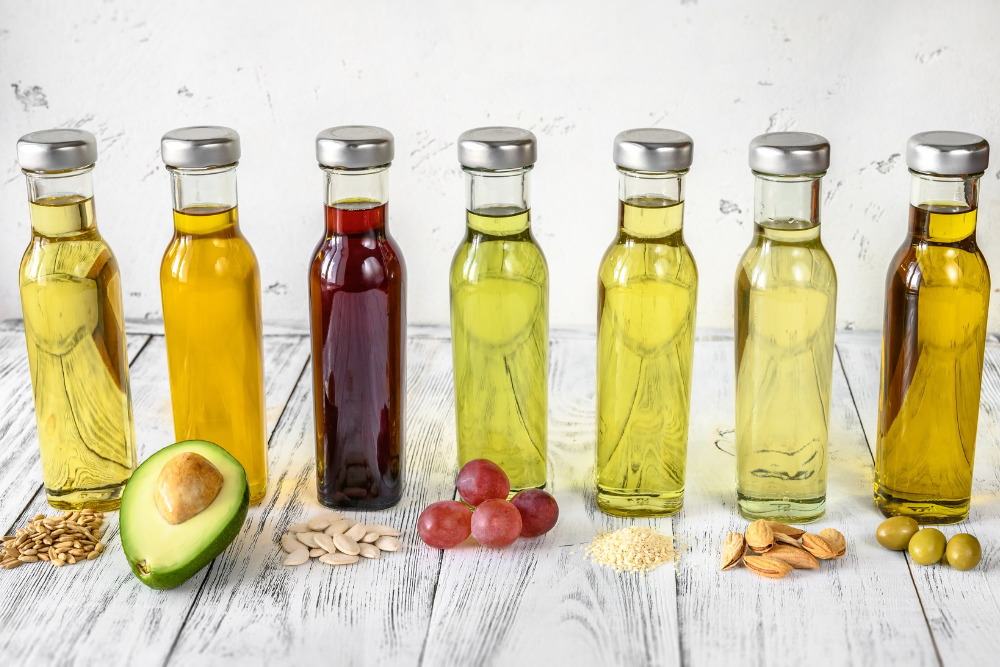
Carrier oils come in many forms – from light, fast-absorbing oils to more nourishing oils suitable for evening rituals. Below you'll find an overview of the most frequently used ones and their main benefits:
- Jojoba oil – universal helper for skin and hair, popular among beginners.
- Argan oil – often chosen for mature skin care and evening rituals.
- Marula oil – lightweight oil ideal for hair oils and wraps.
- Papaya oil – light, quickly absorbed, suitable where you don't want a heavy greasy feeling.
- Kalahari melon – oil that works well for combination skin and daily care.
- Avocado oil – richer oil especially appreciated by very dry skin.
- Infused calendula, carrot, aloe vera – gentle infused oils popular in delicate natural skin care.
How to use carrier oils in practice?
1) Standalone as facial oil
Just a few drops of carrier oil gently massaged into slightly damp skin on the face or body. This helps the oil spread better and keeps the skin pleasantly soft.
2) As cleansing oil
Apply a small amount of jojoba or avocado oil onto a cleansing pad or into your palms and dissolve makeup with circular movements. Then rinse with lukewarm water or finish cleansing with a gentle gel.
3) For hair and scalp
Carrier oils can also be incorporated into hair care – as a pre-wash wrap or a few drops on the ends after washing for smoothing. Particularly popular are oils like marula, argan or kalahari melon.
4) For making homemade cosmetics
Carrier oils form the base of homemade body oils, scrubs, lip balms or oil serums. You can easily combine them with essential oils according to your mood and the scent you love.
How to properly dilute essential oils?
Essential oils are highly concentrated and must always be mixed with a carrier oil before applying to skin. This disperses the fragrance and makes the blend more pleasant to apply.
| Use | Recommended dilution |
| Facial oils | 1–2 drops of essential oil per 5 ml of carrier oil |
| Massage oils | 3–5 drops of essential oil per 10 ml of carrier oil |
| Body oils | 5–8 drops of essential oil per 10 ml of carrier oil |
What to combine carrier oils with?
Carrier oils can be excellently combined with essential oils depending on the atmosphere or ritual you want to create. This allows you to easily change fragrances and the overall character of the blend.
- For relaxation: blend of carrier oil with lavender or chamomile – suitable for evening body oils, for example.
- For a feeling of freshness and energy: a few drops of lemon or peppermint in carrier oil for morning body care rituals.
- For calming the atmosphere in a room: combination with essential oils such as frankincense or geranium in a diffuser, while using pure carrier oil or gently diluted blend on the skin.
Safety and Storage
- Store in a cool, dark place, ideally in a well-sealed bottle.
- Use the oil within the recommended time after opening (usually 6–12 months depending on the type).
- For children and very gentle skin care, choose primarily milder infused oils. Use blends with essential oils on children only in low dilution and according to expert recommendations.
- Avoid contact with eyes and mucous membranes. In case of discomfort or skin redness, discontinue use of the blend.