
 Our products
 Aromatherapy - essential oils
 Essential oils
 Aroma lamps
 Aroma Diffusers
 Seeds
 Vegetables
 Herbs and spices
 Ornamental Plant Seeds
 Grass mixtures
 Sprouts and microgreens
 Growing supplies
 Cultivation and Gardening Supplies
 Hydroponics and indoor growing
 Protective equipment and gardening tools
 Exotic plants
 Exotic Fruit and Vegetables
 Exotic herbs
 Exotic trees and shrubs
 Ornamental exotic plants
 Roasted coffee
 Espresso coffee
 Ecological coffee preparation
 Thermal mugs and coffee cups
 Aeropress
 Thermos flasks and thermal mugs for coffee and tea
 Moka pot
 Filter coffee
 Coffee blends
 Accessories for coffee makers
 Water filtration
 Coffee grinders
 Cleaning the Coffee Maker
 Ecological Cleaning of Coffee Machines
 Coffee makers
 Coffee Preparation
 Coffee Accessories
 Food products
 For wildlife and pets
 Chocolate and others
 Hemp food products
 Natural cosmetics
 Hemp cosmetics
 Smoking supplies
 Bongs - water pipes
 Blunts and tubes
 E-liquids with Terpenes and CBD
 Grinders and Mills
 Papers and filters
 Smoking accessories
 Vaporizers
 Air fresheners
 CBD and CBG products
 CBD sprays
 CBD and CBN crystals
 CBD body and facial care
 Weeds
 CBD suppositories and capsules
 CBD oils and drops
 CBG oils and drops
 House and garden
 Fashion and Decoration
 Kitchen essentials and cooking
 Christmas Decorations and Accessories
 Gift Sets
 Bird feeders
 Seasonal and Special Tools
Soil Reaction - pH
If we want to ensure good plant nutrition, it is necessary to monitor soil reactions. Soil reaction is indicated by the pH symbol. Soil reaction can be:
- acidic (pH below 5.6)
- neutral (pH 6.6-7.1)
- alkaline (pH higher than 7.2)
Optimal is a balanced soil pH, or adjust the soil pH according to the crops you will be growing. When alkaline components in the soil increase (too much calcium, magnesium), alkaline components predominate in the soil and the acidic soil reaction decreases.
In acidic soils, some plants absorb nutrients more poorly. Soil acidity is one of the factors that reduce harvest and yields. Alkaline reactions in the soil cause metabolic disorders in plants - chlorosis.
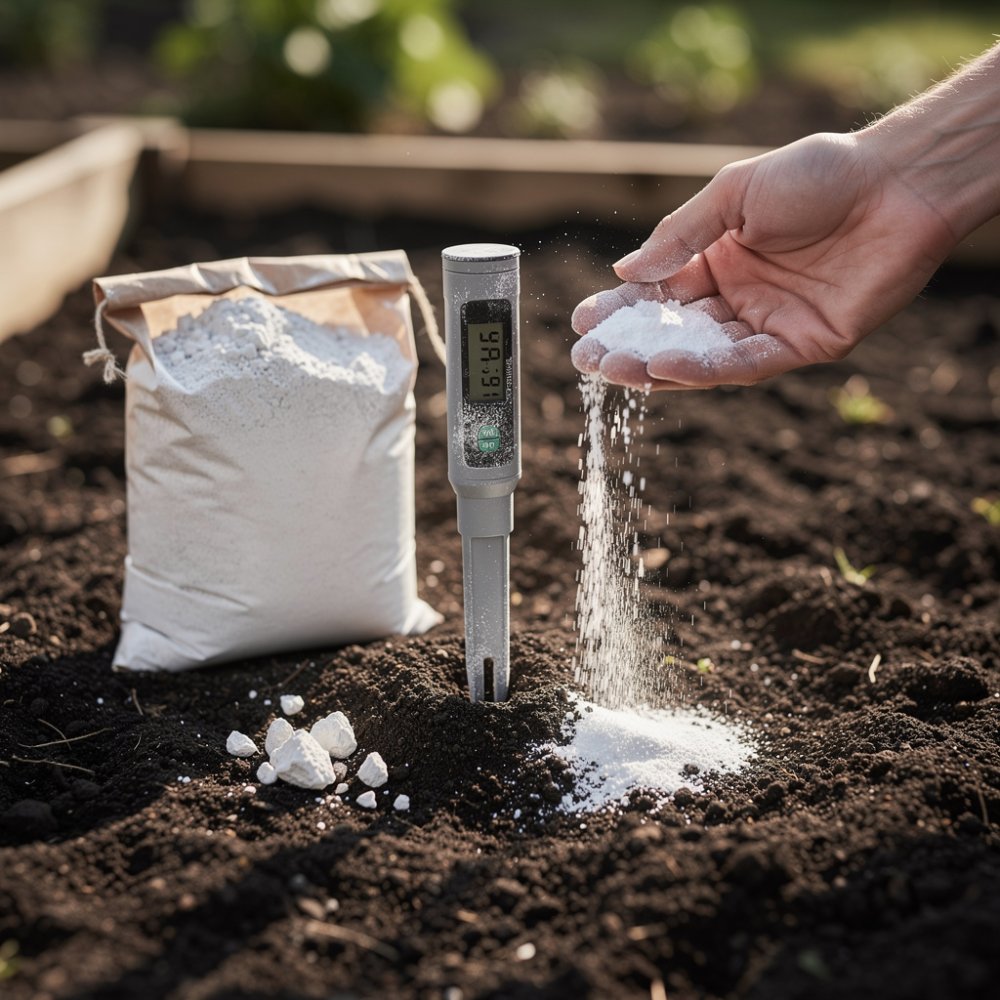
Liming is the most suitable method against excessive soil acidification. Liming neutralizes free hydrogen ions that cause acidity.
Liming
Liming is the application of calcium and magnesium to the soil in various forms. Liming is done with marl, chalk, limestone and hydrated lime.
After soil liming, calcium passes into plants. In plants, calcium neutralizes excess organic acids and increases assimilation (the uptake and transformation of substances by a living organism for building its body).
TIP: If you have a vegetable garden where you regularly grow vegetables, it is recommended to lime every fourth year. Best in autumn or winter.
Do not fertilize with farmyard manure simultaneously with liming. This causes large losses of organic matter, especially nitrogen. Depending on soil acidity, apply 1-3 kg of ground limestone per 10m2, if you have burnt lime then half as much. Ground limestone contains approximately 50% calcium oxide (CaO). Burnt lime 100% more.
We recommend - liming under brassicas and legumes. In more acidic soils, lime for onions, beets, carrots and cucumbers.
Lime Fertilizers
Lime fertilizers - as the name suggests, contain calcium as the main nutrient. With lime fertilizers we improve the fertility of acidic soils. Through liming, we support microbial activity in acidic soils, and thus the release of nutrients from less soluble mineral substances. Lime fertilizers simultaneously increase the effectiveness of phosphate and potassium fertilizers.
Use lime fertilizers in smaller doses and more frequently. Over-liming is unnecessary, plants will not be able to consume the nutrients.
Ground limestone - contains about 35% calcium in the form of calcium carbonate. This is a slow-acting fertilizer. Use this fertilizer for liming in spring, on lighter and humus-rich soils.
Quicklime - contains approximately 65% calcium in the form of calcium oxide. It acts faster. It is used for liming heavier and more acidic soils. We lime in autumn. Quicklime can be added to compost. It is added to compost because it quickly binds water and destroys pathogens and animal pests. Ground quicklime can be spread on the bed and worked into the soil.
Other calcium fertilizers are produced as waste products (sugar beet lime, distillery lime, plaster, waste gypsum).
Growing in Crop Rotation
In the first rotation we grow:
- brassicas (cabbage, Chinese cabbage, kale, cauliflower and broccoli). The first rotation also includes kohlrabi (swedes). Kohlrabi does not tolerate fresh farmyard manure well.
- fruit vegetables (tomatoes, eggplant, peppers, cucumbers, melons and pumpkins)
- other crops (early potatoes, sweet corn, leeks)
Vegetables grown in the first rotation can be generously fertilized with farmyard manure (6-10 kg per m2). We can also fertilize with compost or green manure. Clover crops are the most suitable for green manure. Clover crops tolerate liming well. They are an exceptionally suitable predecessor crop for brassicas, legumes, early potatoes and celeriac. In the first rotation, we can also sow lettuce and spring spinach so that the bed is not without crops.
In the second rotation we grow:
- root vegetables (except celeriac)
- alliums (except leeks)
- leaf vegetables
Vegetables in the second rotation require a high humus content in the soil.
In the third rotation we grow:
- legumes - peas, beans, broad beans
- herbs - marjoram, lemon balm, dill
After a two-year break in this rotation, thanks to fertilizing with fresh farmyard manure, in the third year we can plant in the third rotation - carrots, garlic, onions, lettuce and spinach.
A separate group for sowing consists of: rhubarb, asparagus, horseradish and lovage. These plants thrive in the same location permanently and require regular fertilization in all growing years.
Did you like this article? Share it with your friends on Facebook!
Author: Hana Michalíková