
 Our products
 Aromatherapy - essential oils
 Essential oils
 Aroma lamps
 Aroma Diffusers
 Seeds
 Vegetables
 Herbs and spices
 Ornamental Plant Seeds
 Grass mixtures
 Sprouts and microgreens
 Growing supplies
 Cultivation and Gardening Supplies
 Hydroponics and indoor growing
 Protective equipment and gardening tools
 Exotic plants
 Exotic Fruit and Vegetables
 Exotic herbs
 Exotic trees and shrubs
 Ornamental exotic plants
 Roasted coffee
 Espresso coffee
 Ecological coffee preparation
 Thermal mugs and coffee cups
 Aeropress
 Thermos flasks and thermal mugs for coffee and tea
 Moka pot
 Filter coffee
 Coffee blends
 Accessories for coffee makers
 Water filtration
 Coffee grinders
 Cleaning the Coffee Maker
 Ecological Cleaning of Coffee Machines
 Coffee makers
 Coffee Preparation
 Coffee Accessories
 Food products
 For wildlife and pets
 Chocolate and others
 Hemp food products
 Natural cosmetics
 Hemp cosmetics
 Smoking supplies
 Bongs - water pipes
 Blunts and tubes
 E-liquids with Terpenes and CBD
 Grinders and Mills
 Papers and filters
 Smoking accessories
 Vaporizers
 Air fresheners
 CBD and CBG products
 CBD sprays
 CBD and CBN crystals
 CBD body and facial care
 Weeds
 CBD suppositories and capsules
 CBD oils and drops
 CBG oils and drops
 House and garden
 Fashion and Decoration
 Kitchen essentials and cooking
 Christmas Decorations and Accessories
 Gift Sets
 Bird feeders
 Seasonal and Special Tools
In short: For beginners, the most forgiving tomato varieties are Stupice (early, 55 days), Gardener's Delight, Tornado F1 and Big Beef F1. Choose indeterminate varieties for greenhouses and determinate ones (40–80 cm) for balconies. Sow seeds 6–8 weeks before transplanting at 20–25 °C and plant out only after the last frosts, typically after mid-May.
| Sowing | 6–8 weeks before transplanting, at 20–25 °C |
|---|---|
| Hardening off | 7–10 days |
| Transplanting outdoors | after the last frosts, typically after May 15th |
| Determinate varieties | 40–80 cm, no pruning needed |
| Feeding | every 10–14 days from fruit set, potassium-rich fertilizer |
| Balcony container | at least 15–20 liters |
Tomatoes are incomparably the most popular fruiting vegetable in Czech gardens. Today's variety selection is extraordinarily wide and a beginner can easily get lost in it. In this guide we have selected 20 varieties that have proven themselves best in Czech conditions -- from tiny cherries through cocktail types to large meaty tomatoes. For each variety you will find information about fruit size, color, flavor, disease resistance and recommended use.
You can find our complete selection of tomato seeds in the category fruiting vegetable seeds.
How to choose the right variety
Before purchasing seeds it is important to think about what results you want to achieve and what conditions you have for growing.
Indeterminate vs. Determinate Tomatoes
Indeterminate tomatoes grow continuously in height, often reaching 2 meters or more. They require support (stake, string or trellis) and regular pruning of side shoots (suckers). In return they bring high yields over a longer period and are especially suitable for greenhouses and polytunnels.
Determinate tomatoes grow to a certain height (typically 40--80 cm) and stop growing. They do not require pruning or support. The harvest ripens all at once, which is advantageous for processing or preserving.
Other Selection Criteria
- Disease resistance: In the Czech humid climate it is essential to be resistant to late blight (Phytophthora infestans), which can destroy an entire crop.
- Days to maturity: Early varieties (55--65 days) are harvested significantly earlier than late ones (80+ days) -- especially important in cooler regions.
- Purpose: Salad tomatoes, for sauce, for drying or for preserving whole fruits.
- Flavor: Sweet, tangy, aromatic or complex.
- Growing location: Greenhouse or polytunnel, open ground or container on a balcony.
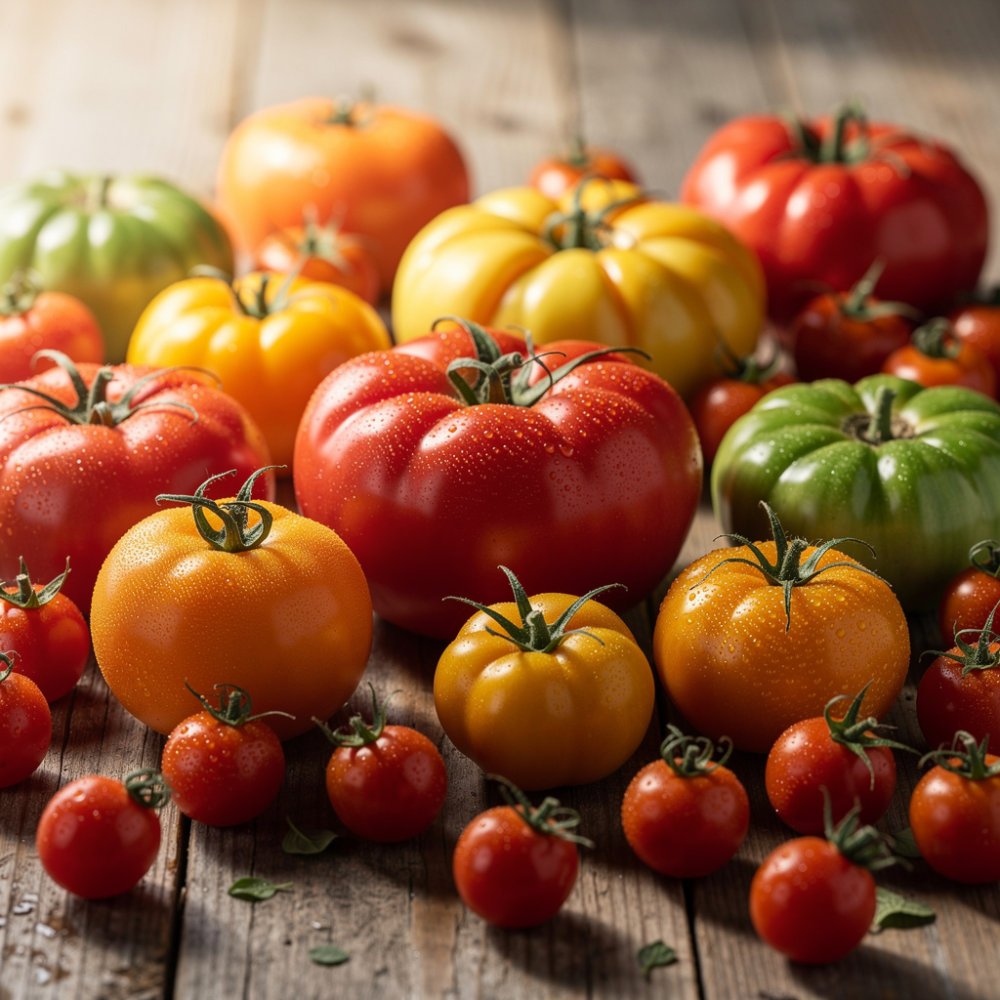
Cherry and Cocktail Tomatoes (up to 50 g)
Cherry tomatoes are popular for their pronounced sweetness, high productivity and versatility. They are excellent as a snack straight from the garden, in salads, for drying and as garnish on a plate.
1. Sweetie (Sweet Million)
A classic red cherry with extraordinarily sweet flavor and long clusters bearing 20--30 fruits. Indeterminate, very productive, resistant to cracking in uneven watering. One of the most reliable cherry varieties for Czech gardens. Days to maturity: 65 days.
2. Sungold F1
Yellow-orange cherry with intensely fruity, almost tropical flavor. Many growers rank it among the tastiest tomatoes regardless of category. Indeterminate, very productive. With irregular watering it is slightly prone to cracking -- maintain even soil moisture. Days to maturity: 60 days.
3. Black Cherry
Dark red to brown-purple cherry with deep, complex aroma reminiscent of slightly smoky tones. Indeterminate, moderately productive. The unusual color predestines it for decorative use on plates and in salad bowls. Days to maturity: 70 days.
4. Tumbling Tom Red
Compact trailing determinate variety ideal for window boxes and hanging baskets. Red, sweet, fruits around 20 g. Requires no pruning or support -- excellent choice for balconies and terraces. Days to maturity: 70 days.
5. Zlatava
A Czech variety of golden-yellow cocktail tomatoes (30--40 g) with sweet, meaty flesh and low acidity. Suitable for salads but also for eating fresh. Indeterminate, well resistant to diseases. Days to maturity: 65 days.
Medium-sized Tomatoes (50--150 g)
Universal tomatoes suitable for salads, cooking and preserving. This category offers the greatest variety of types and suits almost any growing purpose.
6. Stupice
A Czech legend and first choice for beginners. Early variety (55 days) with red fruits 60--80 g, excellent flavor and reliable yields even in poor conditions. Indeterminate, slightly resistant to late blight. The advantage is that it ripens before most diseases have time to attack.
7. Tornado F1
Very early determinate variety with fruits 80--100 g. Its compact growth makes it one of the best choices for container growing. Good disease resistance, ripens among the earliest on the garden. Days to maturity: 55 days.
8. Mandat F1
Cocktail plum-shaped tomatoes (40--60 g) with firm skin, meaty flesh and minimal seeds -- ideal for preserving whole. Indeterminate, high yields and good disease resistance. Fruits tolerate longer transport well. Days to maturity: 70 days.
9. Principe Borghese
An Italian variety intended directly for drying. Small fruits (25--40 g) with distinctly high dry matter content and low moisture. Determinate, very productive. Dried tomatoes from this variety have intense, concentrated flavor comparable to Italian commercial products. Days to maturity: 75 days.
10. Tigerella (Mr. Stripey)
A striking variety with red-golden striped pattern that catches the eye even in the garden bed. Fruits 60--80 g with pronounced aromatic flavor and pleasant acidity. Indeterminate, moderate resistance. Stands out in salad compositions thanks to its decorative appearance. Days to maturity: 65 days.
Large Meaty Tomatoes (150--500 g)
Meaty tomatoes are the kings of the garden. Their fruits are voluminous, juicy and ideal for salads with mozzarella, for sauces and for grilling. Count on longer days to maturity and higher care requirements.
11. Oxheart
An iconic heart-shaped variety with fruits 200--400 g. Pink, meaty, sweet, with minimal seeds and thick walls. Indeterminate, requires stable support. Low disease resistance -- we recommend growing in a greenhouse or polytunnel. Days to maturity: 80 days.
12. Brandywine
An American heirloom variety, considered one of the tastiest in the world. Large pink fruits (300--500 g) with creamy, almost buttery texture and complex aroma. Indeterminate, lower yields -- but the flavor is worth it. Recommended for more experienced growers. Days to maturity: 85 days.
13. Marmande
A French variety with ribbed fruits 150--200 g. Slightly flattened, meaty, aromatic. Semi-determinate growth, good disease resistance. Versatile use from the salad plate to winter supplies. Days to maturity: 70 days.
14. San Marzano
An Italian classic for sauces and sugo. Oblong fruits 100--150 g with thick walls and minimal juice -- thanks to low water content the sauce cooks faster and the flavor is more intense. Indeterminate, requires support. Ideal for preserving and for passata. Days to maturity: 80 days.
15. Big Beef F1
Large red tomatoes 200--300 g with balanced, mildly sweet flavor. A hybrid variety with excellent resistance to a wide range of diseases (V, F, N, TMV). Indeterminate, reliable yields even in unfavorable seasons. Great choice for those who want large tomatoes without complications. Days to maturity: 73 days.
Special and Unusual Varieties
For growers looking for something extra -- unusual colors, shapes and flavors that will enliven both garden and kitchen.
16. Cherokee Purple
A dark purple to brown heirloom variety with fruits 200--350 g and rich, sweet-smoky aroma. The flavor is distinctly more complex than standard red varieties. Indeterminate, lower disease resistance -- better suited for a greenhouse. An absolutely unique gastronomic experience. Days to maturity: 80 days.
17. Green Zebra
Green with dark green stripes -- even at full ripeness remains green, only slightly golden. Fruits 80--120 g, crisp, with pleasant light acidity that combines beautifully with sweeter varieties in a salad bowl. Indeterminate, striking on the plate. Days to maturity: 75 days.
18. Indigo Rose
A pioneering variety with red-purple to almost black skin thanks to high anthocyanin content -- natural pigments with antioxidant properties. Fruits 30--60 g, cherry-cocktail size. Indeterminate. Skin red at the bottom when ripe. Days to maturity: 75 days.
19. Costoluto Fiorentino
An Italian heirloom variety with deep ribbing that gives it a distinctive appearance. Fruits 150--250 g, intensely aromatic. Indeterminate, suitable for greenhouses. Excellent for sauces and roasting -- sauce from Costoluto has full, concentrated flavor. Days to maturity: 80 days.
20. Gardener's Delight
A popular red cherry-cocktail variety (30--50 g) with high sweetness and reliable productivity. Indeterminate, undemanding care and resistant to cracking. Ideal for beginners and for families with children who like to taste fresh from the garden bed. Days to maturity: 65 days.
Overview Table of All 20 Varieties
| # | Variety | Type | Fruit Weight | Color | Days to Maturity | Resistance | Use |
|---|---|---|---|---|---|---|---|
| 1 | Sweetie | indeterminate | 15--20 g | red | 65 days | high | snack, salad |
| 2 | Sungold F1 | indeterminate | 15--20 g | orange | 60 days | moderate | snack, salad |
| 3 | Black Cherry | indeterminate | 20--30 g | purple | 70 days | moderate | salad, garnish |
| 4 | Tumbling Tom | determinate | 15--20 g | red | 70 days | high | balcony, boxes |
| 5 | Zlatava | indeterminate | 30--40 g | yellow | 65 days | high | salad |
| 6 | Stupice | indeterminate | 60--80 g | red | 55 days | moderate | universal |
| 7 | Tornado F1 | determinate | 80--100 g | red | 55 days | high | universal |
| 8 | Mandat F1 | indeterminate | 40--60 g | red | 70 days | high | preserving |
| 9 | Principe Borghese | determinate | 25--40 g | red | 75 days | moderate | drying |
| 10 | Tigerella | indeterminate | 60--80 g | striped | 65 days | moderate | salad |
| 11 | Oxheart | indeterminate | 200--400 g | pink | 80 days | low | salad, caprese |
| 12 | Brandywine | indeterminate | 300--500 g | pink | 85 days | low | salad, gourmet |
| 13 | Marmande | semi-det. | 150--200 g | red | 70 days | high | universal |
| 14 | San Marzano | indeterminate | 100--150 g | red | 80 days | moderate | sauces |
| 15 | Big Beef F1 | indeterminate | 200--300 g | red | 73 days | high | universal |
| 16 | Cherokee Purple | indeterminate | 200--350 g | purple | 80 days | low | gourmet |
| 17 | Green Zebra | indeterminate | 80--120 g | green | 75 days | moderate | salad |
| 18 | Indigo Rose | indeterminate | 30--60 g | black | 75 days | high | health, salad |
| 19 | Costoluto Fiorentino | indeterminate | 150--250 g | red | 80 days | moderate | sauces |
| 20 | Gardener's Delight | indeterminate | 30--50 g | red | 65 days | high | universal |
Growing Tomatoes -- Basic Tips
Starting from Seed
Sow tomato seeds 6--8 weeks before planned transplanting outdoors -- in Czech conditions typically from mid-February to early March. Use quality seed starting substrate and maintain temperature of 20--25 °C. After germination lower temperature to 15--18 °C to prevent seedlings from etiolating (becoming leggy due to insufficient light). Before transplanting, harden off seedlings for 7--10 days by gradually exposing them to outdoor air.
You can order tomato seeds and other fruiting vegetables in the category fruiting vegetable seeds.
Transplanting Outdoors
Transplant tomatoes only after the last frosts -- in the Czech Republic typically after May 15th (after the so-called ice saints). Into a greenhouse or polytunnel you can transplant 2--4 weeks earlier. Plant seedlings deeper than they grew in the pot: tomatoes form additional roots on the buried stem, which gives the plant firmer rooting and better nutrient uptake.
Watering and Feeding
Water regularly and evenly -- alternating between dry and overly wet conditions is the main cause of fruit cracking and spotting. Use room temperature water and water at the roots, not on the leaves. From the time fruit sets, feed every 10--14 days with fertilizer containing higher potassium (K) content, which promotes fruit formation and ripening.
Disease Protection
Late blight (Phytophthora infestans) is the greatest threat to tomatoes in Czech climate. Preventive measures:
- Water at the roots, never on the leaves -- wet foliage is a gateway for infection.
- Ensure good air circulation by removing dense foliage.
- Regularly remove lower leaves touching the ground.
- At the first signs or during risky periods use biological preparations based on copper or Bacillus subtilis.
- Choose resistant varieties where you don't have time for intensive care.
FAQ -- Most Common Questions
Which tomato varieties are best for beginners?
For beginners we recommend Stupice (early, reliable, excellent flavor), Gardener's Delight (undemanding cherry with high productivity), Tornado F1 (determinate without need for pruning) and Big Beef F1 (large tomatoes with excellent disease resistance). These varieties are forgiving and will provide decent yields even with less experience or minor neglect.
Can I grow tomatoes on a balcony?
Yes -- for balcony growing choose compact determinate varieties like Tumbling Tom or Tornado F1. Use containers of at least 15--20 liters volume with quality, breathable substrate. Ensure sufficient sun (minimum 6 hours daily) and regular watering, as containers dry out significantly faster than garden beds.
How much can I harvest from one plant?
Depends on the variety, conditions and care. Cherry tomatoes can give 3--5 kg per plant, medium-sized varieties 4--8 kg and large meaty tomatoes 3--6 kg. In a greenhouse or polytunnel yields are usually 20--40% higher than in open ground thanks to longer growing season and protection from adverse weather.
Do I need to prune tomatoes (remove suckers)?
For indeterminate varieties pruning is recommended -- it improves air circulation, speeds up ripening and allows the plant to concentrate energy on fewer, larger fruits. For determinate varieties do not remove suckers -- each growing shoot bears part of the future harvest and unnecessary pruning would reduce yield.