 Essential oils
 Aroma lamps
 Aroma Diffusers
 Vegetables
 Herbs and spices
 Ornamental Plant Seeds
 Grass mixtures
 Sprouts and microgreens
 Exotic Fruit and Vegetables
 Exotic herbs
 Exotic trees and shrubs
 Ornamental exotic plants
 Espresso coffee
 Ecological coffee preparation
 Thermal mugs and coffee cups
 Aeropress
 Thermos flasks and thermal mugs for coffee and tea
 Moka pot
 Filter coffee
 Coffee blends
 Water filtration
 Coffee grinders
 Cleaning the Coffee Maker
 Ecological Cleaning of Coffee Machines
 Coffee makers
 Coffee Preparation
 Coffee Accessories
 For wildlife and pets
 Chocolate and others
 Hemp food products
 Hemp cosmetics
 Bongs - water pipes
 Blunts and tubes
 E-liquids with Terpenes and CBD
 Grinders and Mills
 Papers and filters
 Smoking accessories
 Vaporizers
 Air fresheners
 CBD sprays
 CBD and CBN crystals
 CBD body and facial care
 Weeds
 CBD suppositories and capsules
 CBD oils and drops
 CBG oils and drops
 Fashion and Decoration
 Kitchen essentials and cooking
 Christmas Decorations and Accessories
 Gift Sets
 Bird feeders
 Seasonal and Special Tools

 Our products
 Aromatherapy - essential oils
 Seeds
 Growing supplies
 Cultivation and Gardening Supplies
 Hydroponics and indoor growing
 Protective equipment and gardening tools
 Exotic plants
 Roasted coffee
 Accessories for coffee makers
 Food products
 Natural cosmetics
 Smoking supplies
 CBD and CBG products
 House and garden

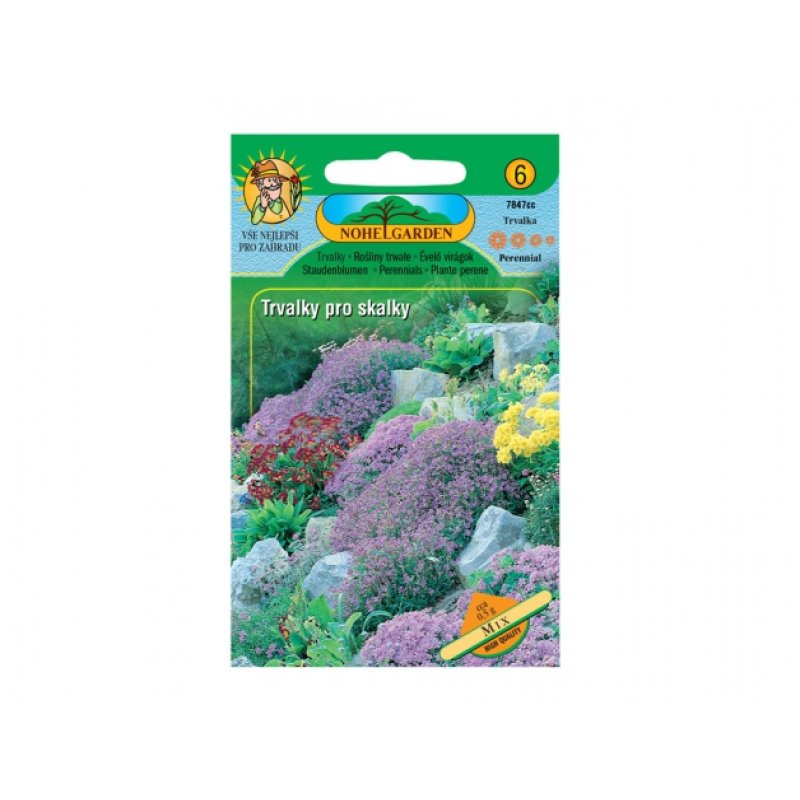
A special plant mix that meets even the most demanding requirements. A harmonious combination of colors and textures. The package contains 0.5g of seeds.
 Wide range of quality products
Seeds, essential oils, growing supplies and exotic plants in one place
 Eco-friendly range
We prefer natural and gentle products
 Expert advice
We help you grow – guides, blog and personal support
 Delivery across the EU
PPL, DPD, GLS and local carriers – pickup point or home delivery
Small perennials and rock plants are suitable for rock gardens, perennial borders, between stones, in planted troughs and containers, while alpine plants require special conditions. You can also plant your rock garden with ornamental-leaved rock plants, so it will look attractive even when the plants have finished flowering. Grateful choices include (some already mentioned) daboecia, draba, dryas, hebe, carnations, thyme, grasses or bugle.
For sunny locations, plant saxifrage, wild thyme, sempervivum, dwarf irises, low carpet phlox, creeping thyme, evening primrose, sedum, veronica, antennaria, and mountain alyssum. Partial shade suits yellow corydalis, bloody cranesbill, mountain and Carpathian bellflower, hosta, dog's tooth violet, primrose, sea thrift, and creeping bugle. For drier locations, choose lamb's ear, spring pasque flower, fescue (ornamental grass - all species), rock carnations, evergreen saxifrage, wild thyme, sempervivum, eastern veronica, and opuntia.
Regularly loosen the soil around perennials to a shallow depth and weed. Follow the light requirements of individual species; generally speaking, it's best to plant where they won't be exposed to midday sun heat. During dry periods, perennials need watering. Tie taller perennials with weak flower stems to stakes. Remove faded flowers immediately. In autumn, cut back the dried above-ground parts and cover species that overwinter poorly with conifer branches. In spring, remove the branches after the last frosts. Regularly fertilize the plants.
For most perennials, sow directly into open ground on a well-prepared bed. Only sow delicate or rare species in cold frames, greenhouses, or indoors "on the windowsill". Thoroughly loosen the bed to a depth of 10-15 cm and carefully remove all weeds, especially perennial ones, which are very difficult to control later among emerging seedlings. For fine seeds, broadcast sow - scatter the seed evenly over the bed surface; if stratified, sow together with the sand or peat it was stored in. Then press the sowing into the soil and cover with a loose layer of soil.
Sow in cold frames for species sensitive to frost and premature sprouting. Proceed practically the same way as for sowing in open ground.
Sow in greenhouses or "on windowsills" for plants sensitive to frost with a long growing season, which must be sown as early as February-March so they have maximum time to grow before autumn. Sow in pots or seed trays filled with horticultural substrate for sowing. Sowing depth depends on seed size, usually 1-2 cm, for open ground sowing 2-6 cm. Cover the sowing with a mixture of substrate and crushed sand (1:1) or directly with a layer of pure sand. The exception is light-germinating plants, whose seeds are only lightly pressed. Germination temperature should be between 15-25°C.
Soil should be airy and retain moisture. Sandy soil can be improved by mixing compost into the top layer. This makes the soil more cohesive and able to absorb more water. Perennial species for rock gardens require rather sandy, very well-draining soils.
Adding some cow manure to compost ensures adequate nutrition for plants. In spring, fertilize with compost and Ceferit. Don't fertilize perennials after August. Rock garden perennials don't need additional fertilizing. Fertilizing 3 times during the growing season through watering is sufficient.
Spray aphids and other sucking insects with Pirimicarb or Metathion; fight caterpillars, grubs, beetles and their larvae with Metathion. All nematodes spread through soil and infected plant parts. Therefore, carefully remove affected plants from the bed along with roots and surrounding soil and destroy by burning. It's recommended to plant marigold (Tagetes) in such beds, which repels nematodes.
Fungal diseases - blackspot, rust, powdery mildew and downy mildew - can be controlled with chemical sprays such as Fundazol. It's better to cut off and burn infected plant parts. Heavily damaged plants must be completely destroyed including roots. If the bed is heavily infested, it's better to transplant healthy plants elsewhere in time.
Data sheet
Specific References
Your review appreciation cannot be sent
Report comment
Report sent
Your report cannot be sent
Write your review
Review sent
Your review cannot be sent
A special plant mix that meets even the most demanding requirements. A harmonious combination of colors and textures. The package contains 0.5g of seeds.
check_circle
check_circle