 Essential oils
 Aroma lamps
 Aroma Diffusers
 Vegetables
 Herbs and spices
 Ornamental Plant Seeds
 Grass mixtures
 Sprouts and microgreens
 Exotic Fruit and Vegetables
 Exotic herbs
 Exotic trees and shrubs
 Ornamental exotic plants
 Espresso coffee
 Ecological coffee preparation
 Thermal mugs and coffee cups
 Aeropress
 Thermos flasks and thermal mugs for coffee and tea
 Moka pot
 Filter coffee
 Coffee blends
 Water filtration
 Coffee grinders
 Cleaning the Coffee Maker
 Ecological Cleaning of Coffee Machines
 Coffee makers
 Coffee Preparation
 Coffee Accessories
 For wildlife and pets
 Chocolate and others
 Hemp food products
 Hemp cosmetics
 Bongs - water pipes
 Blunts and tubes
 E-liquids with Terpenes and CBD
 Grinders and Mills
 Papers and filters
 Smoking accessories
 Vaporizers
 Air fresheners
 CBD sprays
 CBD and CBN crystals
 CBD body and facial care
 Weeds
 CBD suppositories and capsules
 CBD oils and drops
 CBG oils and drops
 Fashion and Decoration
 Kitchen essentials and cooking
 Christmas Decorations and Accessories
 Gift Sets
 Bird feeders
 Seasonal and Special Tools

 Our products
 Aromatherapy - essential oils
 Seeds
 Growing supplies
 Cultivation and Gardening Supplies
 Hydroponics and indoor growing
 Protective equipment and gardening tools
 Exotic plants
 Roasted coffee
 Accessories for coffee makers
 Food products
 Natural cosmetics
 Smoking supplies
 CBD and CBG products
 House and garden


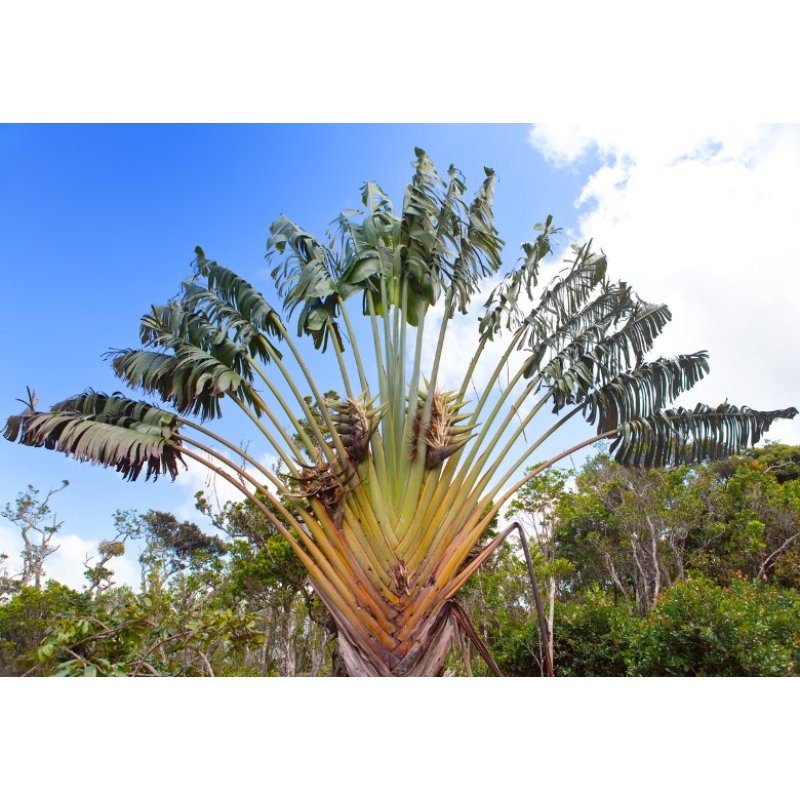
The Madagascar traveller's palm is an impressive tropical plant native to Madagascar with unique fan-shaped leaves. Its leaves can collect water, which in the past served travelers who were searching for a water source.
 Wide range of quality products
Seeds, essential oils, growing supplies and exotic plants in one place
 Eco-friendly range
We prefer natural and gentle products
 Expert advice
We help you grow – guides, blog and personal support
 Delivery across the EU
PPL, DPD, GLS and local carriers – pickup point or home delivery
The Madagascar traveller's palm is also known as the "traveller's tree". It earned this nickname because water can collect in the leaf stalks, which historically proved useful for travellers seeking a water source. This plant originates from Madagascar and is renowned for its large fan-shaped leaves, which are arranged in a single plane, making the tree look like a giant fan. The leaves are often oriented in a north-south direction, which can help reduce direct solar radiation during the hottest parts of the day.
Thanks to its impressive appearance and fan-shaped leaves, it is a popular ornamental plant in tropical and subtropical regions around the world.

The Madagascar traveller's palm is an ornamental plant with a distinctive appearance. It has large fan-shaped leaves that can grow to over 3 metres in length. These leaves grow from the main stem and are arranged in a single plane, giving the plant its characteristic fan-like appearance. The trunk is straight, tall and upright, and can reach heights of up to 20 metres. The trunk surface is covered with the stems of older leaves, giving it a rough appearance. The Madagascar traveller's palm produces an inflorescence hidden among the leaves, containing small white flowers. The fruits are blue to purple and contain seeds wrapped in an orange fruit. It is known for its characteristic growth pattern, with leaves often oriented in a north-south direction, which can help reduce the impact of direct solar radiation.
Overall, the Madagascar traveller's palm has an impressive and exotic appearance, which is often valued in garden architecture, especially in tropical and subtropical regions.
.png)
1. Seed Preparation: Some Madagascar traveller's palm seeds have a hard and resistant shell. To increase germination rates, you can soak the seeds in warm water for 24 hours to soften the shell.
2. Growing Medium Preparation: The Madagascar traveller's palm prefers well-draining soil. You can use a mixture of garden soil and perlite or sand in a 2:1 ratio. This mixture ensures good drainage while retaining moisture.
3. Sowing Seeds: Fill growing containers with the prepared substrate and sow seeds approximately 1-2 cm deep. If you have more than one seed, sow the seeds at adequate spacing.
4. Watering: After sowing the seeds, lightly water the substrate to moisten the seeds. Then keep the substrate moist but not waterlogged. Regularly check moisture levels and water as needed.
5. Temperature and Light Intensity: The Madagascar traveller's palm needs a warm and bright environment for germination. Place growing containers in a sunny location with temperatures around 20-25°C. You can place them on a windowsill or use artificial lighting.
6. Seedling Care: After the seeds germinate, small seedlings will appear. Keep the substrate slightly moist and gradually increase the amount of light. When the seedlings are approximately 10 cm tall, you can transplant them into individual pots with more space for roots.
7. Plant Care: Keep plants in a bright and sunny location with plenty of light. Regularly remove dead leaves and flowers to keep plants healthy.
Data sheet
Your review appreciation cannot be sent
Report comment
Report sent
Your report cannot be sent
Write your review
Review sent
Your review cannot be sent
The Madagascar traveller's palm is an impressive tropical plant native to Madagascar with unique fan-shaped leaves. Its leaves can collect water, which in the past served travelers who were searching for a water source.
check_circle
check_circle