 Essential oils
 Aroma lamps
 Aroma Diffusers
 Vegetables
 Herbs and spices
 Ornamental Plant Seeds
 Grass mixtures
 Sprouts and microgreens
 Exotic Fruit and Vegetables
 Exotic herbs
 Exotic trees and shrubs
 Ornamental exotic plants
 Espresso coffee
 Ecological coffee preparation
 Thermal mugs and coffee cups
 Aeropress
 Thermos flasks and thermal mugs for coffee and tea
 Moka pot
 Filter coffee
 Coffee blends
 Water filtration
 Coffee grinders
 Cleaning the Coffee Maker
 Ecological Cleaning of Coffee Machines
 Coffee makers
 Coffee Preparation
 Coffee Accessories
 For wildlife and pets
 Chocolate and others
 Hemp food products
 Hemp cosmetics
 Bongs - water pipes
 Blunts and tubes
 E-liquids with Terpenes and CBD
 Grinders and Mills
 Papers and filters
 Smoking accessories
 Vaporizers
 Air fresheners
 CBD sprays
 CBD and CBN crystals
 CBD body and facial care
 Weeds
 CBD suppositories and capsules
 CBD oils and drops
 CBG oils and drops
 Fashion and Decoration
 Kitchen essentials and cooking
 Christmas Decorations and Accessories
 Gift Sets
 Bird feeders
 Seasonal and Special Tools

 Our products
 Aromatherapy - essential oils
 Seeds
 Growing supplies
 Cultivation and Gardening Supplies
 Hydroponics and indoor growing
 Protective equipment and gardening tools
 Exotic plants
 Roasted coffee
 Accessories for coffee makers
 Food products
 Natural cosmetics
 Smoking supplies
 CBD and CBG products
 House and garden


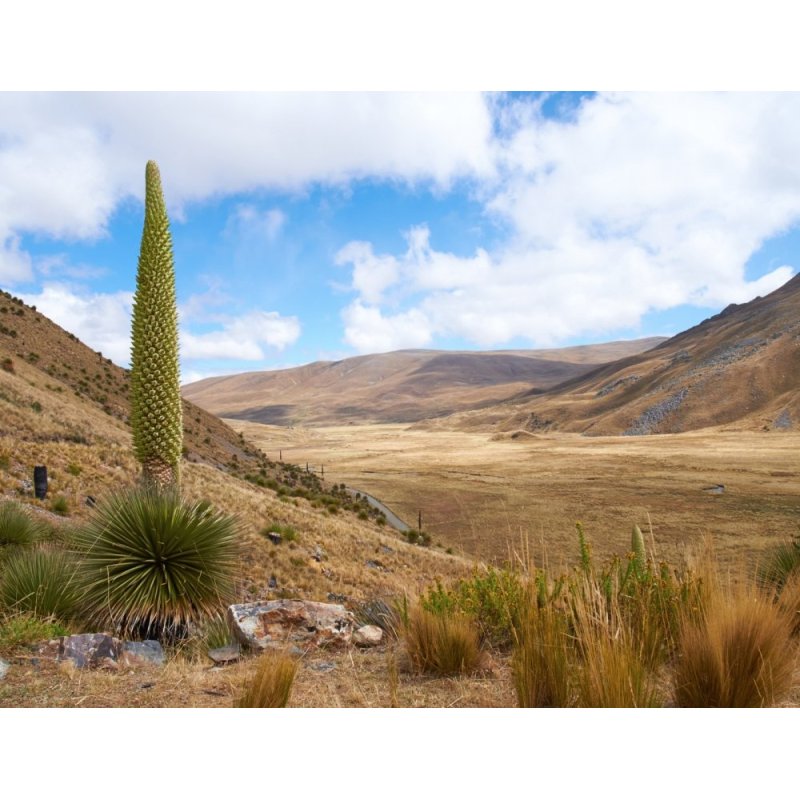
Puya mirabilis is a fascinating plant with long spiny leaves and beautiful blue-violet flowers. Its adaptation to harsh mountain environments and ability to capture water make it an amazing example of surviving and maintaining its beauty in extreme conditions.
 Wide range of quality products
Seeds, essential oils, growing supplies and exotic plants in one place
 Eco-friendly range
We prefer natural and gentle products
 Expert advice
We help you grow – guides, blog and personal support
 Delivery across the EU
PPL, DPD, GLS and local carriers – pickup point or home delivery
Puya mirabilis originates from the mountainous regions of the Andes in South America, primarily from Ecuador and Colombia. Puya mirabilis is an interesting plant due to its unusual morphology. This plant produces long and slender leaves that grow from a basal rosette. These leaves can reach lengths of up to around 2 meters and have thorns on their edges. At the end of these leaves, an inflorescence with flowers forms. The flowers typically have a blue or purple color and prominent pistils. It is adapted to extreme conditions in mountainous areas, where temperatures and humidity are often low. With its leaves, it can capture water from rain and fog and store it in the basal rosettes. It is considered an attractive plant for planting in gardens and exotic plant exhibitions. Its unusual appearance and ability to survive in harsh conditions make it an interesting choice for all plant lovers.
.png)
Puya mirabilis is a stunning and unique plant with a distinctive appearance. It can grow up to 2 meters in height. The plant has long, slender leaves. They have a dark green color and are equipped with thorns on the edges, which protect the plant from herbivores. The leaves spread into a characteristic basal rosette. At the end of the long leaves grows a distinctive flower cluster, which is one of the most interesting features of Puya mirabilis. The flower cluster consists of several flowers arranged in an inflorescence. The flowers have a typical blue-purple color that contrasts with the dark green leaves. The flowers of Puya mirabilis are striking and beautiful. They are tubular or bell-shaped and contain pistils and stamens. The color of the flowers varies from blue to purple, which gives the plant a certain mysterious touch.
Overall, Puya mirabilis is an attractive and remarkable plant that attracts attention with its unusual appearance and ability to survive in extreme conditions.

1. Soil preparation: Puya mirabilis needs well-draining and well-drained soil. You can use a substrate mix for cacti and succulents or a mixture of soil, peat, and perlite for better drainage.
2. Seed sowing: gently spread the seeds over the soil surface and lightly cover them with a thin layer of sand or substrate. Do not bury the seeds too deep.
3. Watering: watering should be done carefully to avoid waterlogging. Keep the soil moist but do not overwater it.
4. Temperature: when sowing seeds, maintain a temperature around 20-25 °C. At lower temperatures, germination may take longer.
5. Germination: seeds can germinate for several weeks to months. Once seedlings appear, you can transplant them into individual pots.
6. Growth and care: seedlings need sufficient light, but should be protected from direct sunlight. To prevent root rot, it is necessary to ensure adequate drainage. Keep the substrate slightly moist.
7. Repotting: once the plants start growing and need more space, they can be repotted into larger pots.
8. Adaptation: before planting outdoors, it is advisable to gradually adapt the seedlings to outdoor conditions to avoid shock.
9. Planting in the garden: once the plants are sufficiently strong and well-rooted, they can be planted outdoors in a sunny and sheltered location.
Data sheet
Your review appreciation cannot be sent
Report comment
Report sent
Your report cannot be sent
Write your review
Review sent
Your review cannot be sent
Puya mirabilis is a fascinating plant with long spiny leaves and beautiful blue-violet flowers. Its adaptation to harsh mountain environments and ability to capture water make it an amazing example of surviving and maintaining its beauty in extreme conditions.
check_circle
check_circle