
 Our products
 Aromatherapy - essential oils
 Essential oils
 Aroma lamps
 Aroma Diffusers
 Seeds
 Vegetables
 Herbs and spices
 Ornamental Plant Seeds
 Grass mixtures
 Sprouts and microgreens
 Growing supplies
 Cultivation and Gardening Supplies
 Hydroponics and indoor growing
 Protective equipment and gardening tools
 Exotic plants
 Exotic Fruit and Vegetables
 Exotic herbs
 Exotic trees and shrubs
 Ornamental exotic plants
 Roasted coffee
 Espresso coffee
 Ecological coffee preparation
 Thermal mugs and coffee cups
 Aeropress
 Thermos flasks and thermal mugs for coffee and tea
 Moka pot
 Filter coffee
 Coffee blends
 Accessories for coffee makers
 Water filtration
 Coffee grinders
 Cleaning the Coffee Maker
 Ecological Cleaning of Coffee Machines
 Coffee makers
 Coffee Preparation
 Coffee Accessories
 Food products
 For wildlife and pets
 Chocolate and others
 Hemp food products
 Natural cosmetics
 Hemp cosmetics
 Smoking supplies
 Bongs - water pipes
 Blunts and tubes
 E-liquids with Terpenes and CBD
 Grinders and Mills
 Papers and filters
 Smoking accessories
 Vaporizers
 Air fresheners
 CBD and CBG products
 CBD sprays
 CBD and CBN crystals
 CBD body and facial care
 Weeds
 CBD suppositories and capsules
 CBD oils and drops
 CBG oils and drops
 House and garden
 Fashion and Decoration
 Kitchen essentials and cooking
 Christmas Decorations and Accessories
 Gift Sets
 Bird feeders
 Seasonal and Special Tools
Ginger essential oil is one of the pronounced, warming oils that have found their place in home aromatherapy. Its spicy scent is often associated with a feeling of warmth, energy and inner comfort – especially during the cold months. In this article you will learn how to use ginger oil in a diffuser, a bath or massage blends, which oils to combine it with and what to watch out for when using it. Practical tips and simple aromatherapy blends are included too.
Ginger essential oil is one of the pronounced and characteristic oils that people have come to like mainly for its warming, spicy aroma. In aromatherapy it is often used in winter, on cold evenings or whenever you want to give a space a feeling of warmth and energy.
You may be surprised that ginger is interesting not only in the kitchen. The essential oil obtained by steam distillation from the rhizomes of this well-known plant is used in diffusers, baths and massage blends.
If you are only starting with aromatherapy, ginger essential oil can be an interesting addition to your home collection. A really small amount is enough and blends gain a distinctive character.
Contents
- What ginger essential oil is
- What ginger oil smells like and its properties
- How to use ginger essential oil
- What to combine ginger oil with
- Traditional uses of ginger in aromatherapy
- Safe use of ginger oil
- FAQ
What ginger essential oil is
Ginger essential oil is obtained by steam distillation from the rhizomes of the plant Zingiber officinale. This process preserves the characteristic scent of ginger – warm, spicy and slightly fresh.
Put simply, it is a concentrated aromatic essence of the plant. That is why it is always used only in small amounts and is usually diluted in a carrier oil or another base medium.
What ginger oil smells like and what properties it has
The scent of ginger essential oil is intense, warm and spicy. Many people recognise in it gentle citrus or slightly woody notes.
In aromatherapy, ginger is often associated with a feeling of warmth, energy and inner comfort. That is why it is popular especially in winter blends or evening rituals.
| Property | Description |
|---|---|
| Part of the plant used | rhizomes (root) of ginger |
| Method of extraction | steam distillation |
| Aroma | warm, spicy, slightly citrusy |
| Colour | pale yellow to orange |
How to use ginger essential oil
Ginger essential oil is used mainly in home aromatherapy. Thanks to its pronounced scent, it can give blends depth and a pleasantly warming character.
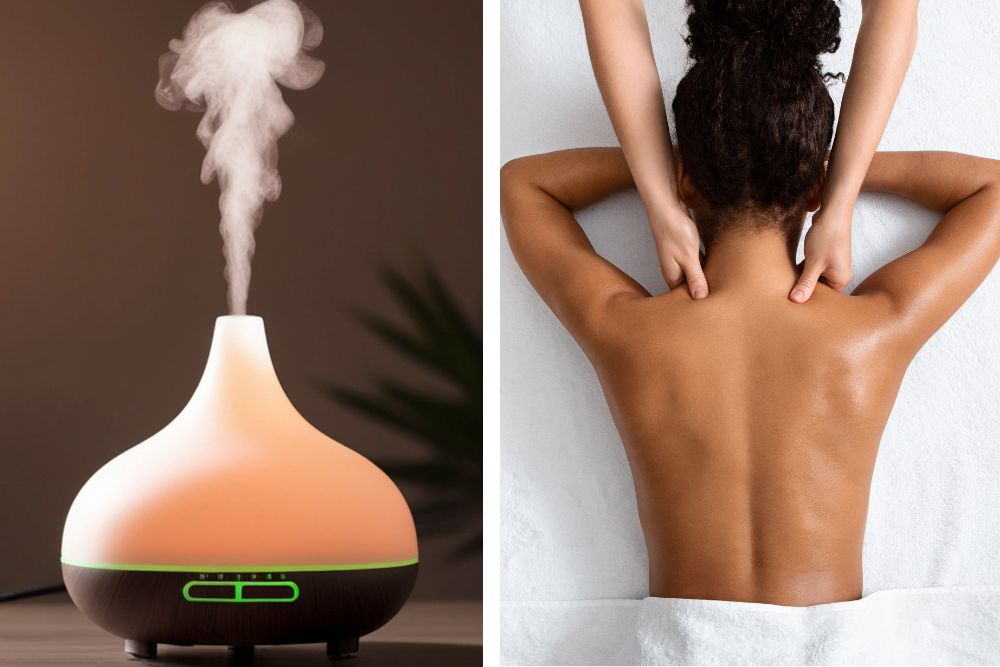
Diffuser or oil burner
For a diffuser, 2–4 drops of ginger oil are usually enough. In an oil burner, 1–3 drops are used in the water in the bowl.
Such a blend can help create a cosy atmosphere on cold evenings or after a demanding day.
Massage blends
Ginger is often added to massage oils. It is always used diluted, for example 1–2 drops of ginger oil per 10 ml of carrier oil.
The carrier oil can be, for example, almond, jojoba or another vegetable oil.
A warm aromatherapy bath
For an evening bath, you can add 3–5 drops of ginger oil to a carrier oil or a neutral bath base. Only then add the blend to the water.
Such a bath is popular especially in winter.
What to combine ginger essential oil with
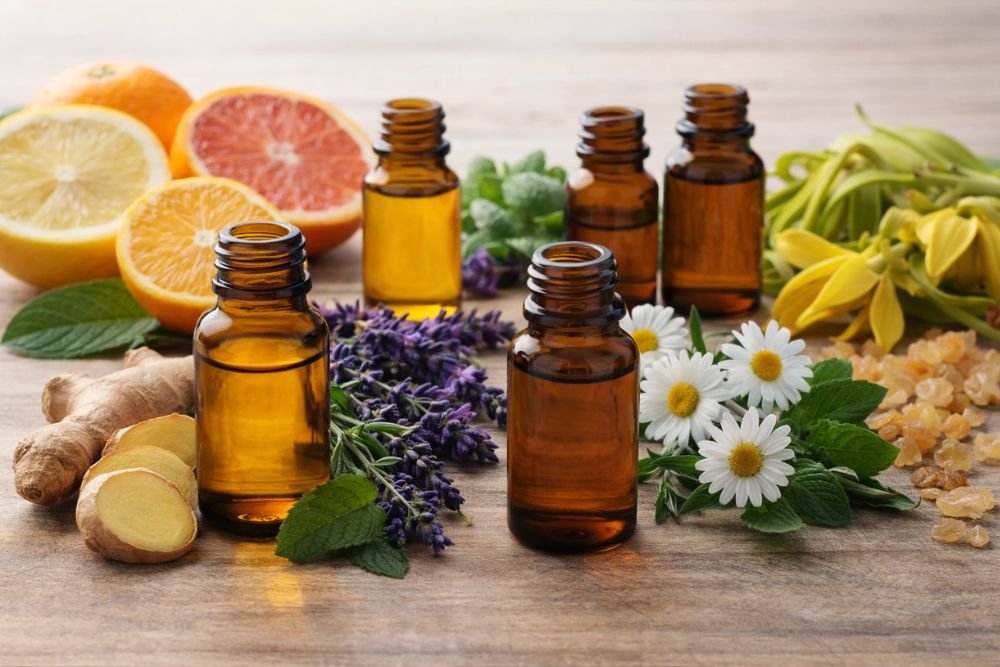
Ginger oil combines very well with other essential oils. The resulting scent can be fresh, relaxing or deeper and spicy.
- citrus oils – lemon, orange, grapefruit
- floral oils – lavender, chamomile
- deeper scents – frankincense or ylang-ylang
- herbal oils – peppermint
Traditional uses of ginger in aromatherapy
Ginger appears in many traditional body-care rituals. In Ayurveda it is regarded as a warming plant that is often part of massages and steam baths.
In modern aromatherapy it is used mainly to create a warming atmosphere, in massage rituals or in blends for the winter season.
If you are interested in the broader context, also read the article Indian aromatherapy: traditional uses of essential oils in Ayurvedic medicine.
Safe use of ginger oil
As with all essential oils, it is important to use ginger oil with care.
- do not apply undiluted directly to the skin
- avoid contact with the eyes and mucous membranes
- use only a small amount
- keep out of the reach of children
You will find more detailed information in the article Safe use of essential oils.
Conclusion
Ginger essential oil is one of the pronounced and interesting oils in aromatherapy. Its warming scent can create a pleasant atmosphere on cold days and evenings.
Whether you use it in a diffuser, a massage blend or a bath, a really small amount is enough. Thanks to its characteristic scent, ginger can be an interesting addition to your home aromatherapy.