
 Our products
 Aromatherapy - essential oils
 Essential oils
 Aroma lamps
 Aroma Diffusers
 Seeds
 Vegetables
 Herbs and spices
 Ornamental Plant Seeds
 Grass mixtures
 Sprouts and microgreens
 Growing supplies
 Cultivation and Gardening Supplies
 Hydroponics and indoor growing
 Protective equipment and gardening tools
 Exotic plants
 Exotic Fruit and Vegetables
 Exotic herbs
 Exotic trees and shrubs
 Ornamental exotic plants
 Roasted coffee
 Espresso coffee
 Ecological coffee preparation
 Thermal mugs and coffee cups
 Aeropress
 Thermos flasks and thermal mugs for coffee and tea
 Moka pot
 Filter coffee
 Coffee blends
 Accessories for coffee makers
 Water filtration
 Coffee grinders
 Cleaning the Coffee Maker
 Ecological Cleaning of Coffee Machines
 Coffee makers
 Coffee Preparation
 Coffee Accessories
 Food products
 For wildlife and pets
 Chocolate and others
 Hemp food products
 Natural cosmetics
 Hemp cosmetics
 Smoking supplies
 Bongs - water pipes
 Blunts and tubes
 E-liquids with Terpenes and CBD
 Grinders and Mills
 Papers and filters
 Smoking accessories
 Vaporizers
 Air fresheners
 CBD and CBG products
 CBD sprays
 CBD and CBN crystals
 CBD body and facial care
 Weeds
 CBD suppositories and capsules
 CBD oils and drops
 CBG oils and drops
 House and garden
 Fashion and Decoration
 Kitchen essentials and cooking
 Christmas Decorations and Accessories
 Gift Sets
 Bird feeders
 Seasonal and Special Tools
Discover the world of Indian aromatherapy, which connects millennia-old Ayurveda with the fragrances of natural essences. Essential oils are used in traditional care to support the balance of body and mind, for relaxation and to create a harmonious environment. Enter a world where fragrances complement rituals focused on well-being and inner peace.
In short: Indian aromatherapy applies Ayurvedic principles to essential oils – inhalation, abhyanga massage, bath rituals, compresses, meditation and natural cosmetics. Oils are always diluted in a carrier oil such as almond, sesame or coconut, never applied neat. Kumkumadi combines more than 20 herbs including saffron, and individual scents are traditionally paired with the seven chakras.
| Main ways of use | Inhalation, massage (abhyanga), bath rituals, compresses, meditation, natural cosmetics |
|---|---|
| Carrier oils for dilution | Almond, sesame, coconut – essential oils never applied undiluted |
| Kumkumadi composition | More than 20 herbs, including saffron; used as an evening facial oil |
| Hair-care oils | Bhringraj, amla, gotu kola – massaged into the scalp, e.g. as a weekly ritual |
| Oils for meditation | Sandalwood, frankincense, jasmine, lavender |
| Avoid during pregnancy | Cinnamon, clove, sage, rosemary, babchi; consult a specialist first |
Did you know that Indian aromatherapy isn't just about pleasant fragrances, but also about conscious care for body, mind and inner balance? This millennia-old tradition combines the use of essential oils with the principles of Ayurveda, which emphasizes harmony, life energy and overall sense of wellbeing.
✨Updated for 2025: modern Ayurvedic practice increasingly combines traditional methods with current aromatherapy knowledge to support a healthy lifestyle and daily rituals focused on calm, concentration or gentle body care. In this article, we'll explore how Ayurveda works with aromatherapy, which essential oils are most popular in India, and how some rituals can be safely used at home – whether for relaxation, chakra work, or as part of skin and hair care.
Table of Contents
- What is Indian aromatherapy and how does it relate to Ayurveda?
- Ways to use essential oils in Ayurvedic practice
- Most popular Ayurvedic essential oils
- Balancing chakras through aromatherapy
- FAQ – Frequently Asked Questions
- Conclusion: Inspiration for your ritual
What is Indian aromatherapy and how does it relate to Ayurveda?
Indian aromatherapy is based on the principles of Ayurveda – a traditional Indian system that focuses on harmony of body, mind and overall life energy. In Ayurvedic practice, fragrances are considered an important part of caring for inner balance and supporting a pleasant atmosphere.
Essential oils are traditionally used during meditation, relaxation or during rituals focused on calming and concentration. In Indian tradition, fragrances are also often connected with the concept of chakras, meaning energy centers, where different essences symbolically support a sense of balance and inner peace.
Ways to Use Essential Oils in Ayurvedic Practice
In Ayurvedic tradition, essential oils have their place in daily rituals and in body and mind care. They are used not only for their fragrance, but also as part of relaxation and harmonising practices.
🌿Inhalation
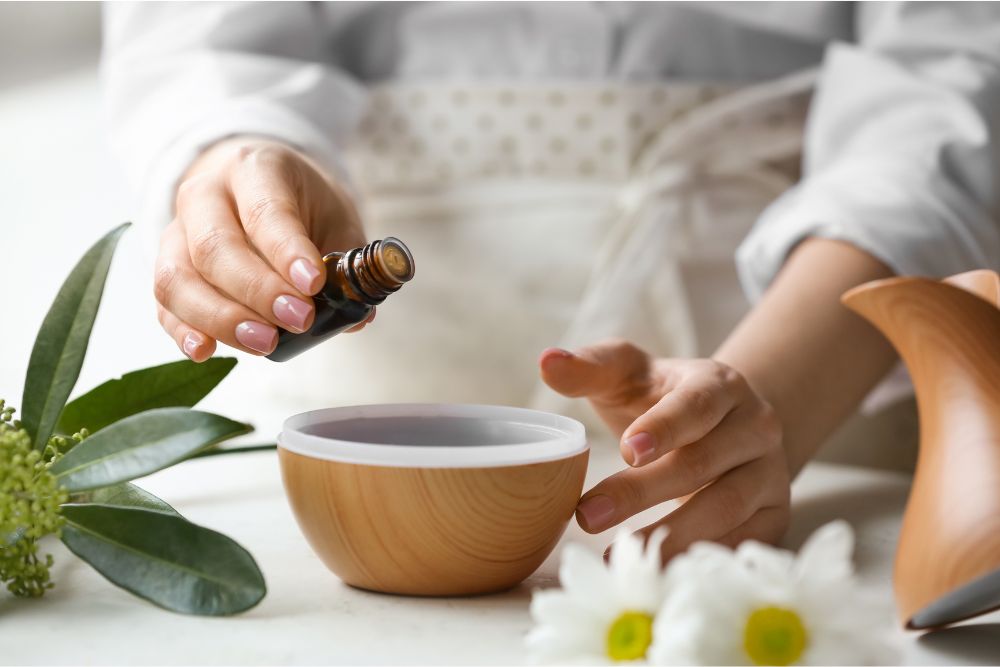
Used in diffusers or aroma lamps to create a pleasant atmosphere that supports concentration or calming.
🌿Massage (abhyanga)
In Ayurveda, massage is an important ritual. A blend of carrier and essential oil is applied to the body for tension release and overall relaxation.
🌿Bath rituals
A few drops of essence mixed with carrier oil or salt can create a pleasant fragrance that softens the evening ritual and promotes relaxation.
🌿Compresses
Warm or cold compresses with essential oils diluted in carrier oil are traditionally used in care for strained or stiff body parts.
🌿Meditation and spiritual practice
Aromatic essences are often used during meditation, prayers and breathing exercises, where they help create a calm atmosphere.
🌿Natural cosmetics
In Ayurveda, facial waters, hair oils, masks or shampoos with added essences are popular – always safely diluted.
New to aromatherapy?
We recommend reading our article on safe use of essential oils to create pleasant rituals without the risk of irritation or sensitivity.
Most Popular Ayurvedic Essential Oils
In Ayurvedic tradition, each oil has its specific use – some are popular in skincare, others are used during relaxation rituals or meditation. Below you'll find an overview of the most well-known ones.
🌿 Fennel Oil
Fennel has a fresh, slightly spicy scent that is often associated with a sense of wellbeing and relaxation. In Ayurvedic care, it's popular thanks to its gentle, aromatic nature.
Uses:
- a few drops in a diffuser create a pleasant environment after meals,
- in oil hair care, it may contribute to the feeling of soft and shiny hair.
🌿 Ginger Oil
Ginger has a warm, heating aroma. In Ayurveda, it's traditionally used during winter or after physical exertion.
Uses:
- suitable for warm baths,
- added to massage blends for a warming sensation.
💡 Tip: A blend of carrier oil and a drop of ginger oil works pleasantly for cold hands or feet.
🌿 Kumkumadi Oil
Kumkumadi is considered a traditional "elixir of beauty" in India. It contains more than 20 herbs, including saffron.
Uses:
- used as an evening facial oil,
- popular in the care of mature and stressed skin
(always apply in small amounts).
🌿 Gotu Kola Oil
Gotu kola is a significant Ayurvedic herb. The oil is often used in skincare for uneven texture or dry patches.
Uses:
- added to homemade facial masks,
- gently massaged into the scalp, it is associated with the feeling of strengthened and nourished hair.
🌿 Babchi Oil
Babchi (psoralea corylifolia) is an intensive Ayurvedic oil that requires careful handling. In traditional care, it is used when there is a need to unify skin appearance.
Uses:
- applied topically and always diluted,
- ideally apply in the evening and avoid sun exposure.
⚠️ Very concentrated oil – use only when diluted and with caution.
🌿 Bhringraj Oil
Bhringraj is one of the most popular hair oils in Ayurveda. Traditionally used in rituals focused on hair comfort.
Uses:
- gently massage into the scalp and leave on,
- ideal as part of a weekly hair ritual.
🌿 Amla Oil
Amla (Indian gooseberry) is valued for its traditional role in hair care. The oil has a pleasant herbal scent and is associated with healthy-looking hair.
Uses:
- as a hair wrap,
- can be added to shampoo or hair mask to increase nourishment.
Each oil has its specific place in Ayurvedic care. Some are mainly used in relaxation rituals, others in skin or hair care. In Ayurveda, it's common to combine oils so that their fragrances and effects harmonize with each other.
💬 Want to learn more about the traditional effects of herbal oils?
We recommend our article Herbal and Essential Oils in Traditional Care – What History and Modern Aromatherapy Say.
Balancing Chakras Through Aromatherapy
In Ayurvedic tradition, essential oils are often used as part of meditation, yoga, or breathing exercises. Their fragrance can help create an atmosphere that supports concentration and inner peace. Each chakra is associated with certain fragrances that are traditionally used to support the harmonization of energy centers.
-
Crown Chakra (Sahasrara): lavender or frankincense are often used, whose delicate fragrance supports a sense of calm.
-
Third Eye (Ajna): popular oils include peppermint or rosemary, which bring a fresh and pure aroma.
-
Throat Chakra (Vishuddha): chamomile or eucalyptus are typically associated with a feeling of openness and release.
-
Heart Chakra (Anahata): rose, ylang-ylang, or jasmine support a gentle and harmonious atmosphere.
-
Solar Plexus (Manipura): citrus oils such as lemon or bergamot are traditionally associated with energy and vitality.
-
Sacral Chakra (Svadhishthana): orange, sandalwood or patchouli support feelings of creativity and relaxation.
-
Root Chakra (Muladhara): vetiver, cedar or patchouli are used in rituals focused on grounding and stability.
These aromatic rituals can be a pleasant addition to daily meditation or relaxation practices and help create a space that feels harmonious.
💬 Reading tip:
For inspiration on how to incorporate essential oils into rituals for calming and balance, we recommend the article Anti-stress Rituals with Essential Oils.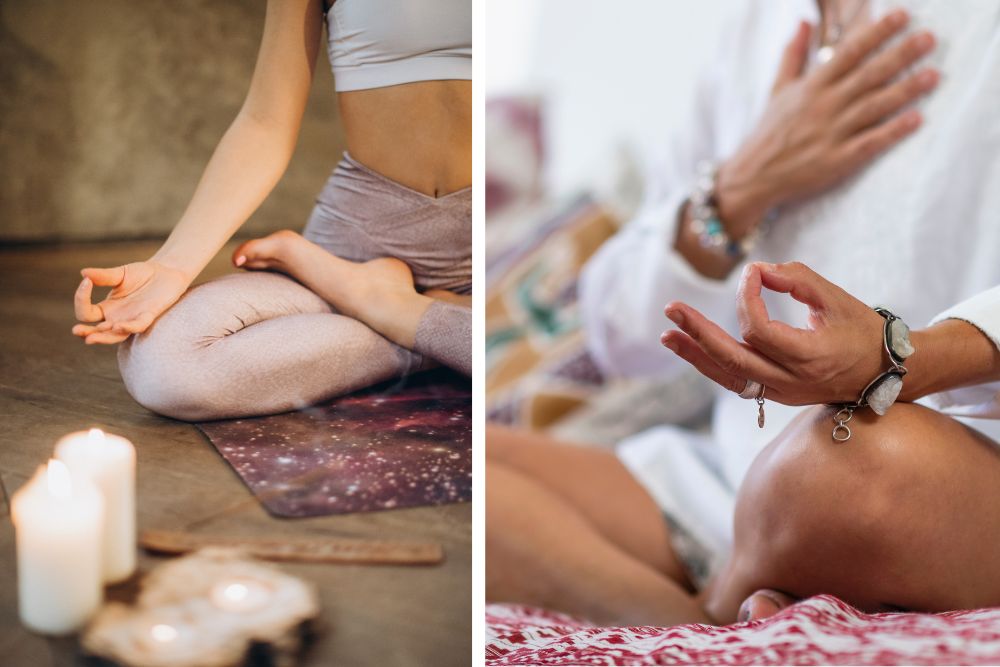
FAQ – Frequently Asked Questions
🌿Are essential oils suitable for everyone, or does it depend on the type of person?
Yes, oils can be used by everyone, but certain scents and types of oils suit different people according to their nature. For example, gentle floral scents calm sensitive and stressed individuals, while spicy and warming oils support energy in people who need more warmth or encouragement.
🌿Can I use essential oils directly on my skin?
No, you must always dilute them in a carrier oil (almond, sesame, coconut). Do not use them undiluted, especially strong Ayurvedic oils like babchi or ginger.
🌿Which essential oil is best for meditation?
In Ayurveda, sandalwood, frankincense, jasmine, or lavender are most commonly used – they create a calm atmosphere and support mental focus.
🌿Can Ayurvedic oils be combined?
Yes. Combining oils is actually a common part of Ayurveda. However, it's important to choose compatible scents and follow the recommended dilution.
🌿Are Indian aromatherapy oils safe during pregnancy?
Some are, some aren't. You should completely avoid oils such as cinnamon, clove, sage, rosemary, or babchi. Consultation with a specialist is necessary before use.
Conclusion: Inspiration for Your Ritual
Indian aromatherapy offers a beautiful connection of traditional scents, rituals, and care for both body and mind. Ayurvedic oils can be a pleasant addition to your day – whether you use them during meditation, massage, relaxation, or in cosmetic rituals.
In the modern world, their scent can be a natural way to give yourself a moment of calm, stillness, and return to yourself.
If you're looking for natural care inspired by Ayurveda – whether for skin, hair, or mental well-being – take a look at our range of Ayurvedic herbal oils and find the one that will best suit your personal ritual.
-