
 Our products
 Aromatherapy - essential oils
 Essential oils
 Aroma lamps
 Aroma Diffusers
 Seeds
 Vegetables
 Herbs and spices
 Ornamental Plant Seeds
 Grass mixtures
 Sprouts and microgreens
 Growing supplies
 Cultivation and Gardening Supplies
 Hydroponics and indoor growing
 Protective equipment and gardening tools
 Exotic plants
 Exotic Fruit and Vegetables
 Exotic herbs
 Exotic trees and shrubs
 Ornamental exotic plants
 Roasted coffee
 Espresso coffee
 Ecological coffee preparation
 Thermal mugs and coffee cups
 Aeropress
 Thermos flasks and thermal mugs for coffee and tea
 Moka pot
 Filter coffee
 Coffee blends
 Accessories for coffee makers
 Water filtration
 Coffee grinders
 Cleaning the Coffee Maker
 Ecological Cleaning of Coffee Machines
 Coffee makers
 Coffee Preparation
 Coffee Accessories
 Food products
 For wildlife and pets
 Chocolate and others
 Hemp food products
 Natural cosmetics
 Hemp cosmetics
 Smoking supplies
 Bongs - water pipes
 Blunts and tubes
 E-liquids with Terpenes and CBD
 Grinders and Mills
 Papers and filters
 Smoking accessories
 Vaporizers
 Air fresheners
 CBD and CBG products
 CBD sprays
 CBD and CBN crystals
 CBD body and facial care
 Weeds
 CBD suppositories and capsules
 CBD oils and drops
 CBG oils and drops
 House and garden
 Fashion and Decoration
 Kitchen essentials and cooking
 Christmas Decorations and Accessories
 Gift Sets
 Bird feeders
 Seasonal and Special Tools
Jojoba oil is among the most popular carrier oils in natural cosmetics. In this article you will learn about the effects of jojoba oil on skin and hair, how to use it correctly and who it suits. It also includes a comparison with other vegetable oils and practical tips for everyday care.
In short: Jojoba oil is chemically a liquid wax, not an oil. Its composition is close to sebum, it does not clog pores and does not go rancid, so it keeps for five years or longer, whereas ordinary carrier oils last one to two years. As a carrier oil, essential oils are diluted in it to 1–2%, that is 5–10 drops per 30 ml.
| Chemical nature | a liquid wax made of esters of long fatty chains |
|---|---|
| Shelf life | 5 years or longer |
| Dilution of essential oils | 1–2% (5–10 drops per 30 ml) |
| Dilution for the face | 1% |
| Amount for the skin | 2–3 drops |
| Amount for hair ends | 1 drop |
Jojoba oil is not an oil but a liquid wax, and everything else follows from that. It consists of esters of long fatty chains, not of triglycerides like almond or sunflower oil, so it is close to the composition of human sebum, does not clog pores and does not go rancid. It keeps for five years or more, whereas ordinary carrier oils last one to two years. It is used as a carrier oil for essential oils at a dilution of 1 to 2%, that is 5 to 10 drops per 30 ml, and on its own on skin and hair.
Below you will find how it differs from other carrier oils, what it is good for and how to recognise quality. This is not medical advice.
Contents
- What jojoba oil is and why it is so popular
- Why jojoba oil behaves differently from most oils
- Jojoba oil: effects on the face and skin
- Jojoba oil for hair: when it makes sense
- How to use jojoba oil in practice (step by step)
- Comparison: jojoba vs. other carrier oils
- What to combine jojoba with (including essential oils)
- How to recognise a cosmetic oil (and not a kitchen oil)
- Safety, storage and common mistakes
- Conclusion: jojoba oil as the basis of everyday care
- FAQ: the most common questions about jojoba oil
What jojoba oil is and why it is so popular
BIO jojoba oil (Simmondsia chinensis) is obtained by cold pressing the seeds of a plant sometimes called the desert nut. It has a gentle, almost neutral scent and a pale yellow to golden colour. That makes it suitable for almost anything – skin, hair and massages.
It is popular mainly for its clean feel on the skin. When you are looking for an oil that absorbs well and does not feel heavy, jojoba is often a very good start.
Why jojoba oil behaves differently from most oils
This is what is so interesting about jojoba. From a chemical point of view, it is not a classic oil but a liquid wax. What should you picture? Not something hard, rather a substance that is naturally stable and holds its shape. That is precisely why jojoba practically does not go rancid and keeps for a long time when stored correctly.
In practice this often means that jojoba feels natural on the skin and does not form a heavy coating. Many people describe it as an oil that leaves no sticky feeling.
Jojoba oil: effects on the face and skin
The effects of jojoba oil are related mainly to comfort and the balance of the skin. Jojoba is popular with people who want hydration and softness but do not like heavy textures. It often suits combination skin too, as it absorbs well and leaves no oily film.
In natural care it has traditionally been used as a universal oil for nourishing the skin and supporting its natural renewal. Do not expect miracles on the spot, rather small daily pluses that add up.
You will like it most, for example:
- for ordinary everyday care when you want simplicity,
- on dry areas (for example around the nose, on the cheeks, on the elbows),
- in oil blends when you do not want them to be too heavy,
- as a light oil after a shower on still damp skin.
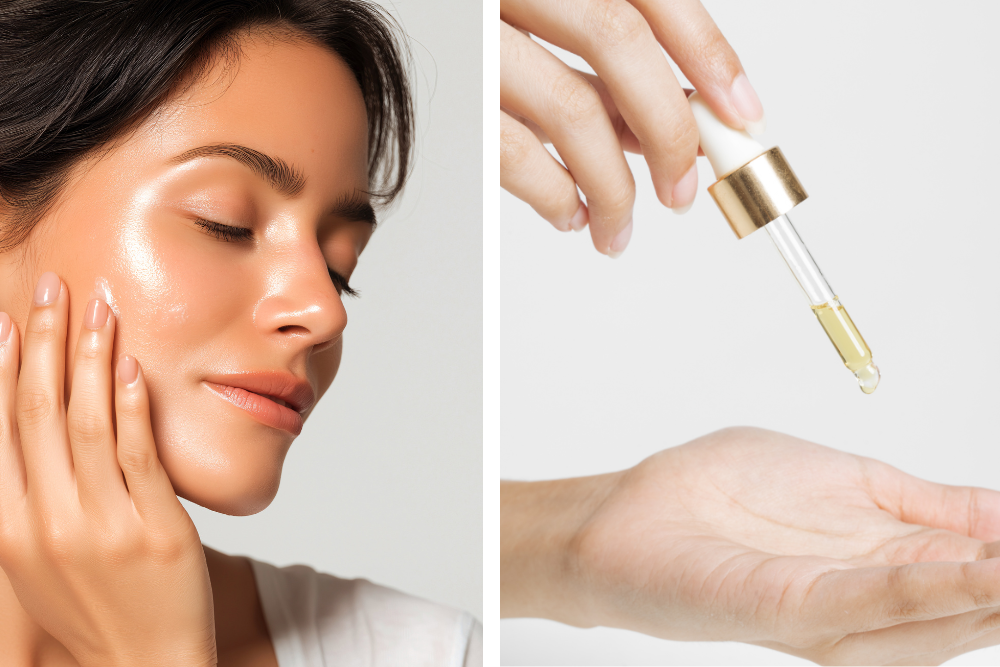
Jojoba oil for hair: when it makes sense
Jojoba oil for hair is used mainly on the lengths, the ends or as a light wrap. It is good when you want to give hair shine and smooth dry ends but do not want to weigh it down with a rich oil.
For the scalp, the rule is: always a little and with respect. Everyone likes something different. If you have sensitive skin, first do a small test and see how you feel.
How to use jojoba oil in practice (step by step)
1) Face: a simple ritual in the morning or evening
It works best on slightly damp skin. After a shower, after toner or after floral water. Put 2–3 drops into your palms, warm them and apply gently to the skin. Do not rub aggressively. The skin usually does not find that pleasant.
2) Make-up removal (oil cleansing)
Jojoba also suits as a make-up removing oil. Apply a small amount to your palms, gently massage in the make-up and then wipe off with a warm damp towel or cotton pad. You can then follow up with a gentle gel.
3) Body after a shower
It is ideal for the body when you do not want to wait long for the oil to absorb. Focus on dry areas – shins, elbows, hands. And again: it is best applied to damp skin.
- face: 2–3 drops
- hair ends: 1 drop
- body: a few drops in your palms, rather in portions
Comparison: jojoba vs. other carrier oils
If you are only getting your bearings with oils, a comparison will save you a lot of trial and error. It is not about the best oil in the world. It is about the one that suits your skin and your daily rhythm.
| Oil | Feel on the skin | When it makes sense |
|---|---|---|
| Jojoba | Light, quick | Combination skin, daily routine, under make-up, beginners |
| Almond | Gentle, comfortable | Dry and more sensitive skin, body, massages |
| Grape seed | Very light | Summer care, quick absorption, oilier skin |
| Avocado | Richer, nourishing | Very dry skin, winter, evening, hair wraps |
What to combine jojoba with (including essential oils)
Jojoba is a great base for homemade blends. It absorbs well and lets the scent of essential oils stand out. If you want a blend that is gentle yet practical, jojoba is often ideal.
- For skin hydration: jojoba + lavender + rose
- For calming: jojoba + chamomile + neroli
- For oilier skin: jojoba + tea tree + rosemary
- For nourishing hair: jojoba + ylang-ylang + cedar

How to recognise a cosmetic oil (and not a kitchen oil)
This is a common source of confusion. When you type "jojoba oil" into a search engine, you will find various products. A cosmetic oil should be clearly labelled as an oil for external use. Ideally you will also see the method of processing (for example cold pressing) and a pure composition without unnecessary admixtures.
- Is cosmetic use / "for external use" stated?
- Does it say how the oil was obtained (ideally cold pressing)?
- Does it have a clear composition (e.g. INCI) without unnecessary ingredients?
Safety, storage and common mistakes
Jojoba oil is intended for external use. It is usually very well tolerated, but it still pays to follow a few simple rules. Especially if you have sensitive skin or are trying an oil for the first time.
- It is a cosmetic product / a raw material for further processing.
- It is not intended for internal use.
- It can be used directly on the skin – dilution is not necessary.
- Avoid contact with the eyes and mucous membranes.
- For sensitive skin, we recommend a patch test.
- Store away from direct sun and tightly closed.
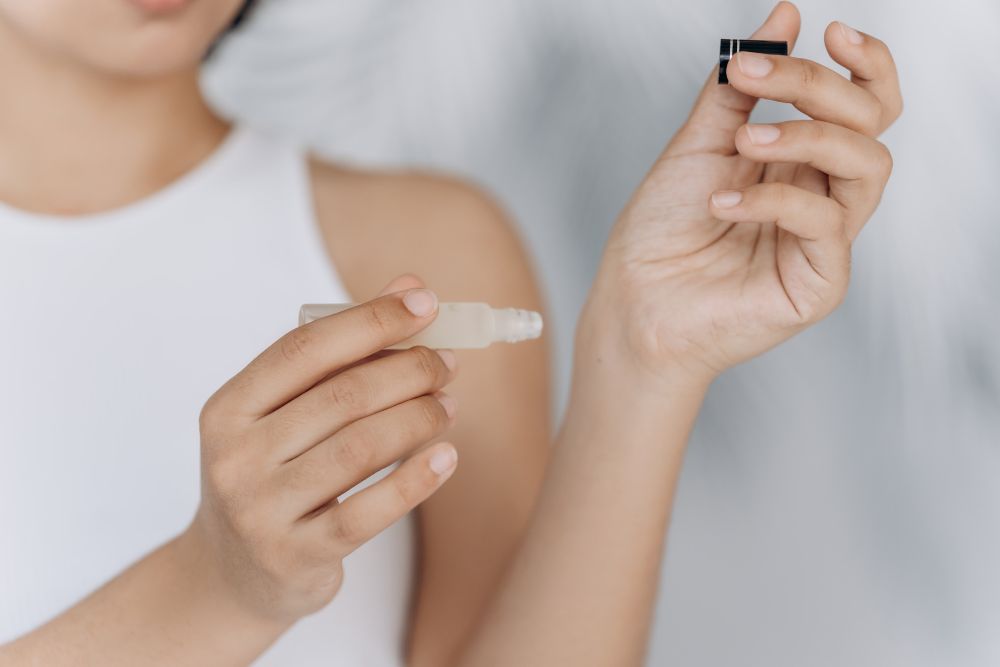
Conclusion: jojoba oil as the basis of everyday care
There is no single best oil for everyone. But if you want a light, stable and easy-to-use base for everyday care, jojoba oil is among the most versatile choices. Start with a small amount and see how your skin feels – that is the most reliable indicator.
FAQ: the most common questions about jojoba oil
Frequently asked questions
What are the effects of jojoba oil?
On the skin it behaves like a light film that reduces water loss but does not feel greasy and does not clog pores, because its composition corresponds to sebum. It therefore suits oily and combination skin too, where heavier oils are a problem. On hair it is used on the ends and on the scalp before washing.
Why does jojoba oil not go rancid?
Because chemically it is not an oil but a liquid wax made of esters. It lacks the bonds that oxidise in ordinary oils, so it keeps for five years or longer. That is precisely why it is added to blends with oils that turn rancid quickly, extending their shelf life.
What is the difference compared with almond and other carrier oils?
Almond, sunflower or macadamia oil are triglycerides: they feel greasier, absorb more slowly and keep for one to two years. Jojoba feels drier to the touch, keeps the longest and is more expensive. You will find an overview of the others in the article carrier oils from A to Z.
How do I use jojoba oil as a carrier?
To 30 ml of jojoba, add 5 to 10 drops of essential oil, which corresponds to a dilution of 1 to 2%. For the face, stay at one per cent. Store the blend in a dark bottle; jojoba will keep, but the essential oil in it will not.
How do I recognise good jojoba oil?
It should be cold-pressed and unrefined, that is golden with a gentle nutty scent. A clear colourless oil has been refined and has lost some of its accompanying substances. The label should say Simmondsia chinensis and it should be filled into dark glass.
You might also be interested in: Paper mulberry