
 Our products
 Aromatherapy - essential oils
 Essential oils
 Aroma lamps
 Aroma Diffusers
 Seeds
 Vegetables
 Herbs and spices
 Ornamental Plant Seeds
 Grass mixtures
 Sprouts and microgreens
 Growing supplies
 Cultivation and Gardening Supplies
 Hydroponics and indoor growing
 Protective equipment and gardening tools
 Exotic plants
 Exotic Fruit and Vegetables
 Exotic herbs
 Exotic trees and shrubs
 Ornamental exotic plants
 Roasted coffee
 Espresso coffee
 Ecological coffee preparation
 Thermal mugs and coffee cups
 Aeropress
 Thermos flasks and thermal mugs for coffee and tea
 Moka pot
 Filter coffee
 Coffee blends
 Accessories for coffee makers
 Water filtration
 Coffee grinders
 Cleaning the Coffee Maker
 Ecological Cleaning of Coffee Machines
 Coffee makers
 Coffee Preparation
 Coffee Accessories
 Food products
 For wildlife and pets
 Chocolate and others
 Hemp food products
 Natural cosmetics
 Hemp cosmetics
 Smoking supplies
 Bongs - water pipes
 Blunts and tubes
 E-liquids with Terpenes and CBD
 Grinders and Mills
 Papers and filters
 Smoking accessories
 Vaporizers
 Air fresheners
 CBD and CBG products
 CBD sprays
 CBD and CBN crystals
 CBD body and facial care
 Weeds
 CBD suppositories and capsules
 CBD oils and drops
 CBG oils and drops
 House and garden
 Fashion and Decoration
 Kitchen essentials and cooking
 Christmas Decorations and Accessories
 Gift Sets
 Bird feeders
 Seasonal and Special Tools
How is ashwagandha oil used in cosmetics and Ayurvedic oils? A practical overview, simple rituals and tips for gentle, calming body care.
In short: Ashwagandha oil is usually an oil macerate: ashwagandha root steeped in a carrier oil, most often sesame oil. It is not a distilled essential oil, it is used externally only for massage and body care, always after a patch test, and never internally.
| What it is | ashwagandha root steeped in a carrier oil (macerate) |
|---|---|
| Production | maceration, not steam distillation |
| Use | external use only: massage, body oil, bath |
| Dosage in a body oil | 3–5 drops of macerate in the palm with a carrier oil |
| Patch test | a small amount on the forearm, 24 hours |
| Internal use | no, it is not a food supplement |
Ashwagandha (Withania somnifera) is a shrubby plant from India, known from the Ayurvedic tradition. In recent years people have also been looking for it in connection with cosmetics, massage oils and home body-care rituals. There is often confusion about what exactly hides behind the name "ashwagandha oil" and how to check what you are buying.
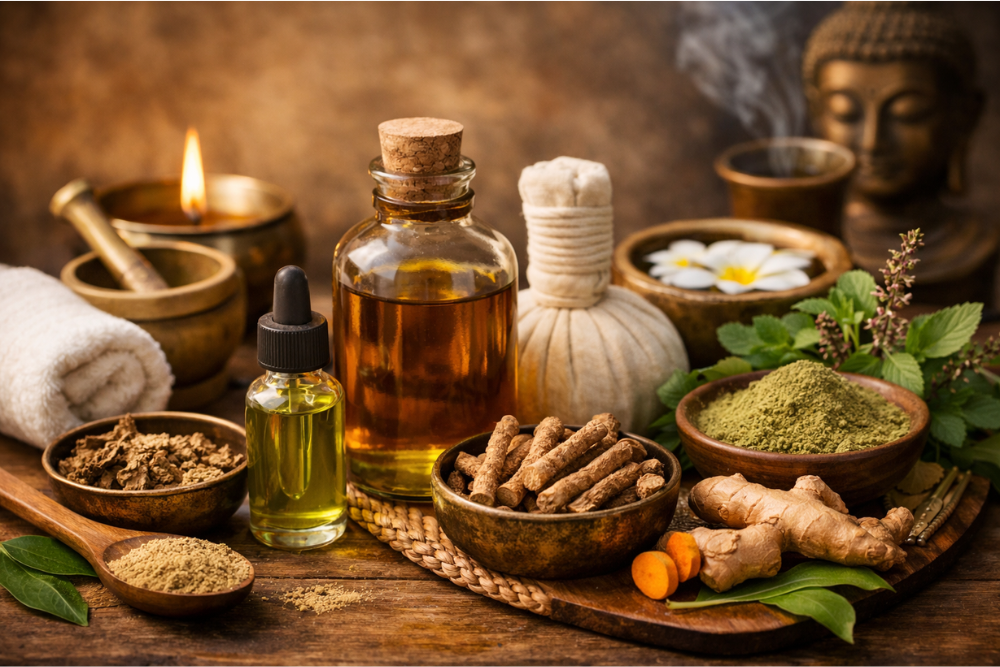
What ashwagandha is and why it appears in cosmetics
In cosmetics, the ingredient most often used is the root of the plant, which has a typical earthy, herbal aroma. Ashwagandha is used as a gentle aromatic ingredient in oil blends: massage and body oils or home evening rituals. It is not a pronounced perfume scent, more a discreet undertone. If you do not like sweet or heavy scents, you may find it pleasant.
Ayurvedic cosmetics and oils
Ayurveda is a traditional Indian system of care for body and mind that works with balance, rituals and natural ingredients. In cosmetics it is reflected mainly in the use of oils, herbal macerates and simple blends that are part of everyday care. Ayurvedic oils are neither a perfume nor a medicinal product. They are used for massage, skin care and creating a pleasant atmosphere.
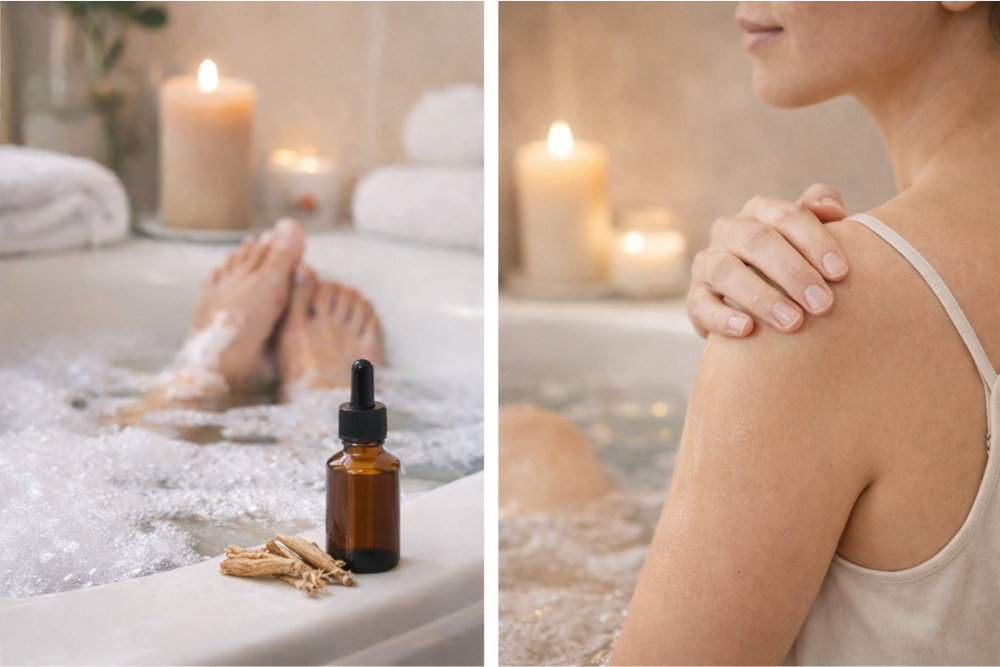
Ashwagandha oil: what it means in practice
When people talk about ashwagandha oil, they mostly mean an oil made by macerating the root in a carrier oil. The root is gently steeped for a certain time, most often in sesame oil, and the oil thereby acquires a delicate earthy aroma. This process differs from essential oils, which are produced by steam distillation or pressing and are highly concentrated.
| Property | Macerate (ashwagandha oil) | Essential oil |
|---|---|---|
| Production | steeping the root in a carrier oil | steam distillation or pressing |
| Concentration | mild ingredient | strong concentrate |
| Use | externally, in massage | dilute, drop by drop |
On the label, look for the name of the plant (Withania somnifera), information about the carrier oil and whether it is a macerate. Another carrier oil for cosmetic blends is described in the article Avocado oil in cosmetics. The macerate is available, for example, as Ashwagandha – root oil.
How ashwagandha is used in cosmetics
- Massage oils and evening massage rituals.
- Body oils after a shower, on still slightly damp skin.
- Bath blends, always mixed into a carrier oil.
- Gentle oil blends for homemade cosmetics.
The scent often develops only after a moment. Try warming the oil in your palms first and only then take in the aroma. In cosmetics, ashwagandha is a cosmetic ingredient, not a medicine.
What to combine ashwagandha with
- Lavender: for a gentler evening pace.
- Frankincense: for a calmer, deeper scent.
- Jojoba oil: as a light carrier oil that absorbs quickly. You will find more about it in the article Jojoba oil: uses and how it differs from other carrier oils; the carrier oil is available, for example, as BIO Jojoba oil.
Start with a small amount: you can always add more, but it is hard to take away.
Simple recipes
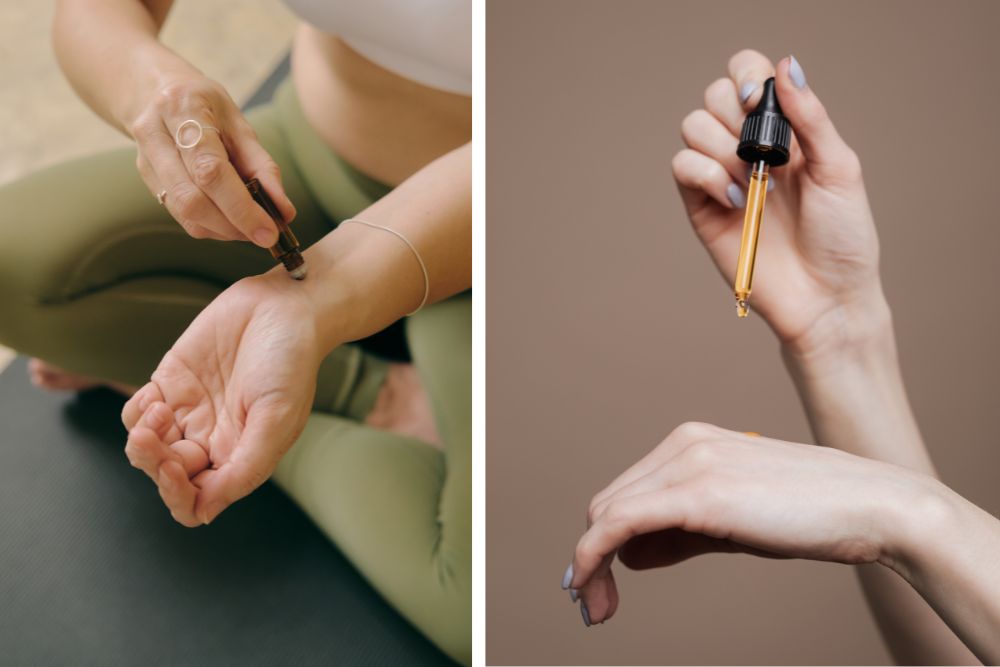
1. Evening body oil after a shower
- Put a small amount of carrier oil into your palms, for example almond, jojoba or coconut oil.
- Add 3–5 drops of ashwagandha oil.
- Rub it between your palms and apply to slightly damp skin.
2. "Slow down" massage blend
1 tablespoon of carrier oil, for example jojoba, 3–5 drops of ashwagandha oil and, optionally, 1–2 drops of lavender essential oil. Lavender then makes up roughly 0.3–0.7% of the blend, which is a low dilution for adults. Massage the blend into the shoulders, neck or feet. Do not use this blend for children.
3. Bath ritual
1 tablespoon of carrier oil and 2–3 drops of ashwagandha oil. First mix them in a bowl, then add to the bath. Oil in the bath makes the tub slippery, so get out carefully, and if your skin is sensitive, it is better to skip the oil bath or shorten it. Do not add citrus oils to the bath, as they may increase the skin's sensitivity to the sun.
How to store the oil and tell that it is in good condition
Store macerated oils in a dark, tightly closed bottle in a cool place, away from direct sun and heat. They usually keep for several months; the exact period is normally given on the label. Do not use an oil that smells like rancid fat, has changed colour or has mould in it. Always close the bottle after use and do not reach into it with wet hands, as the oil could spoil.
One more practical thing: the earthy scent of the macerate can stay on clothes and bed linen. For a massage, put an old towel underneath, and after a shower let the oil absorb for a while. Oil stains are usually best washed out straight away, in hot water with a degreasing agent.
Safety and patch test
- The oil is intended for external use only. It is not a food supplement or a food, and it is never to be drunk.
- Avoid the eyes and mucous membranes.
- Before first use, do a test: apply a drop of the blend to the forearm and wait 24 hours. If redness or itching appears, do not use the oil.
- During pregnancy and breastfeeding, for children and in the case of skin conditions, consult a doctor beforehand.
- Keep out of the reach of children and animals.
- If you add essential oils to blends, follow the dilution guidance: adults 1–2%, children lower depending on age. Do not use any oils in a diffuser in a room with a cat that cannot leave.
Who ashwagandha in cosmetics suits
The macerate suits people who prefer simple rituals with one or two ingredients and do not crave a pronounced scent. It is good for massaging the hands, shoulders and feet, as a body oil after a shower or in an evening routine. On the other hand, it may be less suitable for oily skin and for the face, where a lighter oil is recommended. Here we deal only with cosmetic use and scent, not with using the plant inside the body.
Frequently asked questions
What exactly is ashwagandha oil?
Most often an oil macerate: ashwagandha root steeped in a carrier oil, for example sesame oil. It is intended for external use.
Is ashwagandha oil an essential oil?
No. Essential oils are obtained by steam distillation or pressing. A macerate is made by steeping.
Can ashwagandha oil be drunk?
No. It is a cosmetic ingredient for external use, not a food supplement.
How do I use it for massage?
Put a small amount of carrier oil into your palms, add 3–5 drops of macerate and massage in gently. Do a patch test before the first application.
Which carrier oil should I combine it with?
Jojoba, almond or coconut oil works well. Choose according to your skin type and your own experience.
Sources
Updated: 5 October 2026