
 Our products
 Aromatherapy - essential oils
 Essential oils
 Aroma lamps
 Aroma Diffusers
 Seeds
 Vegetables
 Herbs and spices
 Ornamental Plant Seeds
 Grass mixtures
 Sprouts and microgreens
 Growing supplies
 Cultivation and Gardening Supplies
 Hydroponics and indoor growing
 Protective equipment and gardening tools
 Exotic plants
 Exotic Fruit and Vegetables
 Exotic herbs
 Exotic trees and shrubs
 Ornamental exotic plants
 Roasted coffee
 Espresso coffee
 Ecological coffee preparation
 Thermal mugs and coffee cups
 Aeropress
 Thermos flasks and thermal mugs for coffee and tea
 Moka pot
 Filter coffee
 Coffee blends
 Accessories for coffee makers
 Water filtration
 Coffee grinders
 Cleaning the Coffee Maker
 Ecological Cleaning of Coffee Machines
 Coffee makers
 Coffee Preparation
 Coffee Accessories
 Food products
 For wildlife and pets
 Chocolate and others
 Hemp food products
 Natural cosmetics
 Hemp cosmetics
 Smoking supplies
 Bongs - water pipes
 Blunts and tubes
 E-liquids with Terpenes and CBD
 Grinders and Mills
 Papers and filters
 Smoking accessories
 Vaporizers
 Air fresheners
 CBD and CBG products
 CBD sprays
 CBD and CBN crystals
 CBD body and facial care
 Weeds
 CBD suppositories and capsules
 CBD oils and drops
 CBG oils and drops
 House and garden
 Fashion and Decoration
 Kitchen essentials and cooking
 Christmas Decorations and Accessories
 Gift Sets
 Bird feeders
 Seasonal and Special Tools
Everyone experiences unpleasant feelings after eating, pressure or bloating from time to time. In addition to adjusting your diet, you can also reach for gentle support from nature for greater comfort. Essential oils have distinctive aromatic properties that are traditionally used in aromatherapy for calming and a pleasant feeling in the abdominal area. In this article, you'll find a selection of oils and tips on how to safely incorporate them into your routine.
In short: Essential oils such as peppermint, fennel, caraway, ginger and lemon balm are used in aromatherapy as a gentle complement to comfort after meals, not as a treatment. For an abdominal massage, mix 2–3 drops with 1 tablespoon of carrier oil and massage clockwise; in a diffuser, use 3–5 drops. Never apply oils undiluted to the skin.
| Abdominal massage | 2–3 drops in 1 tablespoon of carrier oil |
|---|---|
| Diffuser | 3–5 drops |
| Inhalation from a tissue | 1–2 drops |
| Massage technique | gentle circular motions, clockwise |
| Before first use | patch test of diluted oil on the inner wrist |
Do you sometimes struggle with bloating or a feeling of heaviness in your stomach? It's not uncommon, and often just a few small changes in your daily routine can help. Nature also offers gentle ways that can support overall wellbeing.
✨In this article updated for 2025, we'll show you how essential oils can complement rituals focused on digestive comfort. You'll learn which fragrances are popular in aromatherapy, how to use them safely, and how to easily incorporate them into your self-care routine.
Article Contents
- Causes of Digestive Issues and Bloating
- Best Essential Oils for Digestion
- How to Use Essential Oils for the Digestive System
- Safe Use of Essential Oils
- Conclusion: Natural Support for the Digestive System with Essential Oils
Causes of Digestive Issues and Bloating
Feelings of a bloated stomach, pressure, or discomfort after eating are quite common – and often indicate that our lifestyle rhythm isn't quite aligned with our digestive needs.
The most common factors that can contribute to feelings of discomfort include:
- Unsuitable diet composition: Heavy meals or excessive amounts of sugar, fats, or fiber can burden digestion.
- Stress and tension: Mental strain can affect overall wellbeing, including how we feel after eating.
- Eating too quickly: Insufficient chewing can contribute to a feeling of heaviness in the stomach area.
- Lack of movement: A sedentary lifestyle can be associated with slower digestion.
- More sensitive digestion: Some people may react more sensitively to certain foods or food combinations.

The good news is that essential oils can be a gentle complement to natural rituals that support overall digestive comfort – especially when combined with a suitable diet and a calmer daily pace.
Best Essential Oils for Digestive Support
Some essential oils are used in traditional aromatherapy for their aroma, which may support overall comfort in the abdominal area. Below you'll find an overview of the most commonly used scents that can be a suitable addition to natural rituals focused on post-meal comfort.
🌿Peppermint Oil for Digestion
Peppermint essential oil is known for its refreshing, cooling scent. It's often associated with a feeling of lightness and freshness after meals. In aromatherapy, it's popular for supporting overall comfort in the abdominal area.
🌿Fennel Oil for Bloating
Fennel is among the traditional herbs used in digestive care. Abdominal massage with fennel oil is part of traditional aromatherapeutic rituals focused on pleasant and relaxing sensations in the abdominal area.
🌿Lemon Balm Oil for Digestive Issues
Lemon balm has a gentle, sweet herbal aroma that is often associated with calming and comfort. In aromatherapy, it's frequently used in rituals focused on post-meal relaxation, especially during periods of stress or tension.
🌿Coriander Oil for the Digestive Tract
Coriander oil has a spicy-sweet scent and in aromatherapy is used in rituals supporting pleasant sensations in the digestive area. It combines beautifully with citrus oils such as lemon or orange.
🌿Ginger Oil for Digestive Support
Ginger oil has a warm and slightly spicy aroma that is traditionally associated with a feeling of post-meal relaxation. It's often used in blends supporting inner balance.
🌿Sage Oil and the Digestive System
Sage oil has historically been used for feelings of fullness or heaviness after meals. It works best as part of blends – for example with lavender or citrus oils.
🌿Caraway Oil Against Cramps
Caraway is well-known in cooking, but its essential oil is also used in aromatherapy. It's associated with pleasant sensations in the abdominal area and is often part of massage blends with peppermint or fennel.
🌿Pepper Oil for Digestive Enzymes
Black pepper essential oil is used very gently and in small amounts. It's a traditional component of aromatherapeutic blends that support sensory stimulation after meals.
🌿Orange Oil and Digestion
Orange has a sweet, uplifting scent that is associated with feelings of well-being after meals. It's suitable for diffusers or gentle massage blends for the abdominal area.
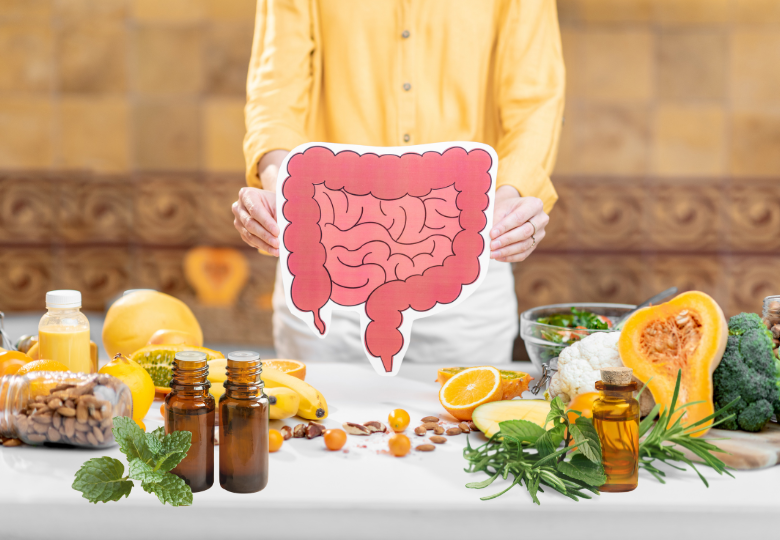
💡Practical tip: Try an evening blend of fennel, orange and ginger in a diffuser. Their scent can contribute to a sense of calm after meals and create a pleasant atmosphere for evening relaxation.
Overview of Essential Oils for Digestive Support and Bloating Relief
| Feeling After Eating | Suitable Application Method | Suitable Oils |
|---|---|---|
| Heaviness or pressure in the abdomen | Abdominal massage with carrier oil | Peppermint, fennel |
| Feeling of fullness, bloating | Aroma diffuser fragrance | Caraway, coriander |
| Fatigue and slow digestion | Room fragrance / relaxation | Ginger, orange |
| Eating under stress, tension | Inhalation from a tissue | Lemon balm, lavender |
| Need for calming in the evening after eating | Aroma diffuser in the bedroom | Fennel, ginger |
How to Use Essential Oils to Support Digestion
Using essential oils is simple – just choose the appropriate method and select an oil whose fragrance suits you. Below you'll find safe and easy-to-perform techniques.
Abdominal Massage for Bloating and Cramps
-
Mix 2–3 drops of essential oil (e.g. peppermint, caraway, fennel)
with 1 tablespoon of carrier oil (sweet almond, jojoba). -
Massage the abdominal area with gentle circular motions in a clockwise direction.
-
This massage can contribute to a feeling of relaxation and lightness after eating.
Inhalation and Aromatherapy for Digestive System Relief
Inhaling fragrances is popular in aromatherapy as part of rituals focused on calming and relaxation – ideally after meals or during periods of increased tension.
-
Add 3–5 drops of essential oil (orange, coriander, lemon balm) to a diffuser or a bowl of warm water.
-
Inhale slowly and enjoy a few calm breaths.
💡Find more tips not only for digestive support but also for mental well-being in the article: 5 Best Essential Oils for Relaxation and Calming.

Safe Use of Essential Oils
Even natural products can be highly concentrated, so it's important to follow several guidelines when working with essential oils:
-
Always dilute: Never use essential oils undiluted directly on the skin.
-
Sensitivity test: Before first use, apply a small amount of diluted oil to the inside of your wrist and wait for any potential reaction.
-
Oil quality: Choose only 100% natural essential oils intended for aromatherapy.
-
Specific conditions: Pregnant and breastfeeding women or people with chronic health conditions should consult their doctor before use.

Conclusion: Natural Digestive Support with Essential Oils
Essential oils can be a pleasant complement to overall post-meal wellbeing care. They are not a miraculous solution, but with regular and safe use, they can support abdominal comfort in a gentle, natural way. They are suitable for massage rituals, aromatherapy, or short relaxation after meals.
If you sometimes feel heaviness, pressure, or unpleasant discomfort after eating, aromatherapy rituals can offer pleasant support – always with consideration for your own body and its needs. Don't be afraid to try different oils and their combinations. Choose scents that you find pleasant and gradually find rituals that best fit into your daily self-care routine.
🌿 Looking for natural essential oils for these rituals?
Browse our range of essential oils and choose those that will help you create gentle supportive rituals after meals and throughout the day.