 Essential oils
 Aroma lamps
 Aroma Diffusers
 Vegetables
 Herbs and spices
 Ornamental Plant Seeds
 Grass mixtures
 Sprouts and microgreens
 Exotic Fruit and Vegetables
 Exotic herbs
 Exotic trees and shrubs
 Ornamental exotic plants
 Espresso coffee
 Ecological coffee preparation
 Thermal mugs and coffee cups
 Aeropress
 Thermos flasks and thermal mugs for coffee and tea
 Moka pot
 Filter coffee
 Coffee blends
 Water filtration
 Coffee grinders
 Cleaning the Coffee Maker
 Ecological Cleaning of Coffee Machines
 Coffee makers
 Coffee Preparation
 Coffee Accessories
 For wildlife and pets
 Chocolate and others
 Hemp food products
 Hemp cosmetics
 Bongs - water pipes
 Blunts and tubes
 E-liquids with Terpenes and CBD
 Grinders and Mills
 Papers and filters
 Smoking accessories
 Vaporizers
 Air fresheners
 CBD sprays
 CBD and CBN crystals
 CBD body and facial care
 Weeds
 CBD suppositories and capsules
 CBD oils and drops
 CBG oils and drops
 Fashion and Decoration
 Kitchen essentials and cooking
 Christmas Decorations and Accessories
 Gift Sets
 Bird feeders
 Seasonal and Special Tools

 Our products
 Aromatherapy - essential oils
 Seeds
 Growing supplies
 Cultivation and Gardening Supplies
 Hydroponics and indoor growing
 Protective equipment and gardening tools
 Exotic plants
 Roasted coffee
 Accessories for coffee makers
 Food products
 Natural cosmetics
 Smoking supplies
 CBD and CBG products
 House and garden

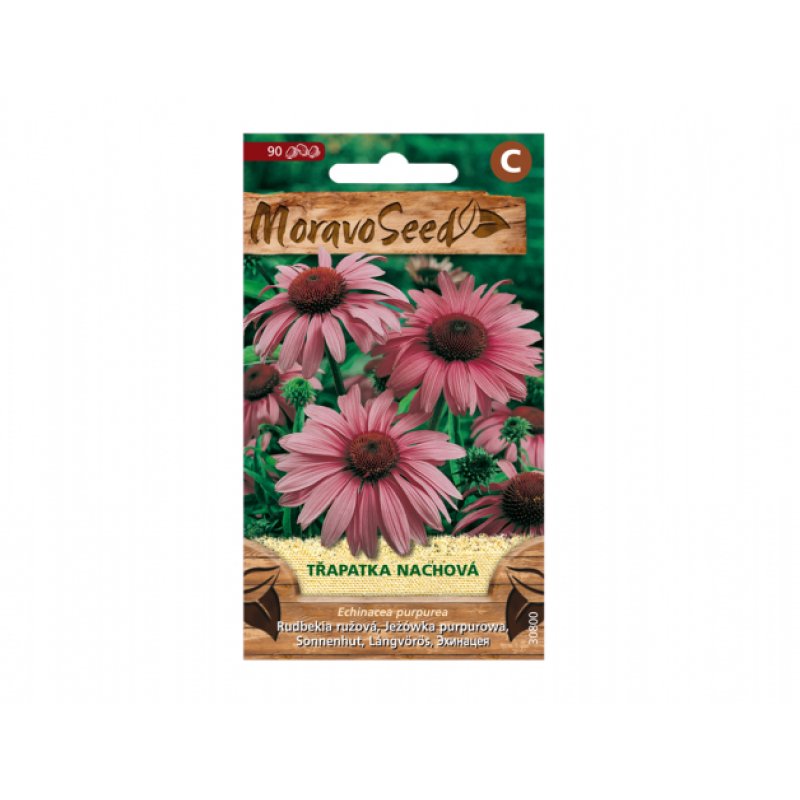
Decorative and medicinal perennial, 80-100cm tall. Tea can be prepared from the flower and herb to help with colds. Additionally, it's an excellent perennial for mixed plantings. Package contains 120 seeds.
 Wide range of quality products
Seeds, essential oils, growing supplies and exotic plants in one place
 Eco-friendly range
We prefer natural and gentle products
 Expert advice
We help you grow – guides, blog and personal support
 Delivery across the EU
PPL, DPD, GLS and local carriers – pickup point or home delivery
Native to North America. There are many known varieties of this plant, about forty in its homeland, but the most widespread in our conditions are Echinacea purpurea and Echinacea angustifolia. The plant typically grows 80-100 cm tall. The entire perennial is hairy. The flowers are large and striking, with a prominent central disc. They are usually about 10 cm wide.
Purple coneflower (Rudbeckia purpurea) is the most commonly cultivated. Less commonly grown is narrow-leaved coneflower (Echinacea angustifolia). It features narrower leaves, shorter and curved petals, and a taproot. Shining coneflower (Rudbeckia nitida) is a magnificent yellow-orange flowering herb suitable for both standalone and mixed beds. Black-eyed Susan (Rudbeckia hirta) is a popular annual or short-lived perennial, reaching up to 90 cm in height. Flowers are yellow, orange-yellow, or brown-red striped. Orange coneflower (Rudbeckia fulgida) is among the most valuable garden perennials. It grows to 70-120 cm but remains sturdy. It blooms relatively late, with the main flowering period in August to September. Giant coneflower (Rudbeckia maxima) captures attention with its truly enormous growth and massive grey-green leaves. Expect it to easily reach 2.5 m.
Coneflower contains a wide spectrum of active substances – flavonoids, polyacetylene compounds, polysaccharides, terpene hydrocarbons, vitamins.
Coneflowers combine perfectly with phlox or white coneflower. Ornamental grasses are also suitable; the combination of coneflower with sedge or millet works very well. They are suitable for both mixed and standalone plantings.
Requires a sunny location. Tolerates drought. Water only during extreme drought. Coneflower can also be grown in a pot, but requires annual repotting. In the bed, we grow it as a perennial.
Sow seeds in March in a cold frame or indoors by a window. For germination, a temperature between 16-18°C is suitable. Plant seedlings at a distance of about 60 cm in early spring. Small plants usually bloom only in the following year.
Requires drier, well-drained soil.
The plant does not require additional fertilization.
Young plants are particularly threatened by slugs; also watch out for aphids. During prolonged rain, powdery mildew or grey mold may occur. Treat affected plants with special fungicides. Sometimes plants are threatened by nematodes, which can be eliminated by planting marigolds near the coneflowers.
Leaves and flowers can be harvested from the second year onwards.
Data sheet
Specific References
Your review appreciation cannot be sent
Report comment
Report sent
Your report cannot be sent
Write your review
Review sent
Your review cannot be sent
Decorative and medicinal perennial, 80-100cm tall. Tea can be prepared from the flower and herb to help with colds. Additionally, it's an excellent perennial for mixed plantings. Package contains 120 seeds.
check_circle
check_circle