 Essential oils
 Aroma lamps
 Aroma Diffusers
 Vegetables
 Herbs and spices
 Ornamental Plant Seeds
 Grass mixtures
 Sprouts and microgreens
 Exotic Fruit and Vegetables
 Exotic herbs
 Exotic trees and shrubs
 Ornamental exotic plants
 Espresso coffee
 Ecological coffee preparation
 Thermal mugs and coffee cups
 Aeropress
 Thermos flasks and thermal mugs for coffee and tea
 Moka pot
 Filter coffee
 Coffee blends
 Water filtration
 Coffee grinders
 Cleaning the Coffee Maker
 Ecological Cleaning of Coffee Machines
 Coffee makers
 Coffee Preparation
 Coffee Accessories
 For wildlife and pets
 Chocolate and others
 Hemp food products
 Hemp cosmetics
 Bongs - water pipes
 Blunts and tubes
 E-liquids with Terpenes and CBD
 Grinders and Mills
 Papers and filters
 Smoking accessories
 Vaporizers
 Air fresheners
 CBD sprays
 CBD and CBN crystals
 CBD body and facial care
 Weeds
 CBD suppositories and capsules
 CBD oils and drops
 CBG oils and drops
 Fashion and Decoration
 Kitchen essentials and cooking
 Christmas Decorations and Accessories
 Gift Sets
 Bird feeders
 Seasonal and Special Tools
- Out of stock

 Our products
 Aromatherapy - essential oils
 Seeds
 Growing supplies
 Cultivation and Gardening Supplies
 Hydroponics and indoor growing
 Protective equipment and gardening tools
 Exotic plants
 Roasted coffee
 Accessories for coffee makers
 Food products
 Natural cosmetics
 Smoking supplies
 CBD and CBG products
 House and garden

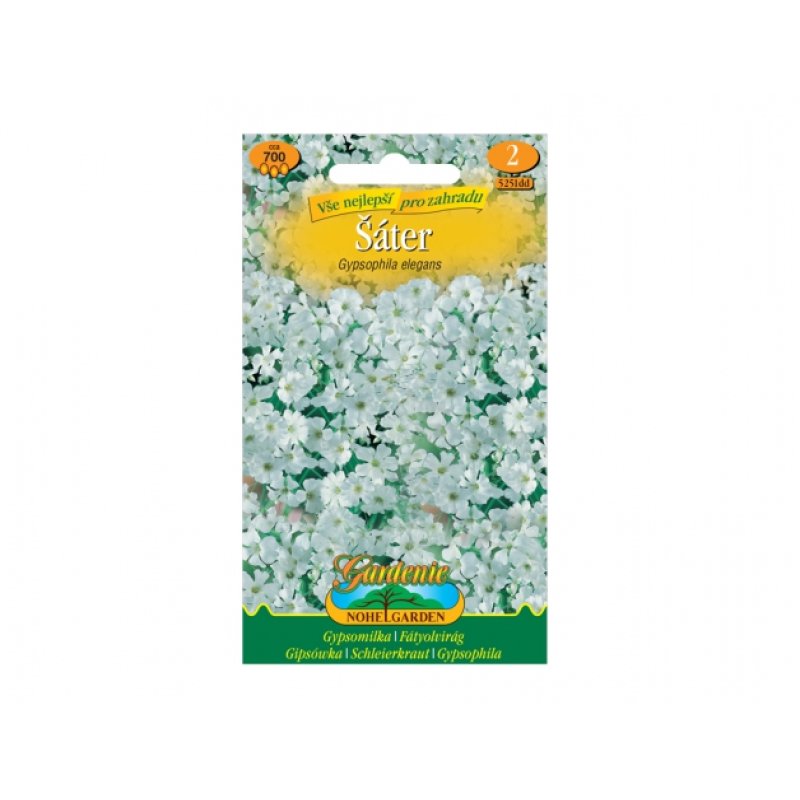
A flood of delicate flowers in your garden! Gypsophila is perfect for drying and cutting. It's an undemanding perennial from grandmother's garden.
 Wide range of quality products
Seeds, essential oils, growing supplies and exotic plants in one place
 Eco-friendly range
We prefer natural and gentle products
 Expert advice
We help you grow – guides, blog and personal support
 Delivery across the EU
PPL, DPD, GLS and local carriers – pickup point or home delivery
The genus Gypsophila doesn't only grow in Europe, but also in North Africa and Asia where we can find about one hundred species. Among them are both annual and perennial herbs, some species have a shrub-like growth with woody older stems. They form smooth stems, branching extensively into a large, hemispherical clump. The small sessile leaves are also smooth. At the end of the stems are abundant inflorescences of tiny flowers.
Low-growing gypsophilas work well in rock gardens, taller ones in perennial beds. The most well-known is baby's breath (G. paniculata). This species is native to Central Europe. A hardy perennial that is an ornament to perennial beds, where among colorful flowers the tiny delicate white flowers of gypsophila, up to 100 cm tall, create an effective display. Annual baby's breath (G. elegans) is shorter, maximum 50 cm tall. Really tiny is cushion baby's breath (G. muralis), compact varieties with white to pink flowers, are only a few centimeters tall. They are annuals, but manage to create a beautiful abundantly flowering cushion in a rock garden or in a dry stone wall. Larger flowers on a conversely very small shrub only about 10 cm tall are borne by the originally Himalayan Gypsophila cerastioides.
Baby's breath suits all types of gardens, standing out best in cottage gardens. It can also be grown in containers. It's suitable for cutting for vases and for drying in dried arrangements.
Requires a sunny location. G. paniculata and G. fastigiata need moister soil and watering during dry summers, lower species suitable for rock gardens and walls prefer drier soil. During the flowering period, water only moderately. In autumn, cut back the entire plant. Winter hardy, protect soil with mulch.
Seed sowing is done from March to June either indoors in seed trays or in a cold frame with a recommended temperature around 15 degrees. Grown seedlings are planted out in June and July. When growing in beds, plant at 40x40 cm spacing.
Soil should be deep, calcareous, rather dry.
In spring, lightly fertilize with universal fertilizer. Suitable options include Cererit or Kristalon.
Does not suffer from diseases or pests.
Cut branches before the flowers fully open. For drying baby's breath, the recommended method is in an upright position in a vase with a small amount of water, about one to three centimeters.
Data sheet
Specific References
Your review appreciation cannot be sent
Report comment
Report sent
Your report cannot be sent
Write your review
Review sent
Your review cannot be sent
A flood of delicate flowers in your garden! Gypsophila is perfect for drying and cutting. It's an undemanding perennial from grandmother's garden.
check_circle
check_circle