 Essential oils
 Aroma lamps
 Aroma Diffusers
 Vegetables
 Herbs and spices
 Ornamental Plant Seeds
 Grass mixtures
 Sprouts and microgreens
 Exotic Fruit and Vegetables
 Exotic herbs
 Exotic trees and shrubs
 Ornamental exotic plants
 Espresso coffee
 Ecological coffee preparation
 Thermal mugs and coffee cups
 Aeropress
 Thermos flasks and thermal mugs for coffee and tea
 Moka pot
 Filter coffee
 Coffee blends
 Water filtration
 Coffee grinders
 Cleaning the Coffee Maker
 Ecological Cleaning of Coffee Machines
 Coffee makers
 Coffee Preparation
 Coffee Accessories
 For wildlife and pets
 Chocolate and others
 Hemp food products
 Hemp cosmetics
 Bongs - water pipes
 Blunts and tubes
 E-liquids with Terpenes and CBD
 Grinders and Mills
 Papers and filters
 Smoking accessories
 Vaporizers
 Air fresheners
 CBD sprays
 CBD and CBN crystals
 CBD body and facial care
 Weeds
 CBD suppositories and capsules
 CBD oils and drops
 CBG oils and drops
 Fashion and Decoration
 Kitchen essentials and cooking
 Christmas Decorations and Accessories
 Gift Sets
 Bird feeders
 Seasonal and Special Tools

 Our products
 Aromatherapy - essential oils
 Seeds
 Growing supplies
 Cultivation and Gardening Supplies
 Hydroponics and indoor growing
 Protective equipment and gardening tools
 Exotic plants
 Roasted coffee
 Accessories for coffee makers
 Food products
 Natural cosmetics
 Smoking supplies
 CBD and CBG products
 House and garden

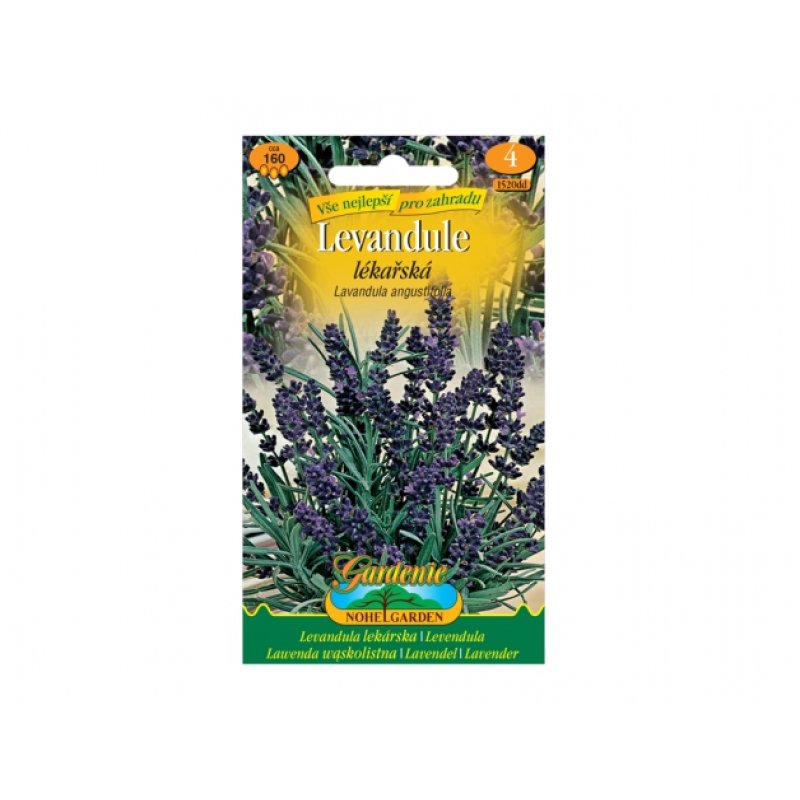
An aromatic semi-shrub that shouldn't be missing from any garden! It has magnificent flowers, calms the mind, and also repels insects such as mosquitoes and aphids. It has a beautiful and strong fragrance. Grows up to 60 cm in height.
 Wide range of quality products
Seeds, essential oils, growing supplies and exotic plants in one place
 Eco-friendly range
We prefer natural and gentle products
 Expert advice
We help you grow – guides, blog and personal support
 Delivery across the EU
PPL, DPD, GLS and local carriers – pickup point or home delivery
Lavender originally comes from the western Mediterranean. It belongs to the mint family (Lamiaceae). It is a perennial plant described as a woody subshrub. Lavender flowers have a blue-violet color. The plant blooms from July to August. Its flowers attract bees. The leaves are aromatic and their length is approximately 5 centimeters, depending on the variety.
Lavender is grown for the cosmetic and pharmaceutical industries. The flowers are used as part of herbal blends. The flowers contain a large amount of essential oils, and significantly less tannins and bitter substances, which have beneficial effects on our entire nervous system. It is also well known that when placed in a wardrobe, it is an excellent repellent for clothes moths.
There are many varieties of lavender, as well as many color variations. Some are suitable for growing in containers, others for growing in the garden thanks to their frost resistance. The greatest advantage of lavender, however, is that it repels harmful insects, such as aphids, mosquitoes and moths. In the garden, it is suitable to grow it under roses, for example. It complements beautifully with irises, roses, baby's breath, sage, rosemary, ornamental grasses and other plants.
Plants need plenty of sunlight and tolerate direct sun. We water young lavender regularly; moderate watering benefits older plants. However, plants also thrive without regular watering. Plants need to be pruned. We first trim plants in spring, and a second time after flowering (i.e., early August). Do not cut into the wood! Lavender also needs to be properly winterized. At temperatures around -10 degrees Celsius, it is necessary to cover the plants with straw or conifer branches.
We sow seeds in spring, ideally in February and March. We maintain seedlings at a temperature of around 20°C. We transplant grown seedlings to an open bed after hardening off. In May and June, we plant mature plants at a spacing of 45 x 60 cm.
It requires light, dry, well-drained and calcium-rich soil. Finely sandy soils are suitable. It does not tolerate waterlogged soils.
We can apply fertilizers with dolomite and calcium fertilizers. If we don't fertilize the plants, they will manage on their own.
Fungal diseases occasionally appear, causing the entire plant to die. They are characterized by a white coating on the plant. We treat them with fungicides. Lavender does not suffer from pests.
We harvest lavender from July to August, always just before flowering or at its very beginning. After harvesting, it is necessary to dry the plants thoroughly.
Data sheet
Specific References
Your review appreciation cannot be sent
Report comment
Report sent
Your report cannot be sent
Write your review
Review sent
Your review cannot be sent
An aromatic semi-shrub that shouldn't be missing from any garden! It has magnificent flowers, calms the mind, and also repels insects such as mosquitoes and aphids. It has a beautiful and strong fragrance. Grows up to 60 cm in height.
check_circle
check_circle