 Essential oils
 Aroma lamps
 Aroma Diffusers
 Vegetables
 Herbs and spices
 Ornamental Plant Seeds
 Grass mixtures
 Sprouts and microgreens
 Exotic Fruit and Vegetables
 Exotic herbs
 Exotic trees and shrubs
 Ornamental exotic plants
 Espresso coffee
 Ecological coffee preparation
 Thermal mugs and coffee cups
 Aeropress
 Thermos flasks and thermal mugs for coffee and tea
 Moka pot
 Filter coffee
 Coffee blends
 Water filtration
 Coffee grinders
 Cleaning the Coffee Maker
 Ecological Cleaning of Coffee Machines
 Coffee makers
 Coffee Preparation
 Coffee Accessories
 For wildlife and pets
 Chocolate and others
 Hemp food products
 Hemp cosmetics
 Bongs - water pipes
 Blunts and tubes
 E-liquids with Terpenes and CBD
 Grinders and Mills
 Papers and filters
 Smoking accessories
 Vaporizers
 Air fresheners
 CBD sprays
 CBD and CBN crystals
 CBD body and facial care
 Weeds
 CBD suppositories and capsules
 CBD oils and drops
 CBG oils and drops
 Fashion and Decoration
 Kitchen essentials and cooking
 Christmas Decorations and Accessories
 Gift Sets
 Bird feeders
 Seasonal and Special Tools

 Our products
 Aromatherapy - essential oils
 Seeds
 Growing supplies
 Cultivation and Gardening Supplies
 Hydroponics and indoor growing
 Protective equipment and gardening tools
 Exotic plants
 Roasted coffee
 Accessories for coffee makers
 Food products
 Natural cosmetics
 Smoking supplies
 CBD and CBG products
 House and garden

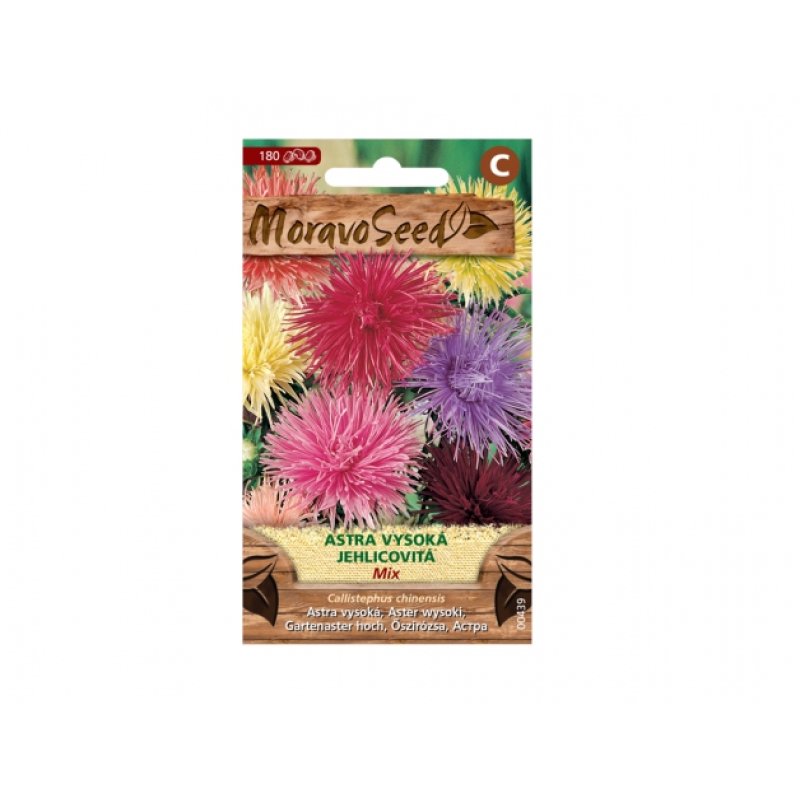
The colorful mix of this beautiful aster with needle-like flowers will certainly brighten up any garden! Thanks to its height, it's also suitable for cutting! The package contains 180 seeds.
 Wide range of quality products
Seeds, essential oils, growing supplies and exotic plants in one place
 Eco-friendly range
We prefer natural and gentle products
 Expert advice
We help you grow – guides, blog and personal support
 Delivery across the EU
PPL, DPD, GLS and local carriers – pickup point or home delivery
This very popular annual originates from Asia. Their flowers resemble chrysanthemum blooms. They create compact plants, very dense, which grow to a height of 20 - 80 cm depending on the cultivar. Blooms from July until frost. Flower colors range from white and yellow through pink and purple to blue and almost black. Flowers come in various forms - needle-shaped, single, double. According to flower shape, asters are divided into pompon-flowered, daisy-flowered, needle-shaped, peony-flowered and chrysanthemum-flowered. Colors can be single or multi-colored.
In the garden, these plants look excellent as part of borders, beds or planted in containers. In mixed beds they complement ornamental grasses, Zinnias or Rudbeckias beautifully. They are also very suitable for cutting as vase flowers.
From the many shapes and sizes of plants that Aster breeding has brought, everyone will find something for their garden!
Plants require rich, moist, well-drained soils. Soil must never be permanently wet, plants are susceptible to root rot. They thrive in full sun to partial shade. The planting location should be sheltered from wind. Plants often break in strong winds. Some varieties suffer from fungal diseases, so we do not recommend planting plants in the same location repeatedly. Plants will bloom again if we remove spent flowers promptly.
Sow seeds in sterile substrate. Avoid sowing too densely. Sow seeds in March. Sow seeds on the substrate surface or cover them only slightly. At a temperature of 18°C they will germinate in seven to ten days. Then transplant seedlings and maintain temperature at 15°C. Keep plants in a bright location. After six weeks, seedlings are ready for planting in the garden. Before actual planting, gradually harden them off.
Plants prefer rather calcareous soil. Well-drained, warm. Humus-rich. Ideal pH 5.1 to 7.5.
Apply fertilizer first in spring, during the growth period. Use rather nitrogen-based fertilizers. At the end of summer, during flowering, add potassium fertilizer. Fertilize every 14 days. Do not apply direct organic fertilization.
Plants are susceptible to fungal and viral diseases. They are attacked by pests.
Ensure annual rotation of location due to aster susceptibility to Fusarium fungi. Fusarium wilt, called aster wilt, manifests in already grown specimens by wilting and subsequent death. Do not put dried asters in compost! Always burn them! Treat growing substrate with Fundazol 50 WP (0.1%).
Aster yellows phytoplasma manifests as plant yellowing, growth cessation, leaves are small and often necrotic. Flower buds are usually closed and deformed. Flowers are stunted, poorly colored and gradually turn completely green. Protection consists of eliminating infected plants and planting healthy seedlings. This disease is transmitted by sucking pests - leafhoppers.
Plants are also attacked by aphids. Use chemical protection - insecticide.
Data sheet
Specific References
Your review appreciation cannot be sent
Report comment
Report sent
Your report cannot be sent
Write your review
Review sent
Your review cannot be sent
The colorful mix of this beautiful aster with needle-like flowers will certainly brighten up any garden! Thanks to its height, it's also suitable for cutting! The package contains 180 seeds.
check_circle
check_circle