 Essential oils
 Aroma lamps
 Aroma Diffusers
 Vegetables
 Herbs and spices
 Ornamental Plant Seeds
 Grass mixtures
 Sprouts and microgreens
 Exotic Fruit and Vegetables
 Exotic herbs
 Exotic trees and shrubs
 Ornamental exotic plants
 Espresso coffee
 Ecological coffee preparation
 Thermal mugs and coffee cups
 Aeropress
 Thermos flasks and thermal mugs for coffee and tea
 Moka pot
 Filter coffee
 Coffee blends
 Water filtration
 Coffee grinders
 Cleaning the Coffee Maker
 Ecological Cleaning of Coffee Machines
 Coffee makers
 Coffee Preparation
 Coffee Accessories
 For wildlife and pets
 Chocolate and others
 Hemp food products
 Hemp cosmetics
 Bongs - water pipes
 Blunts and tubes
 E-liquids with Terpenes and CBD
 Grinders and Mills
 Papers and filters
 Smoking accessories
 Vaporizers
 Air fresheners
 CBD sprays
 CBD and CBN crystals
 CBD body and facial care
 Weeds
 CBD suppositories and capsules
 CBD oils and drops
 CBG oils and drops
 Fashion and Decoration
 Kitchen essentials and cooking
 Christmas Decorations and Accessories
 Gift Sets
 Bird feeders
 Seasonal and Special Tools
- Sale -22 %

 Our products
 Aromatherapy - essential oils
 Seeds
 Growing supplies
 Cultivation and Gardening Supplies
 Hydroponics and indoor growing
 Protective equipment and gardening tools
 Exotic plants
 Roasted coffee
 Accessories for coffee makers
 Food products
 Natural cosmetics
 Smoking supplies
 CBD and CBG products
 House and garden


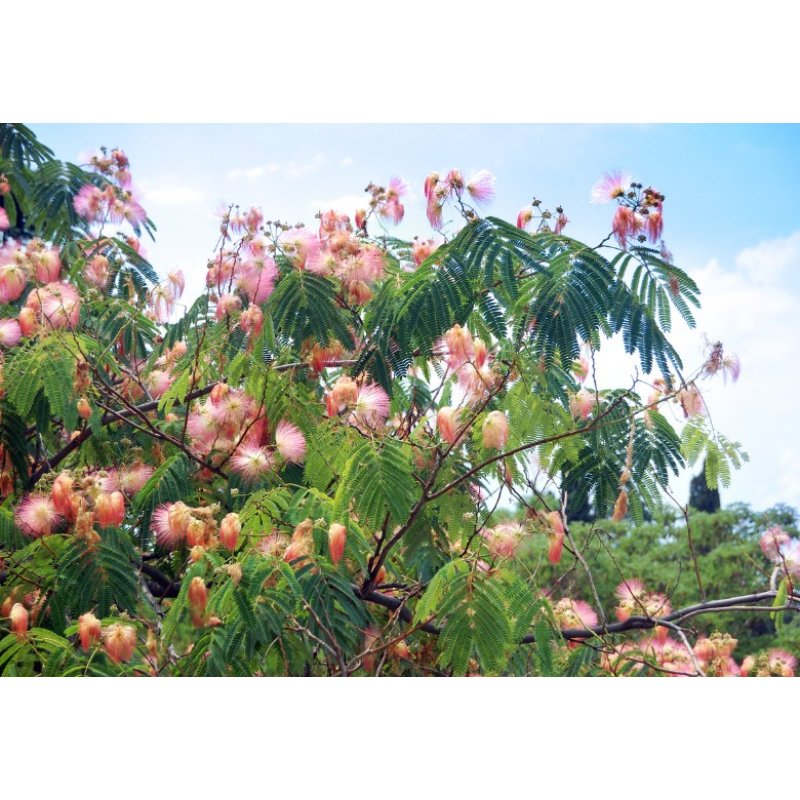
This enchanting tree with unique elegance and charm will amaze you with its magnificent flowers and elegant, delicately divided leaves. Persian acacia is a beloved ornamental tree in many gardens around the world. Its beautiful pink or white flowers attract butterflies and other insects, earning it the nickname "tree of fluttering butterflies".
 Wide range of quality products
Seeds, essential oils, growing supplies and exotic plants in one place
 Eco-friendly range
We prefer natural and gentle products
 Expert advice
We help you grow – guides, blog and personal support
 Delivery across the EU
PPL, DPD, GLS and local carriers – pickup point or home delivery
Persian acacia, known as the silk tree, is a tree originating from Asia, specifically from the area between the Persian Gulf and China. This tree has spread to various parts of the world and is now commonly cultivated as an ornamental plant.
Persian acacia is a popular tree for creating shaded areas in gardens and parks and is also used as an avenue tree. Thanks to its attractive flowers and elegant leaves, it is often used to decorate house surroundings and public spaces. It grows in temperate and warm climates and is relatively easy to care for, which contributes to its popularity among gardeners and landscapers.
 (2).png)
Persian acacia grows to a height of 6 to 12 metres, but in suitable conditions it can reach even greater heights. The tree's crown is wide and spreading, with many branches that create a decorative shape and provide shade. The crown shape can be oval or spherical, depending on the plant's age and growing conditions.
The leaves of Persian acacia are bipinnate, meaning they consist of several pairs of secondary leaflets. The leaflets are thin and green in colour, which creates an interesting contrast with the flowers. The flowers are one of the most distinctive features of this plant. They form large spherical inflorescences that are light pink or white. The flowers are intensely fragrant and attractive to butterflies, bees and other insects. It is popular as a decorative element in parks, gardens, avenues and public spaces, especially in warmer and temperate climatic areas. It is resistant to drier conditions, making it a suitable plant for places with limited water resources.
 (3).png)
1. Seed stratification (optional): some gardeners recommend stratification of acacia seeds, which promotes their germination. Place the seeds in the refrigerator for a few days to go through a cold cycle. This step can be skipped, but it may help increase the likelihood of successful germination.
2. Pot and soil preparation: choose a pot with sufficient depth and drainage holes. Fill it with slightly moist and well-draining soil suitable for plants. A mixture of seedling soil or universal soil with added perlite or vermiculite works well.
3. Sowing seeds: place the seeds on the soil surface and gently cover them with a thin layer of soil. The seeds should not be too deep so that light can easily reach them during germination.
4. Watering: water moderately and ensure that the soil remains constantly moist, but not waterlogged. Water gently to prevent washing out the seeds or damaging germinating seedlings.
5. Temperature and lighting: keep the container in a warm and bright place, preferably on a sunny windowsill or outdoors. The optimal temperature for germination is usually around 20-25 °C.
6. Seedling care: after germination, small seedlings gradually appear. Gradually increase the light intensity to prevent excessive stretching. If the seedlings are planted too close together, transplant them into larger containers with sufficient space for the roots.
7. Transplanting into larger pots: once the seedlings have grown, transplant them into separate larger pots with good drainage.
8. Transplanting into the garden: when the plants are sufficiently strong and have grown to sufficient height, you can transplant them into the garden. Choose a sunny and well-drained location for them.
Data sheet
Specific References
Your review appreciation cannot be sent
Report comment
Report sent
Your report cannot be sent
Write your review
Review sent
Your review cannot be sent
This enchanting tree with unique elegance and charm will amaze you with its magnificent flowers and elegant, delicately divided leaves. Persian acacia is a beloved ornamental tree in many gardens around the world. Its beautiful pink or white flowers attract butterflies and other insects, earning it the nickname "tree of fluttering butterflies".
check_circle
check_circle