 Essential oils
 Aroma lamps
 Aroma Diffusers
 Vegetables
 Herbs and spices
 Ornamental Plant Seeds
 Grass mixtures
 Sprouts and microgreens
 Exotic Fruit and Vegetables
 Exotic herbs
 Exotic trees and shrubs
 Ornamental exotic plants
 Espresso coffee
 Ecological coffee preparation
 Thermal mugs and coffee cups
 Aeropress
 Thermos flasks and thermal mugs for coffee and tea
 Moka pot
 Filter coffee
 Coffee blends
 Water filtration
 Coffee grinders
 Cleaning the Coffee Maker
 Ecological Cleaning of Coffee Machines
 Coffee makers
 Coffee Preparation
 Coffee Accessories
 For wildlife and pets
 Chocolate and others
 Hemp food products
 Hemp cosmetics
 Bongs - water pipes
 Blunts and tubes
 E-liquids with Terpenes and CBD
 Grinders and Mills
 Papers and filters
 Smoking accessories
 Vaporizers
 Air fresheners
 CBD sprays
 CBD and CBN crystals
 CBD body and facial care
 Weeds
 CBD suppositories and capsules
 CBD oils and drops
 CBG oils and drops
 Fashion and Decoration
 Kitchen essentials and cooking
 Christmas Decorations and Accessories
 Gift Sets
 Bird feeders
 Seasonal and Special Tools

 Our products
 Aromatherapy - essential oils
 Seeds
 Growing supplies
 Cultivation and Gardening Supplies
 Hydroponics and indoor growing
 Protective equipment and gardening tools
 Exotic plants
 Roasted coffee
 Accessories for coffee makers
 Food products
 Natural cosmetics
 Smoking supplies
 CBD and CBG products
 House and garden


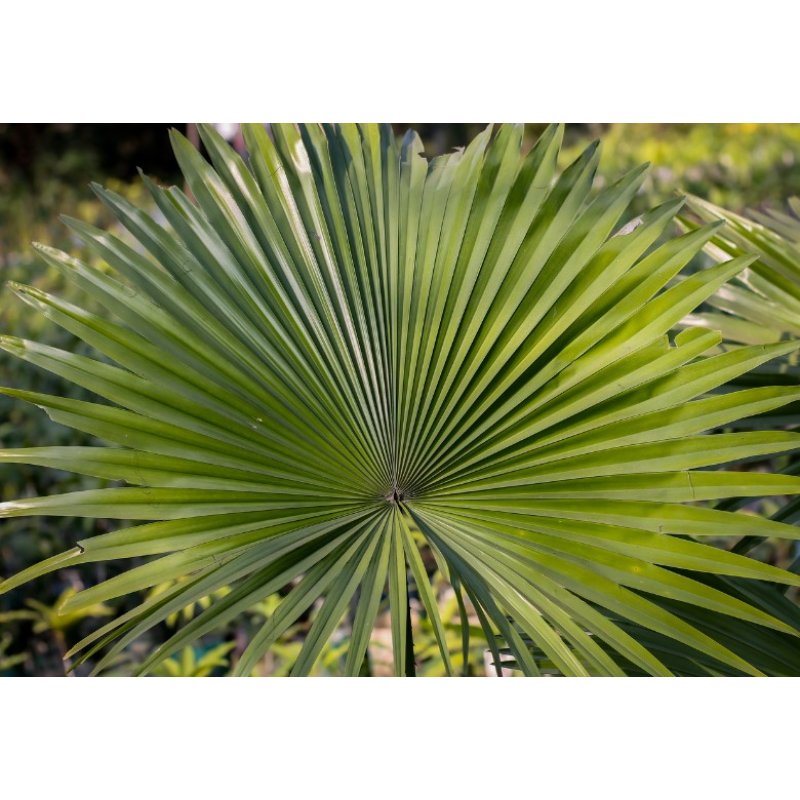
A smaller palm that reaches heights of up to 4 meters. It is found primarily in the United States. It is frost-resistant. The package contains 4 seeds.
 Wide range of quality products
Seeds, essential oils, growing supplies and exotic plants in one place
 Eco-friendly range
We prefer natural and gentle products
 Expert advice
We help you grow – guides, blog and personal support
 Delivery across the EU
PPL, DPD, GLS and local carriers – pickup point or home delivery
A small palm with dark, reddish-black berry-like fruits growing on the Atlantic coast of North America. Reaching a height of 4 m. It has wide fan-shaped leaves and its dark red fruits are protected by a thick scale on a small stem attached to the trunk. It flowers from December to March and produces purple-red fruits from April to October.
The berries contain oil with diverse fatty acids and phytosterols. The fruits are harvested and used in pharmacy.
In our regions, it is grown as both an outdoor and indoor plant. It is frost-resistant.
Requires fully sunny locations and generous watering during the season. Southern, fully sunny exposure is suitable. It tolerates cold down to -14°C. For winter, create a winter cover for palms grown in the garden. Indoor overwintering should be at temperatures of 2 to 10°C, in bright or even dark places with very limited watering.
Sowing is done year-round. First soak the seeds for at least 3 days in warm water. Change the water daily. Then plant the seeds in a substrate composed of perlite and peat in a 1:1 ratio. Sow shallowly. Seeds germinate in 2-3 months in constantly moist substrate. The substrate should have higher than room temperature, approximately 26 degrees Celsius. Transplant approximately 10 cm tall plants into their own containers.
The ideal base for most palms is a mixture of compost soil or peat with a moderate proportion of clay component and yellow, dug sand. It can be purchased directly as palm substrate. Good drainage at the bottom of the container is essential, of course.
Regular fertilization of palms from March to September every 2 to 3 weeks is essential. It is better to fertilize more frequently in lower concentrations than occasionally with strong fertilizer concentration. Before applying fertilizer, the plant must be watered. Do not apply fertilizer to the palm heart, do not fertilize leaves, do not fertilize sick plants, do not fertilize small seedlings, do not fertilize freshly transplanted plants for several months.
During the growing season, fertilize every 3 weeks. It is suitable to use Humvit fertilizer, which does not pose a risk of plant overdose. It can be alternated in spring with Fytovit. In summer with Hahrmavit. Always apply only one-third of the given fertilizer as indicated in the instructions.
Animal pests are biting and sucking insects and their larvae sucking sap from leaves and draining energy, which weakens the organism and leads to plant death. Scale insects and mealybugs can be recognized by brown hard shells on the plant. The plant becomes stunted, leaves fall off and a sticky coating appears. The cause is always dry air. Protection is spraying with Savel. Shells can also be scraped off and affected areas treated with an alcohol-soaked swab.
Mealybugs, mites and thrips create white cotton-like nests and slimy excretions on the underside of leaves. The cause is again dry air. Coat white tufts and individual specimens with oil, humidify the air, or use special sprays, e.g., Biool (oil emulsion) or Mospilan 20 SP or Sumithion super in combination with Applaud WP, Actellic 50 EC, Talstar 10 EC, at least 5 sprays (every 2 days).
White insects that fly up at the slightest disturbance, sticky and deformed leaves, spots on leaves. These are all signs of whitefly infestation. Whiteflies love humid heat, so they appear most often in greenhouses. Protection is to provide plants with cooler and more ventilated environment and use yellow sticky traps or sprays: Applaud 25 WP in combination with Sumithion super, Mospilan 20 SP.
Plants are also attacked by aphids. Suitable protection includes spraying with soapy solutions or spraying with Pirimor 25 WG or Fast K180, Aztec 140 EW, Agrion delta.
Spider mites create webs on the upper or lower side of leaves. Leaves turn yellow and later dry out. It is suitable to use insecticides in spray form (Vertimec 2x 5ml - works almost immediately) Fast K 180, Apollo 50 SC, Omite 57 EW.
Fungus gnats are black flies whose larvae are translucent with black heads, they love humus and peat and usually attack and destroy the roots of young plants. Protection must come immediately, otherwise there is no chance of rescue. Hang yellow sticky traps (Stopset traps), use insecticides in spray form (Decis), at least 5 sprays (every 2 days).
Before winter storage, it is advisable to carry out preventive spraying against fungal diseases (Fundazol 50 WP, Novozir MN, Polyram WG, Rovral 50 WP, Kuprikol 50). Most fungal diseases manifest when the plant is too weakened by unfavorable growing conditions.
Among the most common palm diseases is sooty mold. It manifests as a sticky blackish surface on leaves. Protection is to remove contaminated leaves, spray with Novozir MN.
Gray mold creates a gray-white coating on plants. The best protection is to cut off affected parts of plants, ventilate the room where you grow the plant and use protective products such as Novozir MN, Ronilan, Dithane.
Rust manifests as reddish-brown spots on leaves, shoots may soften. Affected leaves need to be destroyed and when watering, they must not be sprayed, otherwise rust spores spread further throughout the plant. We carry out protection by spraying with Baycor 25 WP, Polyram WG.
Photo sources:
Author: Geoff Gallice from Gainesville, FL, USA – Saw palmetto, CC BY 2.0, https://commons.wikimedia.org/w/index.php?curid=22440540
Author: Ted Bodner, Southern Weed Science Society, United States – This image is Image Number 1120620 at Forestry Images, a source for forest health, natural resources and silviculture images operated by The Bugwood Network at the University of Georgia and the USDA Forest Service., CC BY 3.0 us, https://commons.wikimedia.org/w/index.php?curid=6981549
Author: Bob Peterson from North Palm Beach, Florida, Planet Earth! – Saw palmetto & Flower ScarabUploaded by Jacopo Werther, CC BY-SA 2.0, https://commons.wikimedia.org/w/index.php?curid=24649843
By Ted Bodner, Southern Weed Science Society, United States - This image is Image Number 1120619 at Forestry Images, a source for forest health, natural resources and silviculture images operated by The Bugwood Network at the University of Georgia and the USDA Forest Service., CC BY 3.0 us, https://commons.wikimedia.org/w/index.php?curid=6981484
By Miguel Vieira from Walnut Creek, CA, USA - Saw palmetto (Serenoa repens) and forest in Manatee Springs State Park, CC BY 2.0, https://commons.wikimedia.org/w/index.php?curid=18475331
Data sheet
Your review appreciation cannot be sent
Report comment
Report sent
Your report cannot be sent
Write your review
Review sent
Your review cannot be sent
A smaller palm that reaches heights of up to 4 meters. It is found primarily in the United States. It is frost-resistant. The package contains 4 seeds.
check_circle
check_circle