 Essential oils
 Aroma lamps
 Aroma Diffusers
 Vegetables
 Herbs and spices
 Ornamental Plant Seeds
 Grass mixtures
 Sprouts and microgreens
 Exotic Fruit and Vegetables
 Exotic herbs
 Exotic trees and shrubs
 Ornamental exotic plants
 Espresso coffee
 Ecological coffee preparation
 Thermal mugs and coffee cups
 Aeropress
 Thermos flasks and thermal mugs for coffee and tea
 Moka pot
 Filter coffee
 Coffee blends
 Water filtration
 Coffee grinders
 Cleaning the Coffee Maker
 Ecological Cleaning of Coffee Machines
 Coffee makers
 Coffee Preparation
 Coffee Accessories
 For wildlife and pets
 Chocolate and others
 Hemp food products
 Hemp cosmetics
 Bongs - water pipes
 Blunts and tubes
 E-liquids with Terpenes and CBD
 Grinders and Mills
 Papers and filters
 Smoking accessories
 Vaporizers
 Air fresheners
 CBD sprays
 CBD and CBN crystals
 CBD body and facial care
 Weeds
 CBD suppositories and capsules
 CBD oils and drops
 CBG oils and drops
 Fashion and Decoration
 Kitchen essentials and cooking
 Christmas Decorations and Accessories
 Gift Sets
 Bird feeders
 Seasonal and Special Tools

 Our products
 Aromatherapy - essential oils
 Seeds
 Growing supplies
 Cultivation and Gardening Supplies
 Hydroponics and indoor growing
 Protective equipment and gardening tools
 Exotic plants
 Roasted coffee
 Accessories for coffee makers
 Food products
 Natural cosmetics
 Smoking supplies
 CBD and CBG products
 House and garden


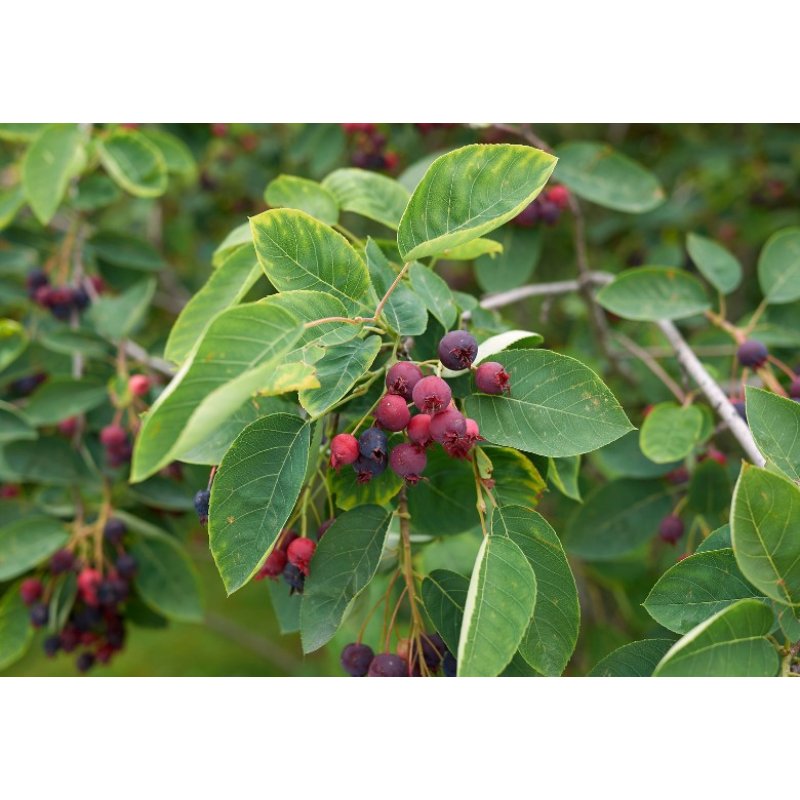
Canadian serviceberry is an ornamental shrub or small tree with beautiful flowers and attractive fruits. Its delicate flowers decorate the garden in spring and then provide tasty and edible fruits in summer. Canadian serviceberry is an oasis full of beauty and life right in your garden.
 Wide range of quality products
Seeds, essential oils, growing supplies and exotic plants in one place
 Eco-friendly range
We prefer natural and gentle products
 Expert advice
We help you grow – guides, blog and personal support
 Delivery across the EU
PPL, DPD, GLS and local carriers – pickup point or home delivery
Juneberry is a species of deciduous shrub or small tree. It originates from North America and is widely distributed in Canada and the eastern United States. It is a very popular shrub in gardens thanks to its decorative appearance, easy care requirements and ability to attract birds and other small wildlife.
.png)
Juneberry is a deciduous shrub or small tree. It can grow up to 6 metres in height. It has alternately arranged oval leaves with serrated edges, which are dark green on the front and lighter on the back. In spring, it blooms with small white or pink flowers arranged in inflorescences. After flowering, small berries form, which have a blue-black to purple colour. These berries are edible and widely used in cooking, for example in making jams and desserts. Juneberry is a popular shrub in gardens thanks to its beautiful inflorescences and attractive fruits.
.png)
1. Seed stratification: the seeds have a natural dormancy period and need to be stratified for better germination. Place the seeds in moist substrate (e.g. peat) and store them in the refrigerator for 2-3 months. This process mimics the natural overwintering of seeds.
2. Preparing growing containers: prepare growing containers with drainage holes at the bottom. Fill them with substrate mixture.
3. Sowing seeds: sow the stratified seeds in growing containers to a depth of about 1-2 cm. Cover them with a thin layer of substrate.
4. Location: place the growing containers in a warm and sunny spot with plenty of light.
5. Watering: water the seeds carefully so that the substrate is moist but not waterlogged.
6. Germination: seeds can germinate in several weeks to months.
7. Seedling care: once the seedlings grow and develop sufficiently strong roots, transplant them into individual pots with more space for root growth.
8. Plant care: water the plants regularly, keep the substrate moist but not waterlogged. Gradually extend the exposure to sunlight so that the plants adapt to greater light intensity.
Data sheet
Your review appreciation cannot be sent
Report comment
Report sent
Your report cannot be sent
Write your review
Review sent
Your review cannot be sent
Canadian serviceberry is an ornamental shrub or small tree with beautiful flowers and attractive fruits. Its delicate flowers decorate the garden in spring and then provide tasty and edible fruits in summer. Canadian serviceberry is an oasis full of beauty and life right in your garden.
check_circle
check_circle