
 Our products
 Aromatherapy - essential oils
 Essential oils
 Aroma lamps
 Aroma Diffusers
 Seeds
 Vegetables
 Herbs and spices
 Ornamental Plant Seeds
 Grass mixtures
 Sprouts and microgreens
 Growing supplies
 Cultivation and Gardening Supplies
 Hydroponics and indoor growing
 Protective equipment and gardening tools
 Exotic plants
 Exotic Fruit and Vegetables
 Exotic herbs
 Exotic trees and shrubs
 Ornamental exotic plants
 Roasted coffee
 Espresso coffee
 Ecological coffee preparation
 Thermal mugs and coffee cups
 Aeropress
 Thermos flasks and thermal mugs for coffee and tea
 Moka pot
 Filter coffee
 Coffee blends
 Accessories for coffee makers
 Water filtration
 Coffee grinders
 Cleaning the Coffee Maker
 Ecological Cleaning of Coffee Machines
 Coffee makers
 Coffee Preparation
 Coffee Accessories
 Food products
 For wildlife and pets
 Chocolate and others
 Hemp food products
 Natural cosmetics
 Hemp cosmetics
 Smoking supplies
 Bongs - water pipes
 Blunts and tubes
 E-liquids with Terpenes and CBD
 Grinders and Mills
 Papers and filters
 Smoking accessories
 Vaporizers
 Air fresheners
 CBD and CBG products
 CBD sprays
 CBD and CBN crystals
 CBD body and facial care
 Weeds
 CBD suppositories and capsules
 CBD oils and drops
 CBG oils and drops
 House and garden
 Fashion and Decoration
 Kitchen essentials and cooking
 Christmas Decorations and Accessories
 Gift Sets
 Bird feeders
 Seasonal and Special Tools
Essential oils can provide gentle support even for the little ones – when used correctly. Children's aromatherapy requires careful selection of safe oils, proper dilution, and a considerate approach to the sensitive child's organism. Discover which essential oils for children are considered the gentlest and how to use them safely and confidently at home.
In short: Essential oils are generally not recommended for newborns up to one month. From 1 to 6 months, only very low-concentration diffusion of gentle oils such as lavender is appropriate. From 6 months to 2 years, dilute 1 drop in 2 teaspoons of carrier oil, and consult a paediatrician before use.
| Newborns up to 1 month | essential oils not recommended |
|---|---|
| 1–6 months | diffuser only, very low concentration, no skin contact |
| 6 months – 2 years | 1 drop per 2 teaspoons of carrier oil; diffuser max. 1–2 drops per room |
| 2–6 years | 1–2 drops per 1 tablespoon of carrier oil; diffuser 2–3 drops |
| Over 6 years | 2–3 drops per 1 tablespoon of carrier oil |
| Diffuser session | max. 30–60 minutes at a time |
Essential oils can be gentle helpers even in caring for the youngest ones. Children's aromatherapy, however, requires increased caution, proper dilution, and careful selection of safe oils. This guide will show you how to use the power of nature responsibly and with consideration for the sensitive child's organism.
Discover which essential oils for children are considered the gentlest and how to safely use them at home as complementary, calming, and fragrant care.
Contents
- Introduction to safe use of essential oils in children
- Age restrictions and basic rules
- Proper dilution of essential oils for children
- Safe essential oils for children
- Oils that are not suitable for children
- Methods of using essential oils in children
- Most common mistakes and how to avoid them
- Practical recipes and tips
- Conclusion
Introduction to safe use of essential oils in children
Aromatherapy and the use of essential oils in children is an increasingly popular topic among parents looking for gentle and natural options for complementary care for their children's wellbeing. Professional literature includes studies examining various effects of essential oils, but these findings belong in the hands of specialists and do not mean that oils replace medical treatment.
It's important to keep in mind that children react to essential oils differently than adults and require special attention when using them. Each child is unique and may react differently to fragrances and oil components. Therefore, it's crucial to follow proven safety procedures, use proper dilution, and select only those oils that are considered suitable for the given age. In this guide, you'll learn everything essential about safely using essential oils in children, so your family can enjoy the benefits of children's aromatherapy without unnecessary risks.
Age restrictions and basic rules
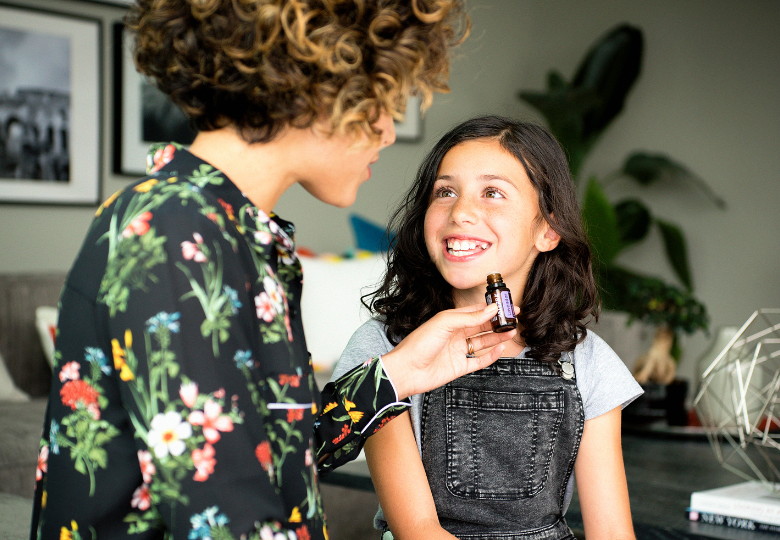
👶 Newborns and infants (0–6 months)
For newborns up to one month of age, essential oils are generally not recommended – their skin is extremely sensitive and their immune system is still developing. For children from 1 to 6 months, gentle child aromatherapy can be used very cautiously in the form of diffusing essential oils into the air, always in very low concentrations and only with the gentlest oils, such as lavender. Direct contact with the skin is inappropriate at this age.
🧒 Children 6 months – 2 years
From the sixth month, you can begin very careful use of selected essential oils for children. It's important to start gradually, use low concentrations, and carefully monitor the child's reactions. Some aromatherapists recommend using hydrosols (floral waters) rather than essential oils for children under 5 years old, as these contain only trace amounts of aromatic compounds.
👧 Children from 2 years
For older children, the possibilities for using essential oils expand, but proper dilution and use of only proven gentle oils remain essential. Some sources indicate that peppermint can be used with very careful dosing and low concentration for children over 30 months, primarily in a diffuser and after consultation with a specialist. Mandarin or ginger are mentioned in professional sources in connection with supporting comfort, but always as complementary, not therapeutic care.
Proper dilution of essential oils for children
Proper dilution is key to safe use of essential oils with children. Never apply concentrated oils directly to children's skin.
🌿 Recommended dilution ratios by age:
Children 6 months – 2 years:
- 1 drop of essential oil per 2 teaspoons of carrier oil
- When using a diffuser: maximum 1–2 drops per entire room
Children 2–6 years:
- 1–2 drops of essential oil per 1 tablespoon of carrier oil
- When using a diffuser: 2–3 drops per room
Children over 6 years:
- 2–3 drops of essential oil per 1 tablespoon of carrier oil
- The concentration can be gradually adjusted according to the child's tolerance and after consulting with a specialist
🌿 Suitable carrier oils for children:
- Almond oil – gentle and universal
- Coconut oil – popular in skincare and easy to spread
- Jojoba oil – well-tolerated and long-lasting on the skin
- Sunflower oil – light and easily absorbed
Safe essential oils for children
🌺 Lavender (Lavandula angustifolia)
Lavender oil is often mentioned in aromatherapy as one of the gentlest and most universal oils that can be well-tolerated even by children. It is traditionally associated with evening relaxation and a calming atmosphere.
Recommended use: Aromatherapy before bedtime using a diffuser, gentle foot massage with well-diluted oil, adding to bath (always in a carrier medium).
🌺 Chamomile (Chamomilla romana)
Chamomile oil is known for its gentle scent and is traditionally used in comfort and calming care. It is considered suitable for sensitive skin when properly diluted.
Recommended use: Gentle tummy massage with well-diluted oil, aromatherapy for calming using a diffuser.
🌺 Mandarin (Citrus reticulata)
Mandarin oil has a pleasant sweet scent that children usually accept well. In aromatherapy, it is associated with a sense of calm and relaxation.
Recommended use: Using a diffuser to improve mood, adding to evening bath (after mixing in a carrier medium).
🌺 Sweet Orange (Citrus sinensis)
Orange oil is popular for its joyful, "sunny" scent. Many parents choose it to create a pleasant atmosphere during the day.
Recommended use: Morning use of diffuser for uplift and better mood, aromatherapy games and fragrant rituals.
Oils that are not suitable for children
Some essential oils are unsuitable for children or are recommended to be used only with great caution in children's aromatherapy. Professional sources also discuss the possible influence of some oils (such as lavender and tea tree) on hormonal balance in pre-pubescent boys. This is why moderation, lower concentrations and emphasis on gentler alternatives are generally recommended for children.
⚠️ Oils where increased caution is recommended or are not recommended for children:
Peppermint – very intense oil, too strong for children's respiratory system (for children it is only considered at an older age, in low dilution and after consulting with a specialist, primarily in a diffuser).
Eucalyptus – high cineole content may be too intense for smaller children.
Rosemary – contains components that may irritate skin and respiratory tract.
Tea tree – may cause irritation or allergic reaction in more sensitive skin.
Clove – highly concentrated oil that may irritate skin and mucous membranes.
Citronella – often too irritating for children's skin.
Anise – not recommended especially when taking medication simultaneously, and generally not among commonly used oils for children.
Methods of using essential oils with children
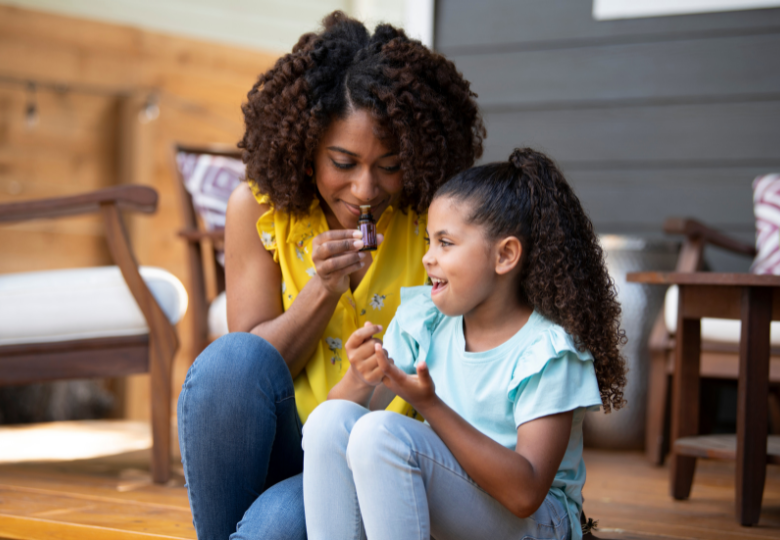
🌬️ Children's aromatherapy using a diffuser
The safest way to use essential oils with children is dispersing them into the air using an aroma lamp or diffuser. This method allows you to control the concentration of the fragrance and easily ventilate the room if needed.
Tips for safe aromatherapy using a diffuser:
- Start with 1–2 drops
- Use the diffuser for a maximum of 30–60 minutes at a time
- Ensure adequate ventilation
- Monitor the child's reactions and turn off the diffuser in case of discomfort
🛁 Aromatic bath
Adding a few drops of well-diluted essential oil to a bath can create a pleasant relaxing experience. Always mix the oil first with a carrier oil, milk, or other suitable carrier to ensure even distribution.
🤲 Gentle massage
Massage with properly diluted oils can promote relaxation and strengthen the bond between parent and child. Always start with a small amount of the mixture on a small area of skin and monitor for any reaction.
Most common mistakes and how to avoid them
❌ Using undiluted oils
Solution: Always dilute essential oils according to recommended ratios and the child's age.
⚠️ Concentration too high
Solution: Always start with minimal doses and adjust according to tolerance if necessary, ideally after consultation with a specialist.
🚨 Ignoring warning signs
Warning: If your child develops a rash, skin irritation, headaches, vomiting, cough, or difficulty breathing, stop using the oils immediately and contact a doctor.
📦 Improper storage
Solution: Store oils out of reach of children, in a cool, dark place, tightly sealed.
Practical Recipes and Tips
🌙 Calming blend before bedtime: 2 drops of lavender, 1 drop of chamomile, and 15 ml of almond oil.
Gently massage the feet or use a diffuser approximately 30 minutes before sleep.
😊 Mood-boosting blend: 2 drops of sweet orange and 1 drop of mandarin.
Use a diffuser during the day to create a pleasant, fragrant atmosphere.
🛁 Bath blend for relaxation: 1 drop of lavender and 1 tablespoon of honey or milk.
Mix together and add to a lukewarm bath.
Conclusion
Essential oils can be an excellent addition to childcare when used responsibly and safely. The key to success is consistency, caution, and strict adherence to age recommendations and dilution guidelines.
Remember that every child is unique and may react differently. Always start with minimal doses, monitor reactions, and consult an expert if you have any doubts. Essential oils should never replace conventional medical care, but they can be a pleasant complement to your family's healthy lifestyle.
🔍 Recommended article: Essential Oil Guide