 Essential oils
 Aroma lamps
 Aroma Diffusers
 Vegetables
 Herbs and spices
 Ornamental Plant Seeds
 Grass mixtures
 Sprouts and microgreens
 Exotic Fruit and Vegetables
 Exotic herbs
 Exotic trees and shrubs
 Ornamental exotic plants
 Espresso coffee
 Ecological coffee preparation
 Thermal mugs and coffee cups
 Aeropress
 Thermos flasks and thermal mugs for coffee and tea
 Moka pot
 Filter coffee
 Coffee blends
 Water filtration
 Coffee grinders
 Cleaning the Coffee Maker
 Ecological Cleaning of Coffee Machines
 Coffee makers
 Coffee Preparation
 Coffee Accessories
 For wildlife and pets
 Chocolate and others
 Hemp food products
 Hemp cosmetics
 Bongs - water pipes
 Blunts and tubes
 E-liquids with Terpenes and CBD
 Grinders and Mills
 Papers and filters
 Smoking accessories
 Vaporizers
 Air fresheners
 CBD sprays
 CBD and CBN crystals
 CBD body and facial care
 Weeds
 CBD suppositories and capsules
 CBD oils and drops
 CBG oils and drops
 Fashion and Decoration
 Kitchen essentials and cooking
 Christmas Decorations and Accessories
 Gift Sets
 Bird feeders
 Seasonal and Special Tools

 Our products
 Aromatherapy - essential oils
 Seeds
 Growing supplies
 Cultivation and Gardening Supplies
 Hydroponics and indoor growing
 Protective equipment and gardening tools
 Exotic plants
 Roasted coffee
 Accessories for coffee makers
 Food products
 Natural cosmetics
 Smoking supplies
 CBD and CBG products
 House and garden

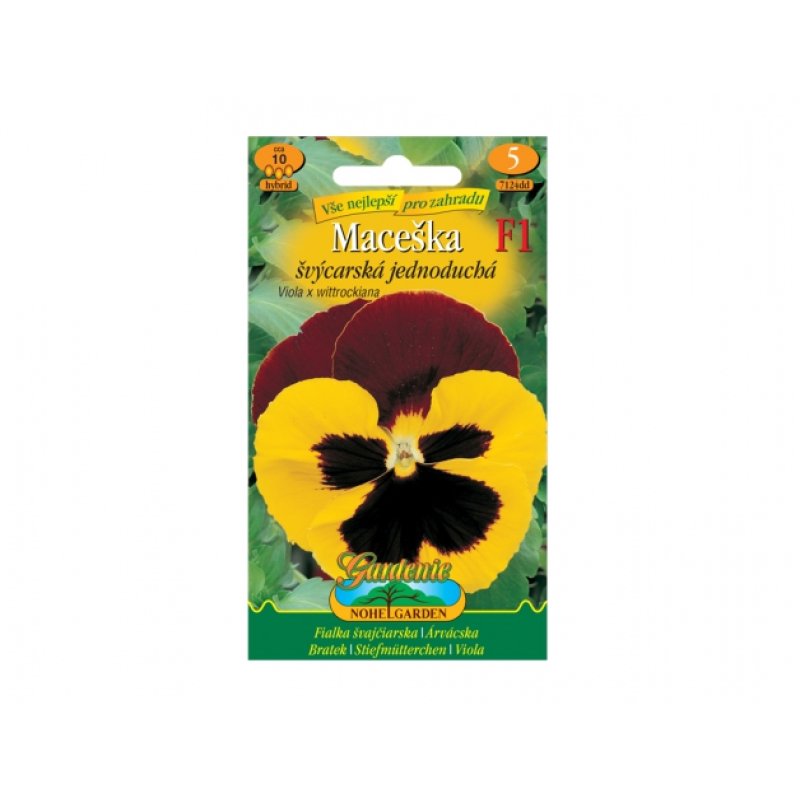
Low-growing yellow-flowering biennial used for group or individual plantings. Suitable for container planting, memorial sites, but also for flower beds or ornamental plantings. Package contains 10 seeds.
 Wide range of quality products
Seeds, essential oils, growing supplies and exotic plants in one place
 Eco-friendly range
We prefer natural and gentle products
 Expert advice
We help you grow – guides, blog and personal support
 Delivery across the EU
PPL, DPD, GLS and local carriers – pickup point or home delivery
Pansies, also known as violas, are biennial plants. There are more than 450 species of pansies in the world. The difference between pansies and violas is not definitive. Violas are lower and more compact. Their flowers are smaller than pansies. They are often single-colored. Pansies have large flowers. They bloom mainly in spring, from April to June. Depending on the sowing time, they can also bloom in autumn, in September and November. Their flowers are beautiful and velvety. The flowers come in a whole range of colors, including black. They grow up to 30 cm in height - depending on the species.
Among the most well-known biennials are: Viola x wittrockiana (garden pansy), which reaches a height of up to 30 cm. V. cornuta (horned viola) - grows up to 15-20 cm in height and Viola tricolor.
They are suitable for flower beds on their own or in combination with other flowers. An excellent combination is planting pansies with spring bulbs, especially tulips. We can also plant them in bowls, boxes, on windows, on balconies, on graves and in ornamental beds. Pansies are a popular flower for memorial plantings.
Plants require a bright location. Keep the substrate moist - not wet or waterlogged. They do not tolerate direct sunlight and drought. Regularly loosen the soil around the plants and keep it weed-free. They may freeze during severe frosts. Therefore, lightly cover the plants with conifer branches.
Before sowing, mix the seeds with fine sand and mix thoroughly. This stratifies the seeds. Sow seeds under glass from February to April so that the plants bloom in summer. Plant out in the flower bed in May. Sow biennials from June to July so they bloom in spring. Regular sowing substrate is sufficient for planting.
The soil should be humus-rich with sufficient nutrients. Well-drained.
Plants do not need additional fertilization. Well-prepared soil for planting or substrate designed for container growing will last the plants for many months. If the soil is not particularly rich in nutrients, apply NPK fertilizer with a lower amount of nitrogen - such as Cererit, Kristalon. Dilute the fertilizer in water and apply once every 14 days with regular watering.
Pansies are affected by a number of fungal diseases. The most common disease is leaf spot. Among animal pests, spider mites and slugs often occur, feeding on the plants. A common disease is phytophthora root rot. Infection manifests as browning and dying of roots and stem bases. Remove diseased plants. Apply a 0.2% spray or drench with Aliette 80 WG or 0.05% Polyversum (2-3 l water/m²). Sometimes plants are damaged by pansy yellows caused by aster phytoplasma yellows. The disease appears on young autumn seedlings. Affected plants turn yellow, stop growing, flowers are poorly colored and plants freeze over winter. Appropriate protection is crop rotation. This means changing the location where we grow the plants every year.
Data sheet
Specific References
Your review appreciation cannot be sent
Report comment
Report sent
Your report cannot be sent
Write your review
Review sent
Your review cannot be sent
Low-growing yellow-flowering biennial used for group or individual plantings. Suitable for container planting, memorial sites, but also for flower beds or ornamental plantings. Package contains 10 seeds.
check_circle
check_circle