 Essential oils
 Aroma lamps
 Aroma Diffusers
 Vegetables
 Herbs and spices
 Ornamental Plant Seeds
 Grass mixtures
 Sprouts and microgreens
 Exotic Fruit and Vegetables
 Exotic herbs
 Exotic trees and shrubs
 Ornamental exotic plants
 Espresso coffee
 Ecological coffee preparation
 Thermal mugs and coffee cups
 Aeropress
 Thermos flasks and thermal mugs for coffee and tea
 Moka pot
 Filter coffee
 Coffee blends
 Water filtration
 Coffee grinders
 Cleaning the Coffee Maker
 Ecological Cleaning of Coffee Machines
 Coffee makers
 Coffee Preparation
 Coffee Accessories
 For wildlife and pets
 Chocolate and others
 Hemp food products
 Hemp cosmetics
 Bongs - water pipes
 Blunts and tubes
 E-liquids with Terpenes and CBD
 Grinders and Mills
 Papers and filters
 Smoking accessories
 Vaporizers
 Air fresheners
 CBD sprays
 CBD and CBN crystals
 CBD body and facial care
 Weeds
 CBD suppositories and capsules
 CBD oils and drops
 CBG oils and drops
 Fashion and Decoration
 Kitchen essentials and cooking
 Christmas Decorations and Accessories
 Gift Sets
 Bird feeders
 Seasonal and Special Tools

 Our products
 Aromatherapy - essential oils
 Seeds
 Growing supplies
 Cultivation and Gardening Supplies
 Hydroponics and indoor growing
 Protective equipment and gardening tools
 Exotic plants
 Roasted coffee
 Accessories for coffee makers
 Food products
 Natural cosmetics
 Smoking supplies
 CBD and CBG products
 House and garden

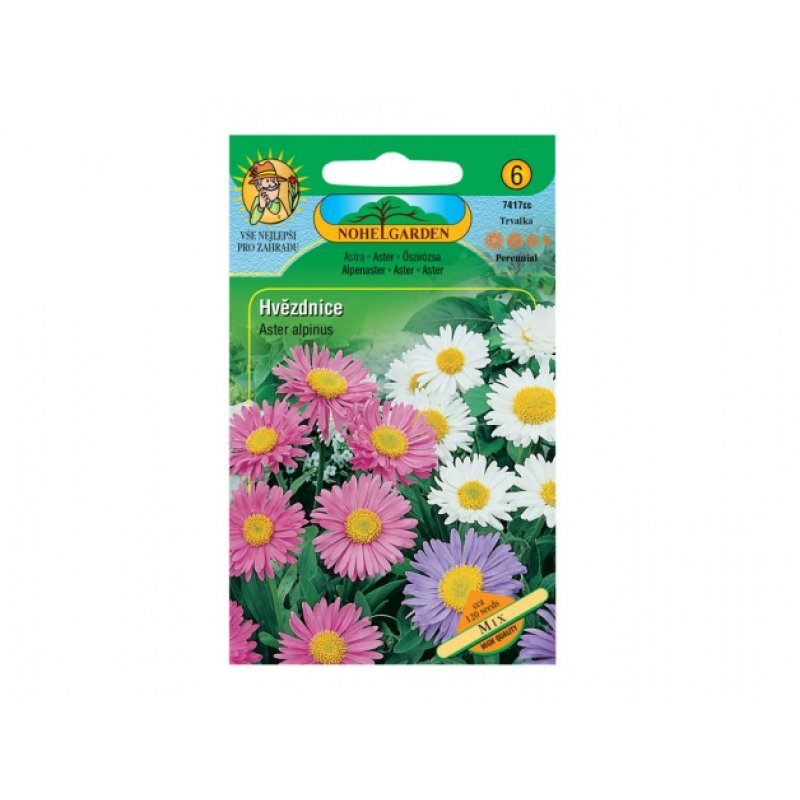
Frost-resistant perennial with low growth habit. Suitable for rock gardens, flower beds, and borders. Requires sunny to partially shaded locations and does not tolerate waterlogging.
 Wide range of quality products
Seeds, essential oils, growing supplies and exotic plants in one place
 Eco-friendly range
We prefer natural and gentle products
 Expert advice
We help you grow – guides, blog and personal support
 Delivery across the EU
PPL, DPD, GLS and local carriers – pickup point or home delivery
Originates from the eastern part of North America, where it grows in drier locations in forest clearings and edges of woodlands. There is an endless variety of Aster species. Some are tall and therefore excellent for cutting, while others are low-growing and compact. Typical colors for this flower are purple and blue, but white also suits it beautifully, standing out wonderfully among warm autumn shades. In the garden, we combine them with yellow-flowering species such as Rudbeckia, Helenium, Coreopsis, Solidago, etc. They are suitable for group plantings, border edging, or as solitary perennials.
Alpine aster originates from Europe but occurs from Europe to Siberia. It grows to approximately 20 cm in height. The flowers are blue-violet. It blooms from May to June. Varieties with white, blue, and pink flowers are cultivated.
They require sunny to partially shaded locations. They can also be grown in drier positions, but watering must be regular. Loosen the soil around the plant regularly. Remove spent flowers. The reason is that the plant grows in clumps, which could lead to rotting. Grow plants in groups with spacing of 20-30 cm between individual plants.
Sow seeds from March to April on the surface of the substrate. Any substrate suitable for sowing is appropriate. Keep seedlings at 18 to 22°C for 2-3 weeks. Then for 4 weeks at -4 to +4°C. As soon as we transfer them to warmth, they will begin to germinate.
Suitable soils are deep, nutritious, permeable, and slightly moist.
Apply fertilizer during intensive growth in spring and then for proper tissue maturation and flower formation during and at the end of summer. We can use well-matured compost or any universal NPK fertilizer or fertilizers for flowering plants.
Plants are attacked by powdery mildew and grey mold in higher humidity. Therefore, treat them curatively and preventively with suitable fungicides.
Data sheet
Specific References
Your review appreciation cannot be sent
Report comment
Report sent
Your report cannot be sent
Write your review
Review sent
Your review cannot be sent
Frost-resistant perennial with low growth habit. Suitable for rock gardens, flower beds, and borders. Requires sunny to partially shaded locations and does not tolerate waterlogging.
check_circle
check_circle