 Essential oils
 Aroma lamps
 Aroma Diffusers
 Vegetables
 Herbs and spices
 Ornamental Plant Seeds
 Grass mixtures
 Sprouts and microgreens
 Exotic Fruit and Vegetables
 Exotic herbs
 Exotic trees and shrubs
 Ornamental exotic plants
 Espresso coffee
 Ecological coffee preparation
 Thermal mugs and coffee cups
 Aeropress
 Thermos flasks and thermal mugs for coffee and tea
 Moka pot
 Filter coffee
 Coffee blends
 Water filtration
 Coffee grinders
 Cleaning the Coffee Maker
 Ecological Cleaning of Coffee Machines
 Coffee makers
 Coffee Preparation
 Coffee Accessories
 For wildlife and pets
 Chocolate and others
 Hemp food products
 Hemp cosmetics
 Bongs - water pipes
 Blunts and tubes
 E-liquids with Terpenes and CBD
 Grinders and Mills
 Papers and filters
 Smoking accessories
 Vaporizers
 Air fresheners
 CBD sprays
 CBD and CBN crystals
 CBD body and facial care
 Weeds
 CBD suppositories and capsules
 CBD oils and drops
 CBG oils and drops
 Fashion and Decoration
 Kitchen essentials and cooking
 Christmas Decorations and Accessories
 Gift Sets
 Bird feeders
 Seasonal and Special Tools

 Our products
 Aromatherapy - essential oils
 Seeds
 Growing supplies
 Cultivation and Gardening Supplies
 Hydroponics and indoor growing
 Protective equipment and gardening tools
 Exotic plants
 Roasted coffee
 Accessories for coffee makers
 Food products
 Natural cosmetics
 Smoking supplies
 CBD and CBG products
 House and garden

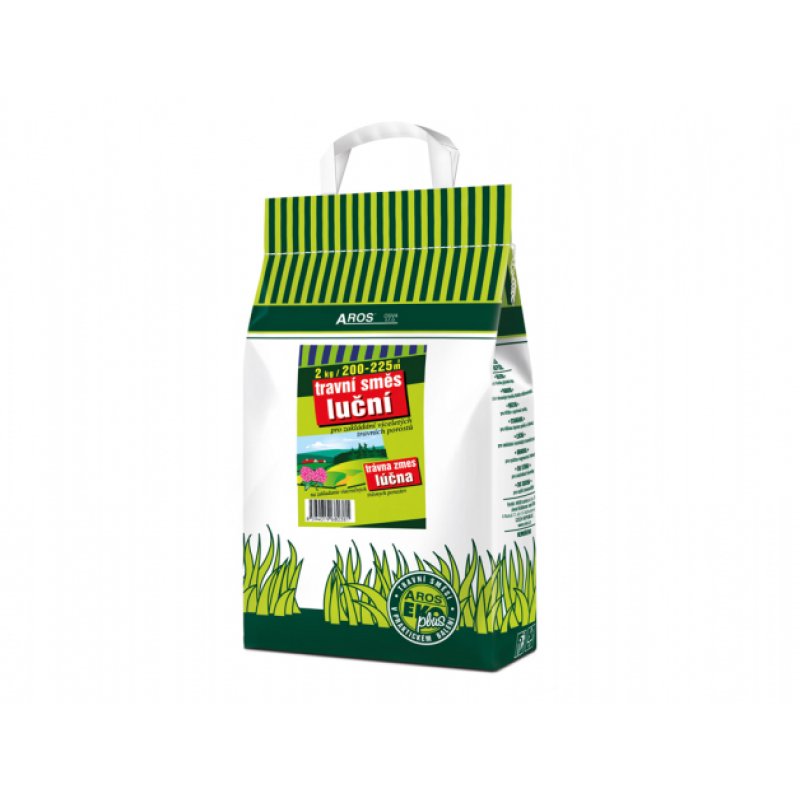
Suitable for grassing extensively maintained lawn areas. The formula contains species and varieties with higher green matter production and a clover admixture. Ideal for hay production and for establishing cattle runs and grazing areas. Package contains 2 kg. A 2 kg package is sufficient for 200 m².
 Wide range of quality products
Seeds, essential oils, growing supplies and exotic plants in one place
 Eco-friendly range
We prefer natural and gentle products
 Expert advice
We help you grow – guides, blog and personal support
 Delivery across the EU
PPL, DPD, GLS and local carriers – pickup point or home delivery
Do you also dream of a beautiful, lush green lawn? If so, special grass seed mixes are the most suitable and simplest solution. However, before you sow grass seed on your prepared area, you should be clear about what purpose the lawn will serve and what you expect from it. We select grass seed mixes according to the primary purpose the lawn will serve.
You can choose based on the names: Shade, Sport, Park Mix (suitable for recreational purposes), Golf, Renovation and many others. The basis of grass seed mixes are special types of grasses, such as fescues, bluegrasses, ryegrass, with the addition of buckwheat or bentgrass and other grasses, so that the mix suits different stress levels. Each type of grass tolerates different stress levels, mowing and requires different care. Grass seed mixes can be divided into several types.
Park Grass Mix is designed for parks and extensive plots where the same areas are not frequently stressed. It has low resistance to trampling and therefore is not suitable for small, heavily used gardens (exceptions are ornamental gardens). Its advantages are that it can withstand long periods without moisture and doesn't need to be mowed often.
Sports Field Grass Mix is designed for playing fields that require firm and resilient turf, resistant to trampling and with good regenerative ability of the stand after damage. They are therefore composed exclusively of species that best withstand stress, primarily meadow bluegrass and perennial ryegrass. The mix for tennis courts contains mainly short and long rhizomatous grass species and varieties that tolerate not only trampling but also very low mowing. However, it is not suitable for normal gardens because it is not very ornamental (a recreational mix is better).
Golf Grass Mix is designed for golf courses. The properties of lawns in different parts of a golf course vary, and therefore the seeds intended for their establishment also differ substantially. A common feature of all mixes for golf purposes is the top quality of selected varieties. The quality of the lawns significantly affects the overall quality of the golf course. A golf mix can certainly be used in a garden, but be prepared for time-intensive maintenance (frequent mowing, fertilizing, weeding).
Recreational Grass Mixes are designed for lawns in residential environments. Such a lawn not only fulfills an aesthetic function but also serves recreational purposes. It must look good while also being very resistant to normal stress. The mix must therefore have a balanced ratio between narrow-leaved ornamental grass species and species that tolerate trampling well, such as perennial ryegrass and meadow bluegrass.
Grass Mixes for Shade are designed for areas that don't receive much sun during the day. These places include under trees, next to houses, various gazebos and pergolas. The mix is composed only of grass species that don't need much sunlight to grow and still look fresh, with no difference in regenerative ability.
Meadow Mixes are designed for lawns around buildings where a more natural-looking lawn stands out better. The advantages are undeniable. The lawn doesn't need to be mowed more than twice a year, doesn't need irrigation or weeding. The lawn composition also includes flowering herbs; it can be said that natural lawns are like flowering meadows.
Drought-Resistant Mix is a special mix designed for sites where the sun shines all day or moisture conditions don't allow proper grass growth. This type of lawn germinates more slowly and gradually establishes itself, survives short-term droughts well and tolerates moderate stress.
Grass Overseeding Mix is suitable for overseeding and quick regeneration of damaged areas in lawns. The grass mix contains selected ryegrass varieties that are characterized primarily by quick germination start and strong tillering.
Universal Grass Mix is composed of quality grass varieties designed for quick grass establishment of areas around buildings, along paths, in residential areas and for improving grass areas in parks and other existing grass areas. The lawn has higher resistance to weeds and lower maintenance requirements.
We perform the first lawn mowing at a height of 10-12 cm. We always shorten by a maximum of 1/5 of the height. After the first mowing, we wait 4-5 days for the overgrown lawn to regenerate a bit and green up, and we shorten it again to the required height, but again by a maximum of half the height. According to mowing intensity, it's necessary to select a suitable type of mower. The most commonly used are blade rotary mowers, for fine and low lawns reel mowers are suitable and gentler, while for mowing higher growth, flail mowers should be used. We always use mowers with well-sharpened blades. Regular lawn maintenance very rapidly increases its stress resistance, the lawn thickens and its appearance improves. Regular lawn care also prevents the formation of fungal and bacterial infections that can damage the lawn. In drier summer months, it's necessary to irrigate the lawn. The water dose is approximately 20 liters of water per m2. We irrigate twice a week, ideally early morning or evening, to prevent excessive evaporation. Lawn scarification is performed twice a year - spring and early autumn. Lawn scarification ensures cleaning from thatch and other vegetation residues. The lawn better absorbs nutrients, moisture and light. In cases where we find that after cutting the lawn, removing dead parts and a large amount of moss, the lawn is heavily thinned, then overseeding and repair are necessary.
Before planting, we remove all unwanted vegetation residues, branches and stones from the plot. Using total herbicides, we rid the plot of weeds. We loosen the plot and leave it undisturbed for a week. After a week of settling, we work in special starter lawn fertilizer. We level the surface with coarse rakes.
We perform sowing evenly by broadcasting or better with the help of a spreader or application cart. To prevent seeds from being washed away by precipitation, it's advisable to roll the surface with a roller. Another option is to attach flat boards to shoes and evenly tread the terrain (smaller areas). After sowing, we irrigate the plot; germinating seed must not dry out.
The ideal pH for lawn cultivation is 6-6.5. Lower under 5 or higher above 7 causes disease occurrence and poor stand growth.
From the first year, we fertilize with mineral granulated fertilizer. Regular fertilizers can be used - Cererit, NPK or Hydrocomplex. We perform spring fertilization in April after cleaning and raking the lawn at a rate of 1 to 2 kg per 100 m2. Another fertilization at a rate of 0.5 to 1 kg is done approximately in June. For autumn lawn nutrition, we use special autumn lawn fertilizers with increased potassium content for better overwintering and resistance. We apply fertilizer evenly over the entire lawn area. For application, we use an application spreader cart or fertilizer spreader. Manual fertilizer broadcasting is not completely ideal.
Snow mold manifests itself by grass plants dying in circular, elliptical or irregular shaped areas. They are covered with whitish or pinkish colored mycelium. The disease manifests mainly after snow melts. In case of severe infestation, we perform fungicide treatment. Otherwise, we rake out the dead grass material and fertilize with calcium nitrate or ammonium nitrate with limestone.
Grass powdery mildew creates a whitish powdery coating on grass leaves during vegetation, which transitions to more extensive brownish spots. Leaves gradually die. The cause is overly dense stands without air access, which retain high moisture. Suitable protection is growing resistant varieties, balanced nutrition and frequent mowing, which limit disease spread. In case of severe occurrence, we perform fungicide treatment.
Dark rust-brown powdery pustules of summer spores appear on the lower parts of stems, later dark black and convex winter spores appear. If this phenomenon appeared on your lawn, it is affected by grass rust. The cause is extensively treated stands, frequent dews and rainfall at higher temperatures. Disease infestation can be limited by performing irrigation in evening hours. It is recommended to treat the lawn with chemical preparations Amistar or Ortiva+Bumper 25EC.
Fusarium blight of lawns occurs on intensively maintained lawns during the growing season, primarily in ornamental lawns with a predominant share of red fescue and sheep fescue. Small, round spots appear on the lawn (similar to damage from a golf ball). It overwinters unfavorable conditions in mycelium form; lawn infestation is most common in summer after stress from a longer period of drought, strong sun exposure and sudden rainfall. Disease occurrence is also supported by extreme soil pH values. Preventive protection is primarily avoiding mowing wet grass, even nutrition, regular mowing. Chemical preparations such as Rovral AquaFlo, Dithane DG Neotec can also be used.
Dry patch of lawns is caused by hydrophobic fungal species and stress. First small, later extensive irregularly shaped spots appear, in which the lawn slowly dries out and doesn't regenerate. We treat such affected lawn with preparations Amistar or Ortiva+Bumper 25EC.
Dollar spot occurs most often at the end of summer. It manifests as straw-colored spots up to 7 cm in diameter. As the spotting spreads, the circles multiply, merge and create irregular patterns. At the beginning of the disease, the spots are yellow-green, later reddish-brown. The main cause of this disease is nitrogen deficiency combined with high temperatures.
Fairy ring manifests by creating regular circles or their parts of various diameters. These circles are formed by fungal fruiting bodies, or a dead zone, or a dark-colored strip of lawn. Protection is regular fertilization, irrigation and preventive application of fungicides.
Data sheet
Specific References
Your review appreciation cannot be sent
Report comment
Report sent
Your report cannot be sent
Write your review
Review sent
Your review cannot be sent
Suitable for grassing extensively maintained lawn areas. The formula contains species and varieties with higher green matter production and a clover admixture. Ideal for hay production and for establishing cattle runs and grazing areas. Package contains 2 kg. A 2 kg package is sufficient for 200 m².
check_circle
check_circle