 Essential oils
 Aroma lamps
 Aroma Diffusers
 Vegetables
 Herbs and spices
 Ornamental Plant Seeds
 Grass mixtures
 Sprouts and microgreens
 Exotic Fruit and Vegetables
 Exotic herbs
 Exotic trees and shrubs
 Ornamental exotic plants
 Espresso coffee
 Ecological coffee preparation
 Thermal mugs and coffee cups
 Aeropress
 Thermos flasks and thermal mugs for coffee and tea
 Moka pot
 Filter coffee
 Coffee blends
 Water filtration
 Coffee grinders
 Cleaning the Coffee Maker
 Ecological Cleaning of Coffee Machines
 Coffee makers
 Coffee Preparation
 Coffee Accessories
 For wildlife and pets
 Chocolate and others
 Hemp food products
 Hemp cosmetics
 Bongs - water pipes
 Blunts and tubes
 E-liquids with Terpenes and CBD
 Grinders and Mills
 Papers and filters
 Smoking accessories
 Vaporizers
 Air fresheners
 CBD sprays
 CBD and CBN crystals
 CBD body and facial care
 Weeds
 CBD suppositories and capsules
 CBD oils and drops
 CBG oils and drops
 Fashion and Decoration
 Kitchen essentials and cooking
 Christmas Decorations and Accessories
 Gift Sets
 Bird feeders
 Seasonal and Special Tools

 Our products
 Aromatherapy - essential oils
 Seeds
 Growing supplies
 Cultivation and Gardening Supplies
 Hydroponics and indoor growing
 Protective equipment and gardening tools
 Exotic plants
 Roasted coffee
 Accessories for coffee makers
 Food products
 Natural cosmetics
 Smoking supplies
 CBD and CBG products
 House and garden


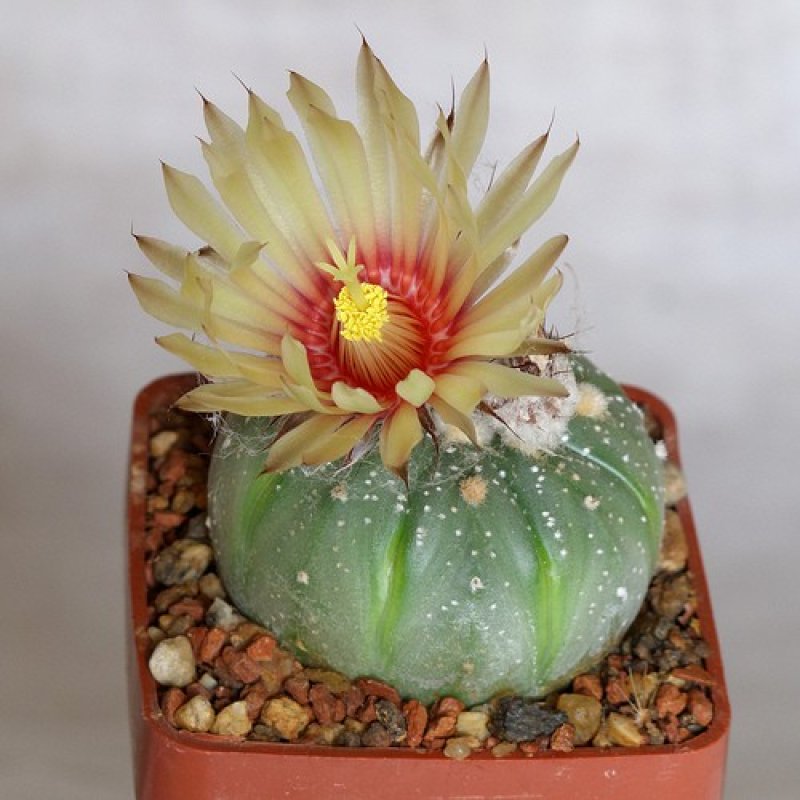
A beautiful cactus that has no spines, but white flakes instead. It blooms yellow. The package contains 6 seeds.
 Wide range of quality products
Seeds, essential oils, growing supplies and exotic plants in one place
 Eco-friendly range
We prefer natural and gentle products
 Expert advice
We help you grow – guides, blog and personal support
 Delivery across the EU
PPL, DPD, GLS and local carriers – pickup point or home delivery
Astrophytum are Central American cacti that grow mostly in Mexico and the surrounding border areas. It is highly decorative and has no spines. It is usually pentagonal, which is why it is called a star cactus. The Astrophytum genus is resistant to dry air. The flowers are predominantly in yellow shades.
Plants need direct sunlight. South-facing windowsills are suitable. It is advisable to use settled or preferably soft water, which applies to all plants. Watering is appropriate only after the substrate has completely dried out. If water remains in the saucer, pour it out. In winter, we can mist the plants. We repot in early spring or summer, during growth stagnation. Cacti overwinter at eight to twelve degrees Celsius completely without watering. Heated apartments do not suit them in winter. It is therefore advisable to move them to a cold hallway or hall. Light or darkness is not decisive for them. In summer, we water minimally - root rot could occur.
Sowing is carried out in March-April in special substrate. It contains 2 parts fine sand and 1 part soil. Seeds are sown on the surface of the substrate. Plastic containers with holes are suitable. Water them. Cover the containers with glass or a plastic lid. Place the seedlings in a warm, bright place. Direct sun can destroy our seeds or seedlings. Cool-loving species germinate at temperatures around twenty-five, heat-loving species at temperatures above thirty degrees Celsius. Ventilate smaller plants regularly. When the seedlings are 0.5 cm, we can transplant them. We place them in the sun only after one or two years of cultivation.
A mixture with at least one third coarse sand, grit, perlite or similar material increasing permeability is suitable. Garden soil is suitable as substrate for this mixture.
If we repot plants regularly every year, we do not apply fertilizer. Fertilizer watering is sufficient a maximum of three times a year during the growing season. We use special fertilizer for succulents, diluted according to the instructions on the package.
Cacti are most commonly troubled by mealybugs, root mealybugs and spider mites. Mealybugs create small woolly tufts on the surface of cacti, or root mealybugs that parasitize plant roots. Spider mites suck out the surface cells of the cactus, which subsequently takes on gray-green to orange colors, stops growing and may also die. We treat plants with suitable insecticides.
Rot is a significant problem. This is caused by permanently wet soil or mold. We cut off the rotten part, let it dry, and after some time try to root the plant again. If the plant is heavily infested, the probability of saving it is low.
Fusarium rot causes cacti to wilt. Plants lose their shine, pale and individual segments wilt, gradually the entire plants wilt from the disease.
Of fungal diseases, plants are most commonly attacked by powdery mildew, rust, and molds. It is advisable to use special fungicides.
Data sheet
Your review appreciation cannot be sent
Report comment
Report sent
Your report cannot be sent
Write your review
Review sent
Your review cannot be sent
A beautiful cactus that has no spines, but white flakes instead. It blooms yellow. The package contains 6 seeds.
check_circle
check_circle