 Essential oils
 Aroma lamps
 Aroma Diffusers
 Vegetables
 Herbs and spices
 Ornamental Plant Seeds
 Grass mixtures
 Sprouts and microgreens
 Exotic Fruit and Vegetables
 Exotic herbs
 Exotic trees and shrubs
 Ornamental exotic plants
 Espresso coffee
 Ecological coffee preparation
 Thermal mugs and coffee cups
 Aeropress
 Thermos flasks and thermal mugs for coffee and tea
 Moka pot
 Filter coffee
 Coffee blends
 Water filtration
 Coffee grinders
 Cleaning the Coffee Maker
 Ecological Cleaning of Coffee Machines
 Coffee makers
 Coffee Preparation
 Coffee Accessories
 For wildlife and pets
 Chocolate and others
 Hemp food products
 Hemp cosmetics
 Bongs - water pipes
 Blunts and tubes
 E-liquids with Terpenes and CBD
 Grinders and Mills
 Papers and filters
 Smoking accessories
 Vaporizers
 Air fresheners
 CBD sprays
 CBD and CBN crystals
 CBD body and facial care
 Weeds
 CBD suppositories and capsules
 CBD oils and drops
 CBG oils and drops
 Fashion and Decoration
 Kitchen essentials and cooking
 Christmas Decorations and Accessories
 Gift Sets
 Bird feeders
 Seasonal and Special Tools
- Sale -15 %

 Our products
 Aromatherapy - essential oils
 Seeds
 Growing supplies
 Cultivation and Gardening Supplies
 Hydroponics and indoor growing
 Protective equipment and gardening tools
 Exotic plants
 Roasted coffee
 Accessories for coffee makers
 Food products
 Natural cosmetics
 Smoking supplies
 CBD and CBG products
 House and garden


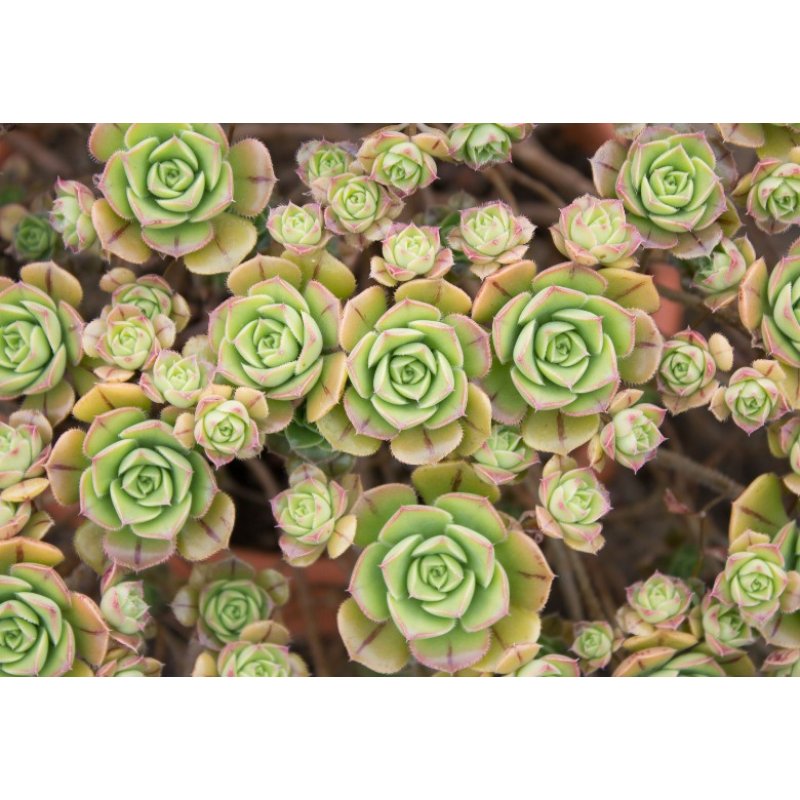
Aeonium spathulatum is a perennial subshrub featuring beautiful leaf patterns that will be a pleasant addition to dry walls and rock gardens. The plant can be grown as a houseplant individually or in mixed plantings with other succulents. The package contains 15 seeds.
 Wide range of quality products
Seeds, essential oils, growing supplies and exotic plants in one place
 Eco-friendly range
We prefer natural and gentle products
 Expert advice
We help you grow – guides, blog and personal support
 Delivery across the EU
PPL, DPD, GLS and local carriers – pickup point or home delivery
This species of aeonium, like other species, originates from the Canary Islands - Lanzarote and Fuerteventura. In habit, this succulent corresponds to a subshrub and reaches heights of up to 60 cm. It grows mainly scattered to abundantly on dry rocks in forest areas, but also extends into the rocks of the subalpine zone.
The plant is relatively densely branched. The leaves are sticky and have red stripes on the underside. It blooms from March to June with yellow inflorescences. The plant can be grown not only as a rock garden succulent, but also as a houseplant.
The plant requires a bright location, full sun. We ensure sufficient light especially during winter months. During summer it can be placed in the garden, but in a location protected from rain and midday heat. It is not frost-resistant! If we grow Aeonium as a houseplant, we maintain optimal temperature in the range of approximately 20°C. In autumn the plant has a dormancy period, so we should keep it at a temperature of 10 to 12°C in a dry environment. The minimum temperature is 8°C. In summer we water moderately, in winter we water very sparingly.
We sow the same way as with all succulents. We sow seeds on the surface of well-draining substrate. We place the sowing in a well-lit location and maintain constant substrate moisture and room temperature. We water from below. Larger seedlings can be transplanted.
Aeoniums primarily need sandy substrate. We can create suitable substrate from 4 parts garden soil, 2 parts peat, and 1 part coarse sand. If we want to save work, we can use substrate designed for houseplants, which we mix 2:1 with sand, and create approximately 1 cm high drainage layer of pebbles, gravel, or decorative marble at the bottom of the pot. Substrates designed specifically for cacti and succulents are not very suitable for Aeonium. Unlike most succulents, Aeoniums have greater nutrient requirements, which these special substrates are poor in.
During the growing season we fertilize 1-2 times monthly with cactus fertilizer, in winter we don't fertilize at all.
During winter months, Aeonium, like most succulents, suffers from root rot, which is caused by excessive watering. We only water plants when the substrate is completely dry. We avoid watering the leaves, as with some species, water that gets into the leaf rosette can also cause rot and death of the entire plant.
If the plant suddenly begins to lose leaves, the cause is very cold water or, in summer, lack of water. Conversely, wilted and faded leaves are a sign of excessive watering and overwatering.
If brown soft (watery) spots appear on the plant leaves, this is fungal leaf spot. It is necessary to use a systemic fungicide and ventilate the room where the Aeonium is located very well. The opposite case is dry brown spots, which are a manifestation of insufficient watering, especially during summer months.
Data sheet
Your review appreciation cannot be sent
Report comment
Report sent
Your report cannot be sent
Write your review
Review sent
Your review cannot be sent
Aeonium spathulatum is a perennial subshrub featuring beautiful leaf patterns that will be a pleasant addition to dry walls and rock gardens. The plant can be grown as a houseplant individually or in mixed plantings with other succulents. The package contains 15 seeds.
check_circle
check_circle