
 Our products
 Aromatherapy - essential oils
 Essential oils
 Aroma lamps
 Aroma Diffusers
 Seeds
 Vegetables
 Herbs and spices
 Ornamental Plant Seeds
 Grass mixtures
 Sprouts and microgreens
 Growing supplies
 Cultivation and Gardening Supplies
 Hydroponics and indoor growing
 Protective equipment and gardening tools
 Exotic plants
 Exotic Fruit and Vegetables
 Exotic herbs
 Exotic trees and shrubs
 Ornamental exotic plants
 Roasted coffee
 Espresso coffee
 Ecological coffee preparation
 Thermal mugs and coffee cups
 Aeropress
 Thermos flasks and thermal mugs for coffee and tea
 Moka pot
 Filter coffee
 Coffee blends
 Accessories for coffee makers
 Water filtration
 Coffee grinders
 Cleaning the Coffee Maker
 Ecological Cleaning of Coffee Machines
 Coffee makers
 Coffee Preparation
 Coffee Accessories
 Food products
 For wildlife and pets
 Chocolate and others
 Hemp food products
 Natural cosmetics
 Hemp cosmetics
 Smoking supplies
 Bongs - water pipes
 Blunts and tubes
 E-liquids with Terpenes and CBD
 Grinders and Mills
 Papers and filters
 Smoking accessories
 Vaporizers
 Air fresheners
 CBD and CBG products
 CBD sprays
 CBD and CBN crystals
 CBD body and facial care
 Weeds
 CBD suppositories and capsules
 CBD oils and drops
 CBG oils and drops
 House and garden
 Fashion and Decoration
 Kitchen essentials and cooking
 Christmas Decorations and Accessories
 Gift Sets
 Bird feeders
 Seasonal and Special Tools
Tomato Brown Rugose Fruit Virus (ToBRFV) -- How to Protect Yourself
Tomato brown rugose fruit virus (ToBRFV) is among the most serious threats facing tomato and pepper growers across Europe. This exceptionally resilient virus spreads mechanically -- through contact, tools, clothing and seeds -- and currently there is no chemical or biological control agent available. The only truly effective weapon remains strict prevention and rigorous hygiene.
The following article summarizes everything essential: how to reliably identify the virus, the pathways through which it spreads, what measures ÚKZÚZ has adopted, and how specifically to protect your crop. The information is based on data from the European and Mediterranean Plant Protection Organization (EPPO) and the Czech Central Control and Testing Institute for Agriculture (ÚKZÚZ).
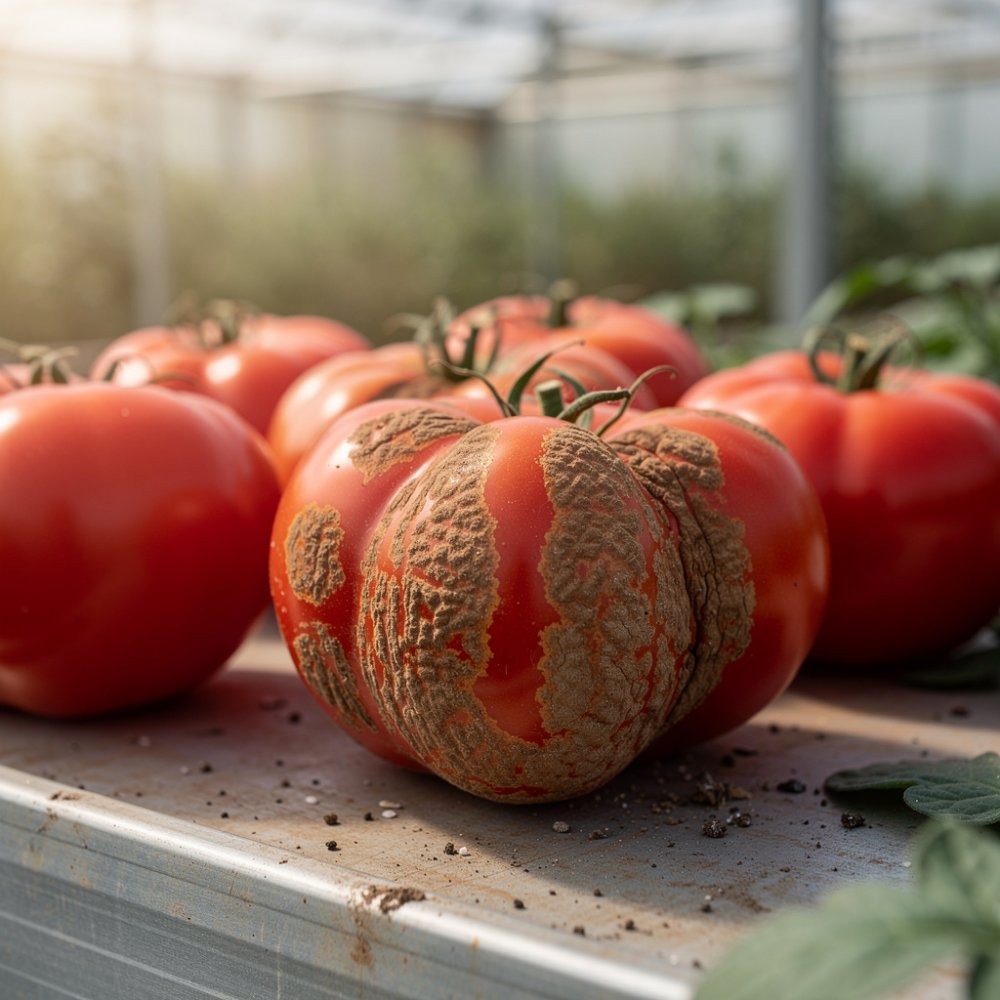
What is ToBRFV
ToBRFV is a virus from the family Virgaviridae, genus Tobamovirus. It was first identified in Israel in 2014 on tomatoes and has since spread to dozens of countries worldwide, including numerous EU member states.
Why is it so dangerous
ToBRFV differs from other tobamoviruses in a combination of properties that make it exceptionally difficult to manage.
Overcomes resistance:
Unlike tobacco mosaic virus (TMV) and tomato mosaic virus (ToMV), ToBRFV can overcome resistance genes Tm-1, Tm-2 and Tm-2(2), which have hitherto provided reliable protection of tomatoes. The practical consequence is fundamental: even varieties previously considered resistant are fully susceptible to ToBRFV.
Extreme environmental stability:
The virus survives on surfaces, in soil, on tools and clothing for weeks to months. It resists drying, high temperatures and most commonly available disinfectants -- this property significantly complicates hygiene measures.
Easy mechanical transmission:
Transmission requires only bare contact between an infected plant and a healthy one. The virus spreads via:
- contaminated hands
- tools (scissors, knives, stakes and pegs)
- clothing and footwear
- seeds (on the surface and inside the seed coat)
- irrigation water
- bumblebees during pollination in greenhouses
Host plants
Primary hosts are:
- Tomatoes (Solanum lycopersicum) -- the most susceptible species, causing the greatest economic losses
- Peppers (Capsicum spp.) -- symptoms are usually milder
- Eggplant (Solanum melongena) -- less common, but confirmed host
The virus can also persist on weeds from the nightshade family (Solanaceae) without causing obvious symptoms -- these plants thus function as hidden infection reservoirs.
ToBRFV Symptoms
Early recognition of symptoms is the first and decisive step in limiting spread. Manifestations vary depending on plant species, variety, stage of infection and environmental conditions -- no symptom is entirely specific, so laboratory confirmation is essential.
Symptoms on leaves
- Mosaic pattern: irregularly distributed light and dark green spots
- Wrinkling: deformed, shriveled leaves with uneven surface
- Blade narrowing: leaves are noticeably narrower than usual, in extreme cases almost thread-like
- Chlorosis: yellowing, most evident on young, apical leaves
- Necrotic spots: brown, dry spots on the leaf blade
Symptoms on fruit
Fruit is most problematic for growers, as ToBRFV directly and significantly reduces their market value:
- Brown rugose spots: the most typical symptom, which gave the virus its name (brown rugose)
- Uneven ripening: fruit ripens in spots, alternating between yellow, green and red areas
- Deformation: fruit has irregular shape, may be cup-shaped or asymmetrical
- Calyx necrosis: browning and progressive death of the green fruit cap
Symptoms on peppers
In peppers, manifestations are usually less dramatic but still economically significant:
- mosaic pattern on leaves
- fruit deformation, particularly circular indentations or lobed protrusions
- occasional leaf yellowing
- overall reduction in yield
Distinguishing from other diseases
ToBRFV is easily confused with other viral diseases of tomatoes, particularly TMV or ToMV. Reliable diagnosis is possible only through laboratory testing by PCR method. If you observe suspicious symptoms, contact ÚKZÚZ without delay -- premature and unconfirmed plant destruction does not solve the situation.
Testing and Monitoring by ÚKZÚZ
ÚKZÚZ launched systematic testing for ToBRFV as of February 16, 2026 across the entire Czech Republic. This step responds to the increasing number of findings in neighboring countries and reflects EU legislation commitments in the field of plant health.
Scope of testing
- Commercial greenhouses: mandatory testing for professional tomato and pepper growers
- Seedlings and seeds: control of imported and domestically produced propagation material
- Survey activities: targeted sampling in risk areas and locations with historical occurrence
What to do if you suspect an outbreak
If you observe symptoms consistent with ToBRFV, proceed in this order:
- Isolate suspect plants: separate them immediately from others and minimize all contact
- Contact ÚKZÚZ: report the suspicion to the appropriate regional office
- Do not prematurely destroy plants: inspectors must collect samples for laboratory analysis
- Document the situation: record when you first noticed symptoms and trace the origin of seeds or seedlings
Quarantine measures
In the event of a laboratory-confirmed ToBRFV finding, ÚKZÚZ will implement these measures:
- Eradication: all infected plants must be destroyed in the prescribed manner
- Disinfection: premises, tools and equipment are subject to thorough disinfection with approved preparations
- Planting ban: temporary ban on growing host plants in the affected area
- Surrounding monitoring: systematic testing of plants in the vicinity of the confirmed outbreak
Prevention -- How to Protect Your Crop
Since treatment does not exist, prevention is the only truly effective strategy. Strict adherence to the measures described below significantly reduces infection risk.
Hygiene first
Hands and clothing:
- Thoroughly wash your hands with soap and warm water before working with tomatoes
- Use disposable gloves or rubber gloves that you regularly disinfect
- Change clothing when moving between different parts of the garden or greenhouse
- After visiting someone else's greenhouse or garden, always change clothes and wash before touching your plants
Tools:
- Disinfect tools between individual plants, not just at the end of the row
- Effective disinfectants: 10% solution of trisodium phosphate, 20% solution of dried milk, or certified virucidal preparations
- Common alcohol-based disinfectants are not sufficiently effective against ToBRFV and cannot be relied upon
- Consider maintaining a separate set of tools exclusively for working with tomatoes
Irrigation:
- Prefer drip irrigation over spraying -- sprayed water is an effective virus vector
- Prevent irrigation water from flowing between plants
- Do not use recirculated water without prior disinfection
Selection of seeds and seedlings
The quality of initial propagation material is the cornerstone of the entire prevention strategy:
- Purchase seeds and seedlings only from verified suppliers with a phytosanitary control certificate
- When ordering, explicitly ask the supplier whether seeds are tested for the presence of ToBRFV
- Seed exchange between growers without documented origin represents unnecessary and easily eliminated risk
- Seeds from your own production from unverified sources should not enter further cultivation without verification
Measures in the greenhouse
- Place a disinfectant mat or container with disinfectant solution at each greenhouse entrance
- Limit entry of unauthorized persons to a minimum
- Regularly and systematically inspect plants and immediately isolate any suspect specimen
- After the season ends, thoroughly clean and disinfect the entire greenhouse, including structures, irrigation hoses and tanks
- Incorporate breaks in crop rotation -- do not grow nightshade crops in the same location every year
On the Pestik.cz website you will find plant protection preparations that will help keep your plants healthy and resilient to various pathogens.
ToBRFV Spread in Europe
ToBRFV is spreading rapidly and systematically across Europe. The first confirmed occurrence in the EU was recorded in 2014 in Germany, and since then the virus has penetrated other countries, typically through international trade in seedlings and seeds.
Confirmed occurrences in the EU
By the end of 2025, the virus was laboratory confirmed in Germany, the Netherlands, Italy, Spain, France, Greece, Turkey and numerous other countries. The vast majority of findings come from commercial greenhouses with intensive production, but cases are increasingly appearing in hobby gardens, where monitoring is significantly more difficult.
Situation in the Czech Republic
The Czech Republic has not yet been among countries with extensive outbreaks, however individual findings have already been recorded. The introduction of systematic testing as of February 2026 is intended to provide an accurate picture of the actual virus distribution and enable targeted and rapid intervention before any outbreaks expand.
Research and Future Solutions
The scientific and breeding community is working intensively on long-term solutions that would provide growers with more effective protection tools.
Resistant varieties
Several leading breeding companies have announced the development of tomato varieties with natural genetic resistance to ToBRFV. Some of these should be commercially available during 2026. These are new resistance genes that the virus has not yet been able to overcome -- although history warns against excessive confidence in simple resistance.
Diagnostic methods
Rapid field tests (lateral flow tests) are being developed that would allow growers to test plants directly on-site without the need to send samples to a distant laboratory. Shortening the time from suspicion to diagnosis could significantly limit the extent of spread.
Biological protection
Ongoing research focuses on the use of beneficial soil microorganisms and natural substances that could strengthen the systemic resilience of plants or directly inhibit virus replication. Practically applicable results are still more of a future prospect.
Frequently Asked Questions
Is ToBRFV dangerous to humans?
No. ToBRFV is exclusively a plant virus that cannot infect humans or animals. Fruit from affected plants is safe to eat, although it may have reduced aesthetic and commercial quality (deformation, uneven coloration). Concerns relate exclusively to plant health and economic losses for growers.
Can I transfer ToBRFV to my garden from a store-bought tomato?
Theoretically yes -- the virus can survive on the surface of fruit purchased from a retail outlet. The risk is relatively low, but if you handle purchased tomatoes and immediately afterwards work with your plants, wash your hands in between. Essential rule: never compost scraps of store-bought tomatoes or their seeds if you grow tomatoes yourself.
Is there an effective spray against ToBRFV?
Unfortunately not. No plant protection preparation can cure the virus in a plant or suppress an ongoing infection. Prevention and hygiene are the only available defense. Some preparations based on milk proteins can inactivate the virus on external surfaces before contact with the plant, but have no therapeutic effect on already infected plants.
What should I do with affected plants?
Remove them including roots and dispose of them by burning or throwing them in municipal waste. Compost is unacceptable -- the virus survives in organic material for a very long time and would return from compost back into the soil. After removing plants, thoroughly disinfect all tools, surfaces and hands. If you suspect ToBRFV, first contact ÚKZÚZ and wait for sample collection -- unnecessary disposal before diagnosis confirmation can complicate the investigation.