
 Our products
 Aromatherapy - essential oils
 Essential oils
 Aroma lamps
 Aroma Diffusers
 Seeds
 Vegetables
 Herbs and spices
 Ornamental Plant Seeds
 Grass mixtures
 Sprouts and microgreens
 Growing supplies
 Cultivation and Gardening Supplies
 Hydroponics and indoor growing
 Protective equipment and gardening tools
 Exotic plants
 Exotic Fruit and Vegetables
 Exotic herbs
 Exotic trees and shrubs
 Ornamental exotic plants
 Roasted coffee
 Espresso coffee
 Ecological coffee preparation
 Thermal mugs and coffee cups
 Aeropress
 Thermos flasks and thermal mugs for coffee and tea
 Moka pot
 Filter coffee
 Coffee blends
 Accessories for coffee makers
 Water filtration
 Coffee grinders
 Cleaning the Coffee Maker
 Ecological Cleaning of Coffee Machines
 Coffee makers
 Coffee Preparation
 Coffee Accessories
 Food products
 For wildlife and pets
 Chocolate and others
 Hemp food products
 Natural cosmetics
 Hemp cosmetics
 Smoking supplies
 Bongs - water pipes
 Blunts and tubes
 E-liquids with Terpenes and CBD
 Grinders and Mills
 Papers and filters
 Smoking accessories
 Vaporizers
 Air fresheners
 CBD and CBG products
 CBD sprays
 CBD and CBN crystals
 CBD body and facial care
 Weeds
 CBD suppositories and capsules
 CBD oils and drops
 CBG oils and drops
 House and garden
 Fashion and Decoration
 Kitchen essentials and cooking
 Christmas Decorations and Accessories
 Gift Sets
 Bird feeders
 Seasonal and Special Tools
Transport and Storage of Harvest
Successful harvest is a reward for months of careful work in the garden. What comes next, however, matters just as much as the cultivation itself: proper harvest timing, careful transport, and suitable storage conditions determine whether you will enjoy the fruits of your labor for months, or whether the harvest spoils before it reaches the table.
In this guide, we will go through the entire process -- from the optimal harvest moment through careful transport to proven methods of preservation and long-term storage. All tools for transport and storage of harvest can be found in the Pestik.cz range.
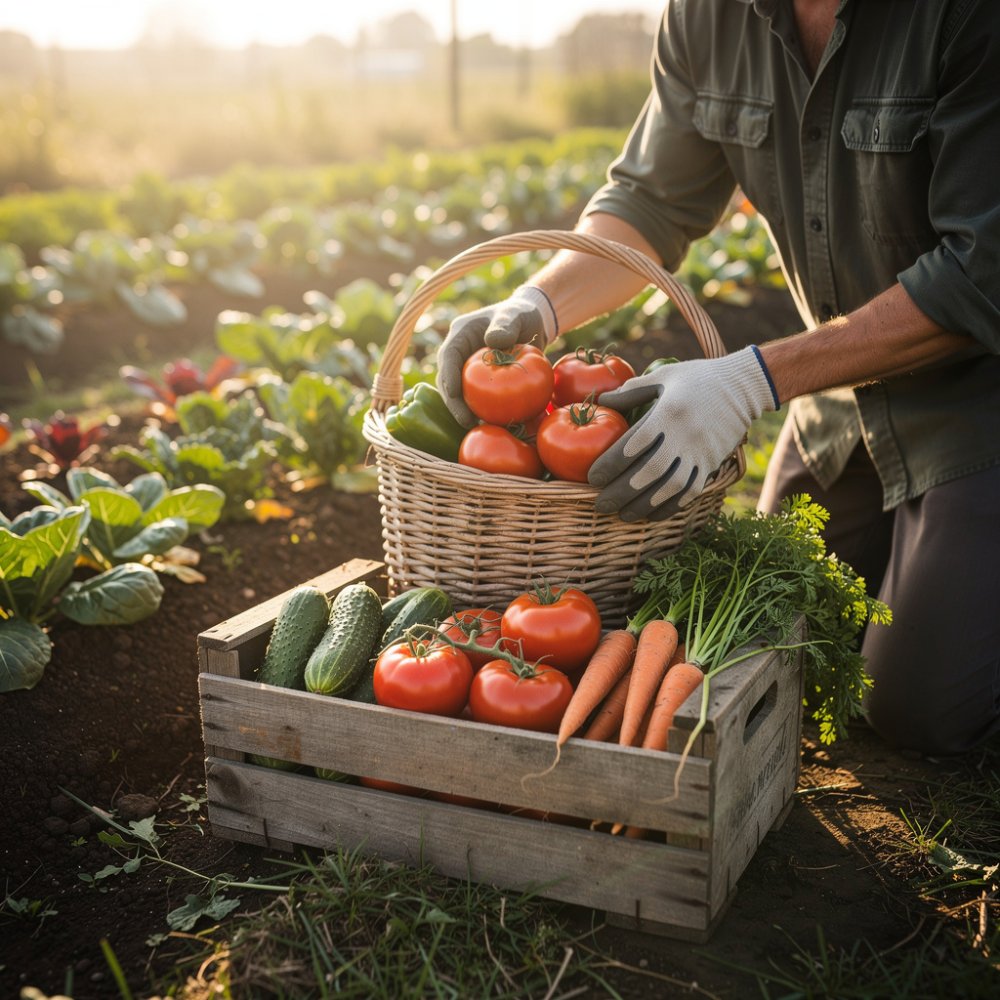
When and How to Harvest
Harvest timing fundamentally affects not only the immediate taste but also the durability of the crop. Too early harvest brings underdeveloped aroma and lower sugar content; too late harvest, on the other hand, shortens shelf life and increases the risk of fruit damage.
General Harvesting Rules
- Harvest in the morning: after the morning dew has dried, but still before the midday heat -- fruits are naturally cooled, firm, and full of fluids
- Use sharp and clean tools: a precise cut minimizes tissue damage and reduces the risk of pathogen entry and rot
- Protect fruits from bruising: every mechanical injury causes local decay and shortens the shelf life of the entire fruit and its neighbors
- Sort immediately during harvest: damaged, overripe, or diseased specimens should be separated immediately and consumed first
- Harvest in the morning: after the morning dew has dried, but still before the midday heat -- fruits are naturally cooled, firm, and full of fluids
How to Recognize Ripeness
Tomatoes: the fruit is fully colored and slightly yielding to the touch; with gentle twisting, it separates easily from the stem without tearing
Peppers: the surface is glossy, the wall is firm and hard, the color corresponds to the variety -- green, red, or yellow depending on ripeness level
Cucumbers: the fruit has a vivid dark green color and firm consistency; harvest before reaching maximum size, otherwise overripening and bitterness risk
Root vegetables: the tops begin to yellow and fall to the ground, the root has reached the typical size for the given variety
Onions: the tops are lying down and drying, the outer skin is dry and papery -- this is the signal to pull out and subsequently dry
Fruit: the fruit can be easily separated from the branch with gentle twisting without the need for tearing; ripe fruit emits a characteristic aroma specific to the given type
Transporting Harvest from the Garden
Careful transport is an underestimated but critical link in the entire chain. Unsuitable containers, overfilling, or direct sunlight can devalue even carefully harvested crops before they reach the kitchen.
Principles of Careful Transport
- Choose breathable containers: crates and wicker baskets allow air circulation, while plastic bags cause fruits to sweat and quickly succumb to mold
- Do not overfill: fruits should lie in at most two layers -- pressure from the bottom layer on the top causes bruises, which gradually turn into rot spots
- Interlayer soft fruits: berries, tomatoes, or apricots should be interlayered with clean paper or cotton fabric that cushions impacts
- Avoid direct sunlight and heat: even short-term exposure of fruits to hot sun triggers accelerated ripening and breakdown of cell walls
In the category transport and storage you will find crates, baskets, and boxes designed specifically for careful handling of fresh produce.
Suitable Transport Tools
- Wooden crates: a traditional and proven solution, the natural breathability of wood is ideal for most vegetables and fruits
- Plastic crates: lightweight, stackable, and easy to clean, a practical choice for larger volumes
- Wicker baskets: aesthetic and airy, suitable for smaller quantities of delicate fruits such as berries or plums
- Garden cart: an indispensable helper in larger plots and orchards, where you need to transport heavier loads over longer distances
Drying -- The Oldest Preservation Method
Drying is one of the most natural ways to preserve food. By removing moisture, you prevent the multiplication of bacteria and mold, while most nutrients remain preserved and flavors become significantly concentrated.
What to Dry
Herbs: basil, oregano, thyme, rosemary, mint, lemon balm, or savory -- dried herbs will retain their aroma and medicinal properties throughout the winter
Fruit: apples, pears, plums, apricots, berries, or cherries -- dried fruit serves as a healthy snack and a full-fledged ingredient for baking and muesli
Vegetables: tomatoes, peppers, mushrooms, zucchini, or onions -- dried vegetables give winter soups, sauces, and stewed dishes an intense flavor
Legumes: beans, peas, and lentils naturally dry right on the plant; after harvest, they just need to dry in a dry and well-ventilated room
Drying Methods
Air drying:
The most natural and energy-free method. Hang bundles of herbs upside down by the roots in a dark, dry, and well-ventilated room at 20--30 degrees. Darkness prevents discoloration and loss of essential oils. Drying takes 1--3 weeks depending on the type and thickness of the stems.
In a food dryer:
An electric dehydrator offers precise temperature control and even air circulation, allowing you to achieve consistent results without the risk of mold. Dry herbs at 35--40 degrees to avoid loss of aromatic compounds; fruits and vegetables at 50--60 degrees.
In the oven:
An accessible alternative method if you don't have a dryer. Set the lowest possible temperature (50--60 degrees) and leave the oven door slightly open, for example with a wooden spoon inserted, so moisture can escape. The result is good, but energy consumption is significantly higher than with a dryer.
In the sun:
A traditional method typical of the Mediterranean, working well for us too for tomatoes, peppers, and stone fruits. Requires at least 3--5 consecutive sunny and dry days. Always cover the fruits with food gauze or fine mesh as protection against insects.
Preserving -- Tradition with Modern Methods
Preserving allows you to keep summer's harvest in jars for the whole year. Properly done preserves retain the color, taste, and a large portion of the nutritional values of the original raw material.
Basic Equipment
- Preserving jars with lids (Twist-off or Weck with rubber seals)
- Large preserving pot or oven with thermometer
- Ladle and funnel for easy and clean filling
- Kitchen tongs for safe handling of hot jars
Basic Methods
Heat sterilization:
Filled jars are heated in a water bath or oven to the required temperature. The duration and temperature depend on the acidity and density of the preserve:
- Fruit in sugar syrup: 80 degrees, 20--30 minutes
- Vegetables in salt or vinegar brine: 100 degrees, 30--60 minutes
- Meat and legume preserves: 120 degrees in a pressure cooker to eliminate the risk of botulism
Acidic brine (pickles):
Vegetables covered with vinegar brine and spices are preserved by the acidic environment, which prevents the growth of unwanted microorganisms. Popular choices are pickled cucumbers, onions, peppers, or mixed vegetables.
Jams and marmalades:
Fruit cooked with sugar and pectin, where high sugar content (minimum 60%) together with heat treatment prevents the growth of bacteria and mold. Marmalades additionally differ from jams in that they are cooked smooth without fruit pieces.
Tips for Successful Preserving
- Always sterilize jars and lids immediately before filling -- boil them or bake in the oven at 120 degrees
- Fill hot jars with hot filling, not cold -- a sudden temperature difference causes the glass to crack
- Leave 1--2 cm of free space under the rim for proper vacuum formation
- After capping, turn jars upside down for 5--10 minutes, then let them cool slowly
- After cooling, check the seal: a properly closed Twist-off lid is slightly dented inward and does not spring when the center is pressed
- Store in cool, dark, and dry conditions and label each jar with the production date
Storage of Fresh Vegetables and Fruit
Optimal storage conditions can extend crop shelf life by weeks or even months without any heat treatment. The key factors are temperature, air humidity, and ventilation.
Storage Principles
Temperature:
Most root vegetables and leafy vegetables are best stored at 1--5 degrees. Fruiting vegetables such as tomatoes, peppers, and eggplant require higher temperatures of 10--15 degrees -- in the refrigerator they would lose flavor and acquire a mealy consistency. Similarly, onions and garlic are stored at room temperature in dry conditions.
Humidity:
Root and leafy vegetables need high relative air humidity (90--95%) to maintain cell turgidity and freshness. Onions, garlic, and squash, on the other hand, require dry conditions (60--70%), otherwise rot is likely.
Ethylene:
A number of fruits -- especially apples, pears, bananas, and tomatoes -- release ethylene gas, which accelerates ripening and aging of surrounding vegetables and fruits. Always store these fruits separately from ethylene-sensitive vegetables such as lettuce, broccoli, carrots, or cabbage.
Recommended Storage Conditions
| Crop | Temperature | Humidity | Shelf Life |
|---|---|---|---|
| Potatoes | 4--8 degrees | 90% | 4--6 months |
| Carrots | 0--2 degrees | 95% | 3--5 months |
| Onions | 0--4 degrees | 65% | 3--6 months |
| Apples | 1--4 degrees | 90% | 2--6 months |
| Garlic | 0--4 degrees | 65% | 6--8 months |
| Cabbage | 0--2 degrees | 95% | 3--4 months |
| Beets | 0--2 degrees | 95% | 3--5 months |
Practical tools for storage and transport can be found in the Pestik.cz range.
Frequently Asked Questions
How do I know if a preserve is spoiled?
Spoiled preserve manifests itself with a lid bent upward, which occurs from the pressure of gases from fermenting microorganisms. After opening, there may be a changed color, unusual or sour smell, or visible mold. If the lid does not make a characteristic clicking sound when opened, it was not properly sealed. In case of any doubt, discard the preserve without tasting -- botulism caused by the bacterium Clostridium botulinum is a serious and potentially fatal disease.
How long do dried herbs last?
Properly dried and stored herbs will retain their aromatic and flavor properties for 1--3 years. Store them in dark, airtight glass or metal containers and place them away from direct light and moisture. A reliable test of freshness is rubbing between fingers -- if the herbs do not emit a distinct aroma, it's time to replace them.
Can I store vegetables in a cellar without temperature control?
A traditional cellar with a clay floor is naturally an excellent storage: earth heat maintains a stable temperature of around 8--12 degrees throughout the year and the clay floor contributes to adequate humidity. It is essential to ensure ventilation and to regularly go through the crop, because one spoiled apple or onion can quickly infect surrounding fruits. In modern homes without a cellar, a cool and well-ventilated garage, unheated pantry, or special garden cooling box will serve the purpose.
What is the difference between preserving and fermentation?
Preserving conserves food by a combination of heat treatment and airtight sealing, which prevents microorganisms from entering. Fermentation, on the other hand, uses the natural activity of beneficial lactic acid bacteria, which convert sugars into lactic acid and create an environment unfavorable for rot-causing bacteria. Fermented foods such as sauerkraut, kimchi, or unpickled cucumbers additionally contain live probiotic cultures beneficial for the intestinal microbiome. Both methods have their irreplaceable place in a modern pantry.