
 Our products
 Aromatherapy - essential oils
 Essential oils
 Aroma lamps
 Aroma Diffusers
 Seeds
 Vegetables
 Herbs and spices
 Ornamental Plant Seeds
 Grass mixtures
 Sprouts and microgreens
 Growing supplies
 Cultivation and Gardening Supplies
 Hydroponics and indoor growing
 Protective equipment and gardening tools
 Exotic plants
 Exotic Fruit and Vegetables
 Exotic herbs
 Exotic trees and shrubs
 Ornamental exotic plants
 Roasted coffee
 Espresso coffee
 Ecological coffee preparation
 Thermal mugs and coffee cups
 Aeropress
 Thermos flasks and thermal mugs for coffee and tea
 Moka pot
 Filter coffee
 Coffee blends
 Accessories for coffee makers
 Water filtration
 Coffee grinders
 Cleaning the Coffee Maker
 Ecological Cleaning of Coffee Machines
 Coffee makers
 Coffee Preparation
 Coffee Accessories
 Food products
 For wildlife and pets
 Chocolate and others
 Hemp food products
 Natural cosmetics
 Hemp cosmetics
 Smoking supplies
 Bongs - water pipes
 Blunts and tubes
 E-liquids with Terpenes and CBD
 Grinders and Mills
 Papers and filters
 Smoking accessories
 Vaporizers
 Air fresheners
 CBD and CBG products
 CBD sprays
 CBD and CBN crystals
 CBD body and facial care
 Weeds
 CBD suppositories and capsules
 CBD oils and drops
 CBG oils and drops
 House and garden
 Fashion and Decoration
 Kitchen essentials and cooking
 Christmas Decorations and Accessories
 Gift Sets
 Bird feeders
 Seasonal and Special Tools
Bird Feeders and Helping Garden Animals
A garden is not just a place for growing plants -- it is a living ecosystem where every creature plays an indispensable role. Birds, hedgehogs, butterflies and other animals contribute to the garden's balance: they help with pollination, natural pest control and the breakdown of organic matter. By creating suitable facilities for these creatures, you are not only showing kindness to nature -- you are directly investing in the health and productivity of your own garden.
In this article, you will learn how to correctly select and place bird feeders, what to offer birds in different seasons, how to build nesting boxes and how to transform your garden into a sanctuary for all its inhabitants.
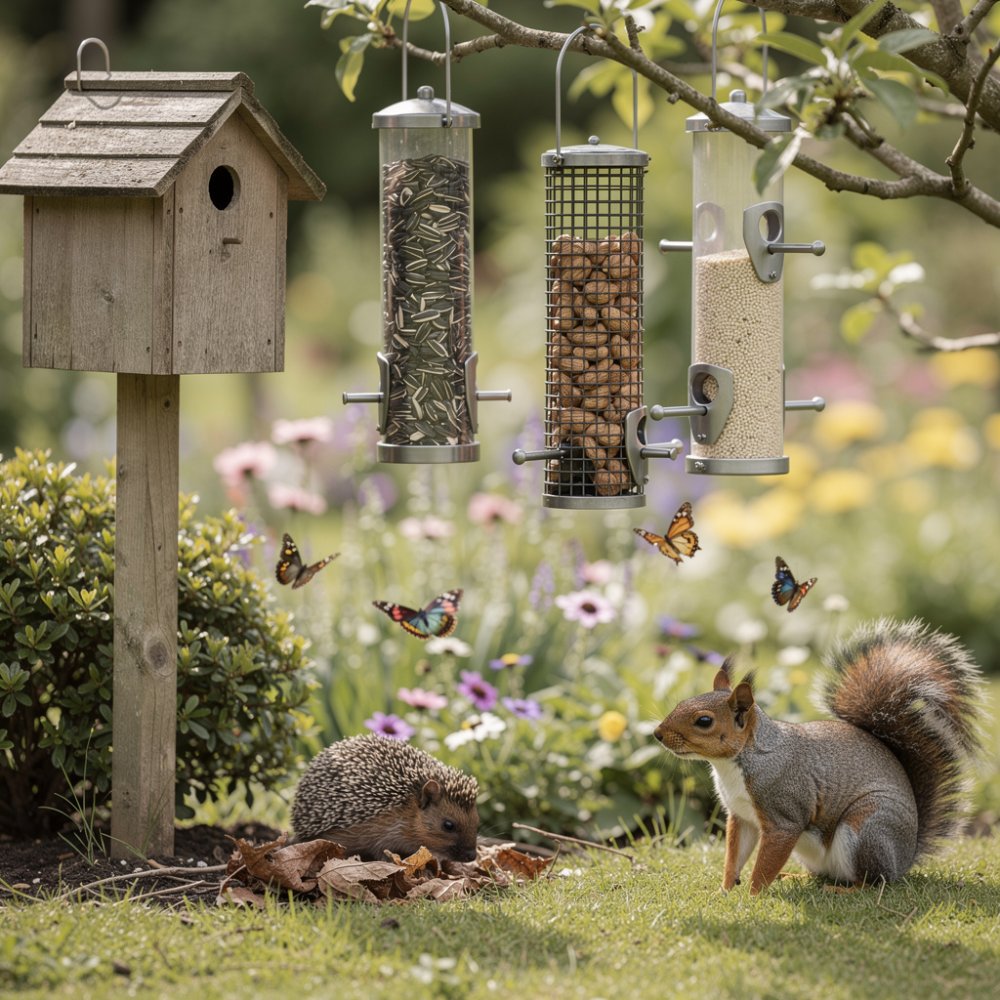
Types of Bird Feeders and How to Choose the Right One
The choice of feeder depends on the bird species you want to attract, the placement conditions and the time you are willing to spend on maintenance. You will find a wide range of feeders on the market -- from simple hanging models to multi-purpose feeding stations with rain and rodent protection.
Hanging Feeders
Hanging feeders are the most common type. They are attached to a tree branch, a wall hook or a special stand and are particularly suitable for smaller species such as tits, finches or robins.
Advantages:
- Easy installation and possibility of relocation
- Natural sense of security due to height above ground
- Difficult access for rodents and cats
Types of hanging feeders:
- Tube feeders: cylindrical seed container, ideal for sunflower seeds and millet
- Mesh feeders: mesh bags designed for fat balls or peanuts
- Hopper feeders: gradually release feed as it is consumed, minimizing waste and scattering
Pedestal Feeders
Pedestal models stand on their own base and offer more space for feeding multiple birds at once. They are ideal for gardens without tall trees. Models with an integrated roof will protect the feed from rain and snow and extend its shelf life.
Window Feeders
For those who don't have a garden but want to help birds, feeders with suction cups on glass are designed. They allow you to observe birds up close and are particularly popular with children. Make sure the glass is sufficiently marked, as birds have difficulty recognizing it.
Ground Feeders
Thrushes, blackbirds and fieldfares prefer feeding on the ground -- in nature they process food on open areas and do not feel comfortable on raised feeders. A simple bowl or low tray placed in a protected but well-visible spot where birds can see predators approaching in time will suffice.
What to Feed Birds in Winter
Winter feeding of birds is the most common and at the same time the most important form of helping wild animals. During the period from November to March, when natural food is missing or hidden under snow, regular replenishment of the feeder can literally save lives.
Suitable feed by species
Tits and woodpeckers:
- Fat balls without mesh (the mesh can cause beak or claw injuries)
- Hulled sunflower seeds (hulled are easier to digest and don't leave waste under the feeder)
- Unsalted and unroasted peanuts
- Pure lard or suet molded into blocks
Finches and sparrows:
- Seed mixes (sunflower, millet, hemp seed)
- Flax seed
- Crushed or flat grains
Thrushes and blackbirds:
- Apples cut in half and speared on a branch or nail
- Raisins and dried fruit soaked in lukewarm water
- Oat flakes (dry or soaked)
Robins:
- Dried or live mealworms (robins seek them out as their natural food)
- Small seeds
- Fat mix with seeds
What to Never Give Birds
- Salty foods: salt damages bird kidneys and is toxic to them even in small amounts
- Moldy foods: mycotoxins cause serious digestive tract diseases
- Bread and baked goods: virtually no nutritional value, swell in the digestive tract and cause a feeling of fullness without energy
- Cooked rice and pasta: sticky consistency complicates digestion and contaminates the feeder
- Milk and dairy products: birds lack enzymes to digest lactose
In the range of feeders and animal supplies you will also find quality feed mixes specially composed for species commonly nesting in the Czech Republic.
Bird Boxes -- Homes for Nesting
In addition to supplementary feeding, you can significantly help birds by providing safe nesting sites. Modern gardens lack the natural cavities in old trees that birds traditionally use. A properly placed bird box reliably fills this gap.
How to Choose the Right Box
Key parameters are the internal floor dimensions and the diameter of the entrance hole -- these determine what species of bird will occupy the box:
- Great tit: hole 32 mm, internal floor dimension 12 x 12 cm
- Blue tit: hole 26 mm, internal floor dimension 12 x 12 cm
- Starling: hole 45 mm, internal floor dimension 15 x 15 cm
- House sparrow: semi-open box without a classic round hole, with an open front section
Choose boxes made of wood without chemical treatment. The interior should not be painted or varnished -- birds need a rough surface for easier movement inside.
Box Placement
Proper placement is key to birds accepting the box:
- Height: 2--5 meters above ground, depending on species
- Orientation: entrance hole facing east or southeast -- birds spend the morning hours warming up, excessive afternoon sun overheats the box
- Protection: out of reach of cats and martens, ideally with a metal collar on the trunk
- Shade: do not expose the box to direct midday sun
- Quiet: far enough from busy paths and passages
Install boxes by February at the latest so birds can explore them before the start of the breeding season in March. In autumn, clean boxes of old nests, disinfect with hot water and check their overall condition.
Other Animals You Can Help
Birds are not the only garden inhabitants who will appreciate your attention. A comprehensive approach to caring for garden animals includes other species that naturally regulate pests and support biodiversity.
Hedgehogs
Hedgehogs are among the most useful garden helpers -- in a single night they can eliminate hundreds of slugs and snails. Support them with a few simple measures:
- Leave piles of leaves, branches and wood in the garden as natural shelters and winter nests
- Create passages in fences and walls (opening approximately 13 x 13 cm)
- Offer a bowl of water and cat food (not milk)
- Avoid chemical slug treatments -- hedgehogs take them in with their prey and can be poisoned
Insects and Pollinators
Bees, bumblebees and butterflies are irreplaceable pollinators. Without them, most garden crops would yield a fraction of their harvest. Their numbers can be boosted by:
- Planting honey-producing plants with different flowering times (lavender, thyme, clover, marjoram, dogwood)
- Installing insect hotels in a sunny, protected location
- Leaving part of the garden unmowed and "wild" throughout the season
- Consistently avoiding chemical sprays during flowering
Amphibians
Frogs and newts are natural regulators of mosquitoes, slugs and other insects. If conditions allow, build a small garden pond with a gradual entry. An alternative is a shallow bowl of water with stones and twigs that animals can use to get out without risk of drowning.
A Garden Friendly to Nature -- Practical Tips
Transforming a garden into a place favorable to biodiversity does not require large investments or specialized knowledge. The key is consistency and willingness to let nature at least partially decide.
Principles of a Natural Garden
- Diverse planting: the more plant species a garden offers, the more animal species it will attract -- this applies to insects, birds and mammals
- Natural shelters: piles of stones, logs and leaves serve as refuges for centipedes, lizards, hedgehogs and insects
- Water features: even a small bowl of water regularly replenished with fresh water will attract birds, insects and amphibians
- Minimizing chemicals: biological plant protection naturally regulates pests more gently than synthetic pesticides, which affect the entire ecosystem
- Leaving fruits: leave some berries and seeds on bushes over winter -- for many birds this is a life-saving source of energy
Plants Attracting Birds
With proper planting you will create a natural and sustainable source of food and shelter:
- Dog rose: fruits last through the entire winter, dense branching protects nesting birds from predators
- Rowan: thrushes and fieldfares regularly visit the rowan for fruits from October to January
- Elderberry: berries are food for dozens of species, plus the flower attracts pollinators
- Ivy: provides shelter year-round and as one of the few plants flowers in autumn when other food is scarce
- Sunflower: a dry head left on the stem over winter becomes a natural feeder for finches and tits
On Pestik.cz you will find a wide selection of bird feeders and other animal products that will help you transform your garden into a living and self-sufficient ecosystem.
Frequently Asked Questions
When to Start Feeding Birds?
Start supplementary feeding in autumn as soon as temperatures regularly drop below 5 degrees Celsius and continue until nature fully awakens in spring and birds have sufficient natural insects and seeds. Once you start, keep the feeder regularly stocked -- birds quickly incorporate your feeder into their daily routine and sudden interruption endangers them during the critical winter period.
How Often to Clean the Feeder?
Clean the feeder at least once every two weeks. Remove old and moldy feed residue, wash the feeder with hot water without chemical cleaning products and let it dry thoroughly before refilling. During wet weather or thaws, shorten the cleaning interval to one week -- moisture significantly accelerates mold formation and bacterial spread.
Can Feeding Birds Attract Rodents?
Scattered feed under the feeder can attract mice or rats, especially near buildings. Minimize risk by choosing hopper feeders that limit scattering and regularly removing debris from the ground. Place the feeder at sufficient height and consider installing a smooth metal collar on the support pole that rodents cannot climb.
Is It Better to Buy Ready-Made Feeders or Build Your Own?
Both options have their place. Ready-made feeders are usually better constructed in terms of weather resistance, hygienic maintenance and functional design for specific bird species. Building your own feeder is, on the other hand, an excellent family project and the result can be precisely tailored to the available space and species composition of birds in your area. You can easily combine both options.