
 Our products
 Aromatherapy - essential oils
 Essential oils
 Aroma lamps
 Aroma Diffusers
 Seeds
 Vegetables
 Herbs and spices
 Ornamental Plant Seeds
 Grass mixtures
 Sprouts and microgreens
 Growing supplies
 Cultivation and Gardening Supplies
 Hydroponics and indoor growing
 Protective equipment and gardening tools
 Exotic plants
 Exotic Fruit and Vegetables
 Exotic herbs
 Exotic trees and shrubs
 Ornamental exotic plants
 Roasted coffee
 Espresso coffee
 Ecological coffee preparation
 Thermal mugs and coffee cups
 Aeropress
 Thermos flasks and thermal mugs for coffee and tea
 Moka pot
 Filter coffee
 Coffee blends
 Accessories for coffee makers
 Water filtration
 Coffee grinders
 Cleaning the Coffee Maker
 Ecological Cleaning of Coffee Machines
 Coffee makers
 Coffee Preparation
 Coffee Accessories
 Food products
 For wildlife and pets
 Chocolate and others
 Hemp food products
 Natural cosmetics
 Hemp cosmetics
 Smoking supplies
 Bongs - water pipes
 Blunts and tubes
 E-liquids with Terpenes and CBD
 Grinders and Mills
 Papers and filters
 Smoking accessories
 Vaporizers
 Air fresheners
 CBD and CBG products
 CBD sprays
 CBD and CBN crystals
 CBD body and facial care
 Weeds
 CBD suppositories and capsules
 CBD oils and drops
 CBG oils and drops
 House and garden
 Fashion and Decoration
 Kitchen essentials and cooking
 Christmas Decorations and Accessories
 Gift Sets
 Bird feeders
 Seasonal and Special Tools
Bongs, pipes and accessories – Complete guide
The world of smoking accessories is surprisingly diverse, and each tool offers a different experience and ritual. From elegant glass bongs with multi-level filtration through classic briar pipes to modern accessories such as precision CNC grinders and premium rolling papers. This guide will walk you through individual categories, explain key differences, and help you choose equipment that perfectly matches your needs. On pestik.cz you will find a complete assortment from renowned manufacturers.
Bongs and Water Pipes – Filtration and Cooling
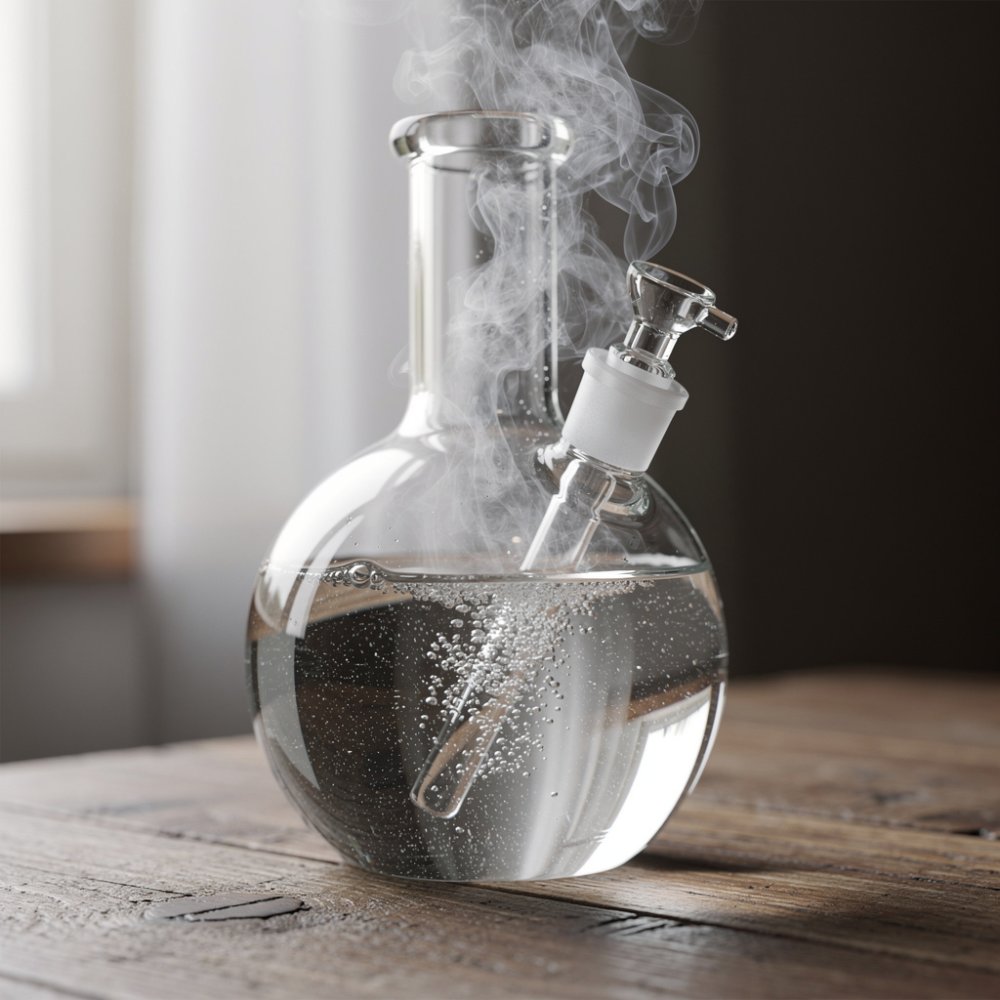
Bongs and water pipes work on a simple principle: smoke passes through water before reaching the user. Water filtration cools the smoke and captures some solid particles and water-soluble substances, making inhalation smoother and less irritating to the respiratory tract. The volume of water plays an important role – too little water will reduce the filtration effect, too much will make it difficult to draw.
Anatomy of a Bong
Each bong consists of several basic parts:
- Base – the lower part filled with water where filtration takes place; the shape of the base (round, straight, beaker) affects stability and water volume
- Tube – vertical pipe through which filtered smoke rises; a longer tube ensures better cooling
- Bowl – removable head for inserting material; standard sizes are 10 mm, 14 mm and 18 mm
- Chillum (downstem) – tube connecting the bowl to the water; length and diameter affect the intensity of bubbling
- Carburator (carb hole) – hole for controlling the draw allowing you to clear the tube of smoke in one drag; found in only some models
Materials and Their Properties
| Material | Advantages | Disadvantages | Price Category |
|---|---|---|---|
| Borosilicate Glass | Pure taste, transparency, easy cleaning, resistance to temperature shock | Brittleness when dropped | Medium to High |
| Acrylic | Resistance to breaking, low price, varied colors | Less pure taste, harder to clean when heavily soiled | Low |
| Silicone | Virtually unbreakable, foldable, suitable for travel | May slightly affect taste as material ages | Low to Medium |
| Ceramic | Artistic processing, good thermal insulation, pure taste | Brittleness, higher price | Medium to High |
| Bamboo | Natural aesthetics, solid durability | More demanding maintenance, limited transparency | Medium |
For beginners, a simple glass bong with a straight tube or beaker base 25 to 35 cm high is ideal. Such a model offers great filtration ratio, easy cleaning and acceptable price without unnecessary complexity.
Percolators – Advanced Filtration
A percolator is an additional filtration element inside the bong that mechanically breaks the smoke into smaller bubbles. The smaller the bubbles, the greater the contact area with water and the more effective filtration and cooling. Percolators differ in construction and draw resistance:
- Tree – branches with holes at the ends, fine bubbling and low resistance
- Honeycomb – plate with dozens of small holes, pronounced bubbling and excellent filtration
- Showerhead – expanded tube with holes around the perimeter, compromise between resistance and filtration
- Inline – horizontal tube placed in the base, smooth draw suitable for larger bongs
Bongs with multiple percolators offer the smoothest experience, but require stronger draw and more demanding cleaning. For daily use, one quality percolator is sufficient.
Pipes and Chillums – Classics That Never Go Out of Style
Pipes and chillums represent the oldest form of controlled smoking. Unlike bongs, they do not work with water filtration, but offer portability, intuitive operation and distinctive ritual character. The taste of smoke is more direct and full, as it is not affected by passage through water.
Types of Pipes
Classic pipe consists of a head (bowl), stem and mouthpiece. Material significantly affects the character of the smoke:
- Briar wood – the most popular choice, naturally absorbs moisture and resins, after break-in provides clean and balanced taste
- Meerschaum – porous mineral with excellent thermal insulation, produces cool and dry smoke, gradually develops a golden-brown patina over time
- Ceramic – neutral taste, affordable price, suitable for experimenting with different materials
- Glass – full transparency allows you to monitor burning, chemically inert material with no effect on taste
One-hitter (chillum) is a compact straight tube designed for one to two drags. Maximally discreet and economical – uses minimal material without waste. Popular are metal models shaped like a classic cigarette.
Chillum is a straight conical tube without a carburetor originating from Indian spiritual tradition, where it is traditionally used by sadhus. Modern chillums are made from glass, natural stone or ceramic and are suitable for sharing in a group.
How to Properly Pack and Use a Pipe
- Grind material to medium coarse consistency – too fine powder clogs the airhole, too coarse burns unevenly
- Loosely fill the head to one third and press gently
- Add a second layer to two thirds and press again lightly
- Fill the last layer and press firmly – but air should still pass freely
- First ignition is so-called charring: slowly ignite the surface with mild draw until an even glowing layer forms
- Second ignition will ignite the material across the entire surface and ensure even burning throughout the smoking time
Rolling Papers, Blunts and Tubes – The Art of Rolling
Rolling papers and blunts and tubes form the basis of classic smoking method. Paper quality and composition directly affect taste, burn rate and overall experience – the difference between cheap and premium paper is noticeable on first comparison.
Types of Rolling Papers
- Rice papers – the thinnest variant with slow and even burning, minimal effect on taste; ideal for those who want to feel only the material
- Hemp papers – made from hemp fibers, natural synergy with the content; burn slightly faster than rice but still slower than classic
- Cellulose papers – transparent and visually attractive, made from plant cellulose; suitable for more experienced users
- Classic wood papers – the most common and affordable variant, faster burning, more pronounced paper taste
Most common sizes: Single Wide (70 mm) for smaller consumption, 1 1/4 (78 mm) as a golden mean, King Size (110 mm) for larger rolls and King Size Slim (110 mm, narrower) as the most popular format. We recommend King Size Slim to beginners along with cardboard filter tips – they offer plenty of room for rolling and at the same time a solid base.
Blunts and Tubes
Blunts are tobacco leaves or special wraps used to wrap herbal material. Unlike papers, they burn significantly slower and give the smoke a fuller, characteristic taste. They are especially popular for sharing in a group. Tubes are pre-made empty cigarette tubes with a filter – they are filled using a mechanical or electric filler and are a convenient alternative for those who do not master hand rolling.
Grinders, Mills and Other Essential Accessories
Grinders and mills are a basic preparation tool. Properly ground material burns more evenly, does not clog airways and releases active compounds more efficiently than material torn by hand or cut with scissors.
How to Choose a Grinder
Grinders differ in the number of chambers and what they do with the ground material:
- Two-part (single chamber) – basic model for direct grinding without separation; simple to clean, suitable for travel
- Three-part (dual chamber) – integrated sieve separates finer particles from coarser material; better consistency for rolling
- Four-part (three chamber) – adds a catch chamber for powder dust (kief), the most valuable fraction; after several weeks of use, a noticeable amount accumulates in the chamber
Material determines lifespan. CNC machined aluminum grinders with anodized finish offer excellent price-to-durability ratio. Titanium models are practically indestructible and do not cause oxidation. Plastic grinders are cheap but teeth dull quickly and can leave microplastic particles. For regular use, choose a four-part aluminum grinder 50 to 63 mm in diameter – it is spacious enough and the kief chamber fills at a reasonable rate.
Lighters and Torches
A quality lighter or torch is the last, often underrated link in the chain. Classic gas lighters are versatile and affordable – refillable models are much cheaper in the long run than disposable ones. Torches with jet heads produce concentrated high-temperature flame, suitable for precise ignition of bong bowls or for dabbing applications.
Practical Tip
Replace your classic lighter with hemp wick (hemp wick). The procedure is simple: ignite the wick with a lighter and ignite the material through it. This eliminates inhalation of butane gas from the flame, which always enters the first drag during direct ignition. Hemp wick also burns at a lower temperature, which better preserves the aromatic components of the material.
Cleaning and Maintenance – Extend the Life of Your Equipment
Regular maintenance is key to preserving taste, functionality and hygienic safety of all smoking equipment. Contaminated equipment not only draws poorly, but significantly impairs taste and experience.
Glass bongs and pipes:
1. Rinse with warm water immediately after use – residue has not yet burned
2. Fill with isopropyl alcohol (91% and higher) and add coarse rock salt as an abrasive
3. Cover all openings and shake thoroughly for one to two minutes
4. For heavier contamination, let the solution work for 15 to 30 minutes before shaking
5. Repeat until the glass is transparent, then rinse thoroughly with clean water and allow to air dry
Metal grinders:
1. Disassemble the grinder into individual parts, carefully scrape the kief chamber with a collection brush
2. Soak parts in isopropyl alcohol for 20 to 30 minutes
3. Clean with an old toothbrush – you can get between the teeth
4. Rinse with warm water and dry thoroughly before assembling, otherwise corrosion may occur on aluminum models
Recommended cleaning frequency: Change the water in the bong after each use, perform thorough cleaning once a week. Clean grinders once every two weeks or sooner if they start grinding poorly. Tap out pipes after each use and perform deep cleaning of airways once a month.
Frequently Asked Questions
What is the Difference Between a Bong and a Water Pipe?
A bong is designed for direct inhalation of herbal material – it has a smaller volume, more compact head and provides stronger, more concentrated draw. A water pipe (shisha, hookah) is intended for slow social smoking of tobacco blends with fruit flavors, has significantly larger volume, tube for gentler and longer drags and is designed for group use. Both types use water filtration, but differ in construction, volume and method of use.
How Often Should You Change the Water in a Bong?
Ideally after each use. Stagnant water quickly becomes colonized by bacteria and mold, and also absorbs resin and significantly impairs the taste of smoke. With regular use, change the water at least once a day and perform thorough cleaning of the entire device including the downstem and bowl once a week.
Are Glass Bongs Really Better Than Plastic?
In terms of taste and hygienic safety, definitely yes. Borosilicate glass is chemically inert, does not affect the taste of smoke, is easy to clean and resistant to temperature shock. Acrylic bongs are more resistant to dropping and cheaper, but may slightly affect taste with long-term use and are more demanding to thoroughly clean older deposits. Complete selection of glass and acrylic models can be found in the smoking accessories section on pestik.cz.
What Bong is Best for Beginners?
For beginners, we recommend a simple glass bong with a straight tube or beaker base 25 to 30 cm high without a percolator. Such a model is intuitively operated, provides good filtration and is usually in the price category of 500 to 1,500 CZK. Add percolators and ice chambers only after you familiarize yourself with the basic model – then you will better understand what type of filtration actually works for you.