
 Our products
 Aromatherapy - essential oils
 Essential oils
 Aroma lamps
 Aroma Diffusers
 Seeds
 Vegetables
 Herbs and spices
 Ornamental Plant Seeds
 Grass mixtures
 Sprouts and microgreens
 Growing supplies
 Cultivation and Gardening Supplies
 Hydroponics and indoor growing
 Protective equipment and gardening tools
 Exotic plants
 Exotic Fruit and Vegetables
 Exotic herbs
 Exotic trees and shrubs
 Ornamental exotic plants
 Roasted coffee
 Espresso coffee
 Ecological coffee preparation
 Thermal mugs and coffee cups
 Aeropress
 Thermos flasks and thermal mugs for coffee and tea
 Moka pot
 Filter coffee
 Coffee blends
 Accessories for coffee makers
 Water filtration
 Coffee grinders
 Cleaning the Coffee Maker
 Ecological Cleaning of Coffee Machines
 Coffee makers
 Coffee Preparation
 Coffee Accessories
 Food products
 For wildlife and pets
 Chocolate and others
 Hemp food products
 Natural cosmetics
 Hemp cosmetics
 Smoking supplies
 Bongs - water pipes
 Blunts and tubes
 E-liquids with Terpenes and CBD
 Grinders and Mills
 Papers and filters
 Smoking accessories
 Vaporizers
 Air fresheners
 CBD and CBG products
 CBD sprays
 CBD and CBN crystals
 CBD body and facial care
 Weeds
 CBD suppositories and capsules
 CBD oils and drops
 CBG oils and drops
 House and garden
 Fashion and Decoration
 Kitchen essentials and cooking
 Christmas Decorations and Accessories
 Gift Sets
 Bird feeders
 Seasonal and Special Tools
Hemp seeds (Cannabis sativa) have accompanied humanity as food for thousands of years. In recent decades, it has experienced a renaissance thanks to its exceptional nutritional profile – and rightfully so. Hemp seeds, oil, protein and tea are among so-called superfoods with a complete amino acid profile, ideal ratio of omega fatty acids and rich content of vitamins and minerals. On pestik.cz you will find a complete range of hemp foods from verified manufacturers with proven quality.
Hemp Seeds – Small Seeds with Extraordinary Nutritional Value
Both hulled and unhulled hemp seeds are among the most nutritionally dense plant-based foods. Just 30 g of hulled seeds (approximately three tablespoons) covers almost one-fifth of daily protein needs, half of the recommended magnesium intake and one-quarter of the daily zinc requirement – all in a single raw ingredient.
Nutritional Profile of Hemp Seeds (per 30 g)
| Nutrient | Amount | % Daily Recommended Value |
|---|---|---|
| Energy | 166 kcal | 8 % |
| Protein | 9.5 g | 19 % |
| Fats | 14.6 g | 21 % |
| Omega-6 (LA) | 8.3 g | – |
| Omega-3 (ALA) | 2.8 g | – |
| Fiber | 1.2 g | 4 % |
| Iron | 2.4 mg | 13 % |
| Magnesium | 210 mg | 50 % |
| Zinc | 3.0 mg | 27 % |
Hemp seeds are one of the few plant foods that contain all nine essential amino acids in sufficient quantities – making them a complete protein source comparable to eggs or dairy products. For vegans and vegetarians, they represent one of the most valuable protein sources available.
How to Practically Include Hemp Seeds in Your Diet
- Sprinkle them into morning porridge, yogurt or smoothie bowls – they won't change the taste but will significantly increase nutritional value
- Add to salads instead of croutons for a pleasant nutty texture and extra protein
- Blend with water in a 1:3 ratio for quick homemade hemp milk without added stabilizers
- Work into whole grain bread dough, muffins or homemade energy bars
- Briefly toast in a dry pan – they gain more intense flavor and work as a healthy snack or topping for soups
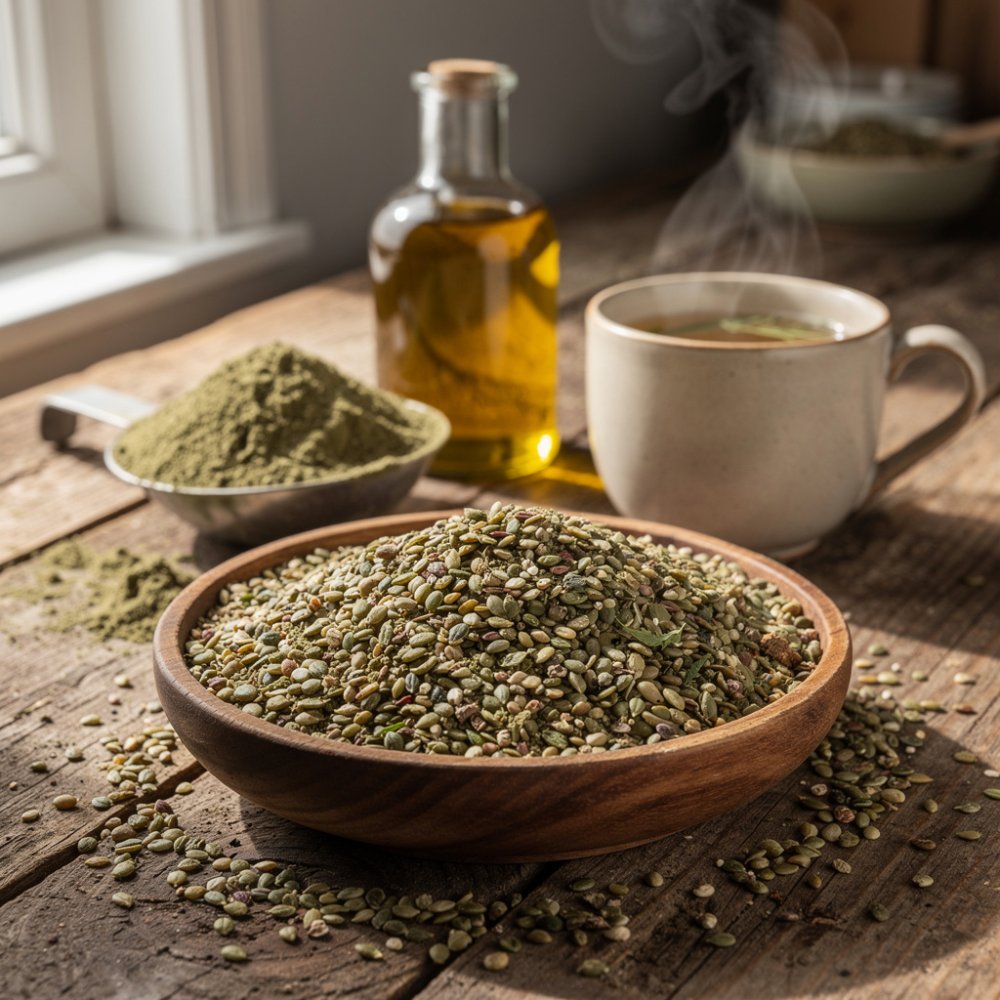
Hemp Protein – Plant-Based Foundation for Recovery and Muscle Development
Hemp protein is created by finely grinding hemp seeds after oil pressing. The resulting powder typically contains 50–70% protein and unlike many other protein concentrates, it retains natural fiber and a spectrum of minerals. It is naturally hypoallergenic – contains no lactose, gluten or soy.
Why Choose Hemp Protein
Hemp protein differs from other plant-based alternatives in several ways. It contains a complete amino acid profile including branched-chain amino acids (BCAA – leucine, isoleucine, valine), which are key for muscle synthesis and recovery after exercise. It also excels in high arginine content, which supports blood vessel expansion, circulation and natural nitric oxide production. The fiber contained in the powder additionally supports intestinal microbiome and digestion – an advantage that isolated proteins (whey, pea isolate) do not offer.
The recommended daily dose is 30–50 g, ideally split into two servings. Hemp protein mixes well with water or plant-based milk, and in thicker smoothies leaves almost no lumps.
Tip for Athletes: Post-Workout Shake in Five Minutes
After training, mix 30 g hemp protein with 300 ml almond milk, one ripe banana and a teaspoon of honey or date syrup. You get a complete post-workout drink with optimal protein to carbohydrate ratio, electrolyte-replenishing minerals and without unnecessary additives.
Hemp Oil – Valuable Plant Oil for Cold Kitchen Use
Cold-pressed hemp oil is one of the most balanced plant oils in terms of fatty acid composition. Its key advantage is the natural ratio of omega-6 and omega-3 fatty acids around 3:1, which approaches values that nutritional experts consider optimal for the human body. Most modern diets significantly exceed this ratio in favor of omega-6, so hemp oil can help with its natural correction.
Guidelines for Proper Hemp Oil Use
Hemp oil is exclusively for cold kitchen use. Heating above approximately 165 °C damages unstable unsaturated fatty acids and can lead to oxidative products. Always leave heat treatment to olive or coconut oil. Hemp oil instead excels as:
- Salad dressing – on its own, with lemon juice or as a vinaigrette base
- Seasoning added directly to plate just before serving (on soups, pasta, legumes)
- Smoothie and protein cocktail ingredient to increase healthy fat content
- Olive oil substitute in homemade pesto or tahini dressing
- Dietary supplement – one to two teaspoons daily on an empty stomach or with food
After opening, store hemp oil in cool darkness and consume ideally within three months. A dark glass bottle slows oxidation caused by light. The range of hemp oils and other foods can be found clearly on pestik.cz.
Hemp Tea and Beverages – Relaxation Ritual with Phytoactive Compounds
Hemp tea is made from dried leaves and flowers of hemp varieties with low THC content. Besides trace amounts of cannabinoids, it contains terpenes (e.g., linalool, myrcene) and flavonoids that complement each other and contribute to a pleasant calming effect. Hemp tea is a popular choice as part of an evening ritual or for moments when you seek natural relaxation without sedative medications.
How to Brew Hemp Tea Correctly and Get the Most Out of It
Hemp tea preparation has one specific rule many overlook: cannabinoids and terpenes are lipophilic – they dissolve in fats, not in water. Without added fat you will get a pleasant herbal beverage, but its effectiveness will be significantly lower.
- Pour one tea bag or one teaspoon of loose tea with 250 ml freshly filtered water heated to approximately 90–95 °C
- Immediately add a drop of coconut oil, a teaspoon of full-fat or plant-based milk, or a small piece of butter
- Steep 5–8 minutes covered so volatile terpenes do not escape with steam
- Strain into a cup and sweeten with honey to taste
Fat acts as a natural extractor of active compounds and visibly increases the resulting tea effect. The longer you steep (within reason), the more phytoactive substances transfer into the beverage.
In addition to teas, pestik.cz also offers hemp beverages and chocolates and other treats for those with a sweet tooth.
Safety and Legislation of Hemp Foods
Hemp foods available on the Czech market come exclusively from technical hemp varieties with THC content below 0.3% – this limit is set by European legislation and applies to all hemp food products marketed in the EU. Such products are completely legal, do not have psychoactive effects and are safe for long-term inclusion in your diet.
What to Watch for When Selecting a Product
- Prefer manufacturers who state the origin of hemp – ideally certified European varieties
- For oils and proteins, check the minimum shelf life date and storage method
- Look for products with independent laboratory testing results (COA certificate)
- For protein powders, compare protein content per 100 g, not just per serving – recommended servings vary significantly between manufacturers
Frequently Asked Questions About Hemp Foods
Are Hemp Foods Safe for Children?
Hemp seeds and hemp oil are generally considered safe for children over three years old in appropriate quantities. They are a valuable source of omega fatty acids that support brain and nervous system development. For hemp tea we recommend consulting a pediatrician – even trace amounts of cannabinoids may have unpredictable effects in small children.
Can Hemp Foods Cause a Positive Drug Test?
With normal consumption of certified hemp foods from technical hemp, the risk of a positive THC test is practically negligible. For THC levels in the body to reach detectable levels, it would be necessary to consume an extremely large amount of product at once. However, if you know you will undergo a drug test, prefer products with documented THC content and laboratory certificate.
How Does Hemp Protein Differ from Soy Protein?
Hemp protein is naturally hypoallergenic and contains no phytoestrogens, whose effects on hormonal balance are a subject of scientific discussion with soy protein. While it has a lower percentage of protein per 100 g (50–70% compared to 80–90% in soy isolate), it has significantly higher fiber and mineral content. Hemp protein also contains no trypsin inhibitors, which can reduce protein digestibility in soy and cause digestive issues.
What Is the Optimal Daily Amount of Hemp Seeds?
The recommended daily amount of hulled hemp seeds ranges between 30 and 45 g, or approximately two to three tablespoons. This quantity covers a meaningful portion of daily omega fatty acid needs, quality proteins and key minerals. If you are just starting with hemp seeds, introduce them gradually – higher fiber intake may initially cause temporary digestive issues, which your digestive system needs time to adapt to.