
 Our products
 Aromatherapy - essential oils
 Essential oils
 Aroma lamps
 Aroma Diffusers
 Seeds
 Vegetables
 Herbs and spices
 Ornamental Plant Seeds
 Grass mixtures
 Sprouts and microgreens
 Growing supplies
 Cultivation and Gardening Supplies
 Hydroponics and indoor growing
 Protective equipment and gardening tools
 Exotic plants
 Exotic Fruit and Vegetables
 Exotic herbs
 Exotic trees and shrubs
 Ornamental exotic plants
 Roasted coffee
 Espresso coffee
 Ecological coffee preparation
 Thermal mugs and coffee cups
 Aeropress
 Thermos flasks and thermal mugs for coffee and tea
 Moka pot
 Filter coffee
 Coffee blends
 Accessories for coffee makers
 Water filtration
 Coffee grinders
 Cleaning the Coffee Maker
 Ecological Cleaning of Coffee Machines
 Coffee makers
 Coffee Preparation
 Coffee Accessories
 Food products
 For wildlife and pets
 Chocolate and others
 Hemp food products
 Natural cosmetics
 Hemp cosmetics
 Smoking supplies
 Bongs - water pipes
 Blunts and tubes
 E-liquids with Terpenes and CBD
 Grinders and Mills
 Papers and filters
 Smoking accessories
 Vaporizers
 Air fresheners
 CBD and CBG products
 CBD sprays
 CBD and CBN crystals
 CBD body and facial care
 Weeds
 CBD suppositories and capsules
 CBD oils and drops
 CBG oils and drops
 House and garden
 Fashion and Decoration
 Kitchen essentials and cooking
 Christmas Decorations and Accessories
 Gift Sets
 Bird feeders
 Seasonal and Special Tools
Annual and Biennial Flowers – Quick Color for Your Garden
Chcete zahradu plnou barev už letos? Letničky jsou tou nejrychlejší odpovědí. Tyto jednosezónní květiny vyklíčí, vyrostou, rozkvetou a dozrají do semen – vše během jediné vegetační sezóny. Překonají všechny trvalky v rychlosti nástupu do kvetení, bohatosti květů i šíři barevné palety. Jejich příbuzné dvouletky sice potřebují rok na přípravu, ale v druhém roce se odvděčí velkolepým květem.
Celou nabídku najdete v našich kategoriích letniček a dvouletek.
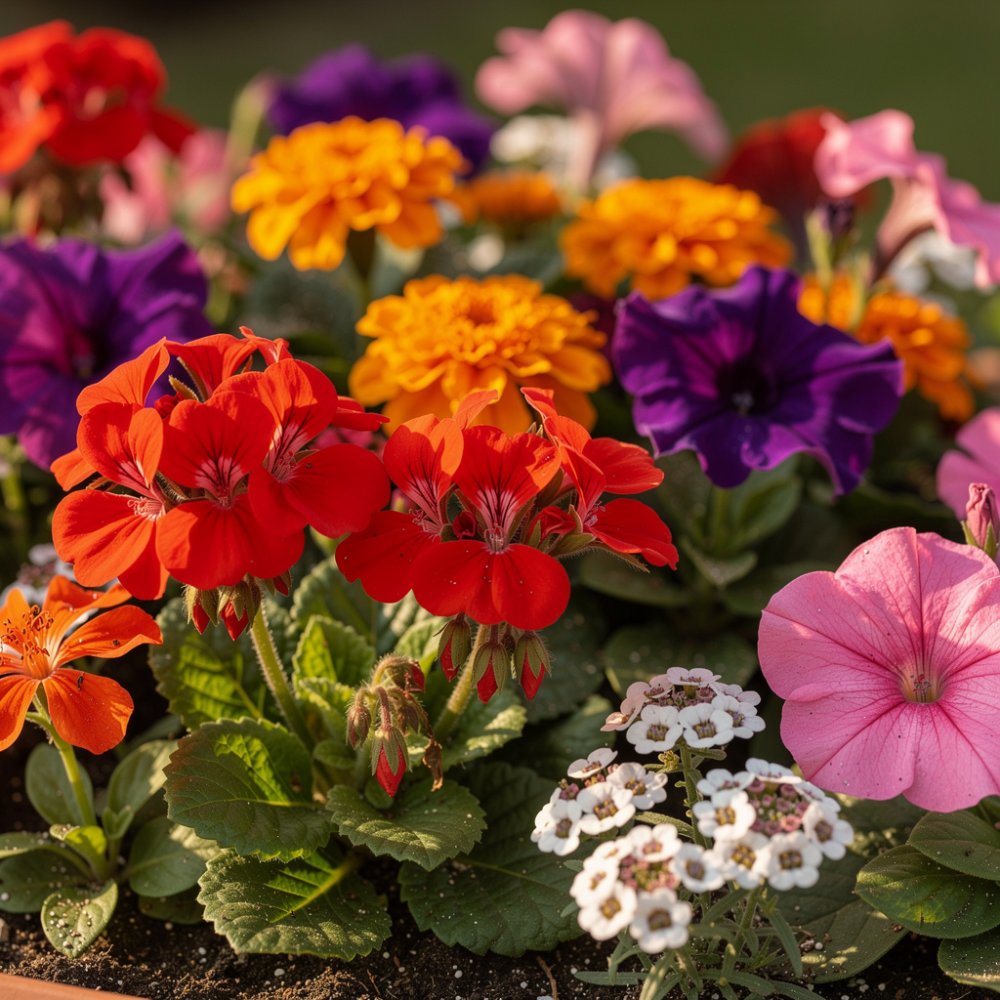
Annual Flowers vs. Biennial Flowers – What's the Difference?
Annual Flowers (Single-Year Flowers)
Plants that complete their entire life cycle – from germination through flowering to seed production – in a single growing season. They die in autumn. They are sown in spring (either directly in the bed or started indoors) and flower from summer until the first frosts.
Biennial Flowers
Plants with a two-year cycle. In the first year, they develop only a basal leaf rosette, overwinter, and only in the second year do they flower, produce seeds, and die. Practical advantage: most biennials self-seed abundantly and maintain themselves permanently in the garden without needing to be resown annually.
Practical Overview:
| Feature | Annuals | Biennials |
|---|---|---|
| Lifespan | 1 year | 2 years |
| Flowering | Year 1 (3–5 months) | Year 2 (1–3 months) |
| Sowing | Spring (II–V) | Summer (VI–VII) |
| Self-seeding | Some yes | Most yes |
| Examples | Marigold, zinnia, petunia | Hollyhock, foxglove, pansy |
Sowing Calendar
Seed Starting (indoors or in a greenhouse):
| Month | Varieties to Sow |
|---|---|
| February | Petunia, lobelia, begonia, geranium, celosia |
| March | Marigold, zinnia, aster, snapdragon, balsam, dahlia from seed |
| April | Sunflower (in pots), nasturtium, cosmos |
Direct Sowing in Garden (after last frost – mid-May in Czech Republic):
| Month | Varieties to Sow |
|---|---|
| May | Sunflower, nasturtium, cosmos, sweet pea, ornamental pumpkin |
| June | Late sowing of cosmos and marigold |
Biennial Flowers (sow in summer for next year's flowering):
| Month | Varieties to Sow |
|---|---|
| June | Foxglove, hollyhock, wallflower |
| July | Pansy, forget-me-not, sweet William |
Top 15 Annual Flowers
1. Zinnia (Zinnia elegans)
Vibrant, fully double flowers in a complete color palette – from white through yellow, orange, and pink to deep red and purple. An excellent cut flower with long vase life: the more consistently you cut, the more abundantly it flowers.
- Height: 30–90 cm | Flowering: VII–X | Sowing: Seed starting III–IV or direct sowing V
- Tip: Zinnias are sensitive to cold – don't sow too early. Direct sowing after May 15 delivers reliable results and plants catch up with those started indoors.
2. Cosmos (Cosmos bipinnatus)
An airy, elegant annual with fine, almost fern-like leaves and large simple flowers in white, pink, and crimson. Grows up to 120 cm and creates light, swaying "clouds" of bloom. Dislikes overfeeding – in overly rich soil it produces more leaves than flowers.
- Height: 60–120 cm | Flowering: VII–X | Sowing: Direct sowing V or seed starting IV
- Tip: Allow some plants to mature seeds and self-sow – next year they'll grow without any care.
3. Marigold (Tagetes)
Extremely reliable annual in yellow and orange that also serves as a protective interplant. Aromatic volatile oils in the leaves repel aphids and nematodes, making it an ideal companion to vegetables and ornamental beds. Suitable for beds and containers alike.
- Height: 20–80 cm (by variety) | Flowering: VI–X | Sowing: Seed starting III–IV
- Tip: Planted near tomatoes and peppers naturally reduces pest pressure throughout the season.
4. Sunflower (Helianthus annuus)
Offers giant single-headed forms reaching up to 3 m and compact branching varieties suited to smaller gardens and containers. Grows very quickly; direct sowing in place is the simplest and most effective method.
- Height: 40–300 cm | Flowering: VII–IX | Sowing: Direct sowing V directly to location
- Tip: For cut flower arrangements, choose branching varieties without pollen – they don't shed on surfaces and last longer in a vase.
5. Petunia (Petunia)
The irreplaceable queen of balconies, window boxes, and hanging baskets. Flowers continuously from May until frost in all imaginable colors and patterns. Trailing surfinia varieties are perfect for hanging baskets; upright types work beautifully in beds.
- Height: 20–40 cm | Flowering: V–X | Sowing: Seed starting II–III (caution: seeds are very fine; don't sow too deep)
- Tip: Regular removal of spent flowers and weekly feeding with potassium-rich fertilizer are essential for abundant blooming throughout the season.
6. Nasturtium (Tropaeolum majus)
Both the flowers and leaves are edible – they have a distinctive peppery flavor and brighten salads and cold appetizers beautifully. Grown in bush or climbing form. Peculiarity: it flowers more abundantly in poor soil than in rich soil, where it invests energy in foliage.
- Height: 30 cm (bush) / 200 cm (climbing) | Flowering: VI–X | Sowing: Direct sowing V
- Tip: Large seeds can be soaked in lukewarm water for 4–6 hours before sowing to speed germination.
7. Sweet Pea (Lathyrus odoratus)
A climbing annual with intensely fragrant flowers in soft pastel shades – the fragrance is among the loveliest in the entire plant kingdom. Requires solid support (trellis, fence, netting). The more regularly you pick flowers, the longer and more abundantly it blooms.
- Height: 150–200 cm | Flowering: VI–IX | Sowing: Direct sowing IV (soak seeds in lukewarm water for 12 hours)
- Tip: Don't allow pods to mature on the plant – this significantly shortens the flowering season.
8. Snapdragon (Antirrhinum majus)
Characteristic two-lipped flowers that "open their mouth" when squeezed from the sides are especially beloved by children. Vertical racemes of flowers in warm tones make striking specimens or group plantings. An excellent cut flower.
- Height: 30–90 cm | Flowering: VI–X | Sowing: Seed starting III
- Tip: In warmer regions of Bohemia and Moravia, snapdragon survives mild winters in protected locations and behaves as a short-lived perennial.
9. Lobelia (Lobelia erinus)
Compact or trailing annual with small but intensely blue flowers – blue is rare in gardens and lobelia provides it in abundance. Perfect for window boxes, hanging baskets, and as edging for beds. Also available in white and pink.
- Height: 10–20 cm | Flowering: V–X | Sowing: Seed starting II–III (seeds are very fine; sow on substrate surface)
- Tip: During summer heat waves, lobelia reduces flowering – prune it by a third and it will bloom profusely again once temperatures cool.
10. Sweet Alyssum (Lobularia maritima / Alyssum)
A low, cushion-forming annual with tiny, honey-scented florets. Attracts bees, lacewings, and other beneficial insects, thereby indirectly protecting nearby plantings. Self-seeds abundantly.
- Height: 10–15 cm | Flowering: V–X | Sowing: Direct sowing IV–V or seed starting III
- Tip: As a living mulch beneath taller plants, it covers the soil, reduces water evaporation, and creates a natural microclimate.
11. Ageratum (Ageratum houstonianum)
A compact annual with characteristic fluffy florets in blue, purple, and white. Excels as a reliable bed edging and container filler. Also suits sunken containers in combination with taller varieties.
- Height: 15–30 cm | Flowering: VI–X | Sowing: Seed starting III
- Tip: It tolerates light shade better than most annuals – use it in locations where sun shines only in the morning.
12. Impatiens (Impatiens walleriana)
The best annual for shady locations – it flowers abundantly even without a single hour of direct sun. Unbeatable under tree canopies, on north-facing walls, or in sheltered courtyards. Requires consistently moist soil.
- Height: 20–40 cm | Flowering: V–X | Sowing: Seed starting II–III or buy bedding plants
- Tip: It wilts quickly in drought but recovers after watering – don't buy wilting plants as they're difficult to regenerate.
13. Wax Begonia (Begonia semperflorens)
One of the most reliable annuals ever – tolerant of drought, rain, and alternating sun and shade. Glossy green or bronze leaves and small single or double flowers in white, pink, and red decorate beds and containers with minimal care.
- Height: 15–30 cm | Flowering: V–X | Sowing: Seed starting I–II (slow growing – allow 12–16 weeks before planting) or buy bedding plants
- Tip: Bronze-leafed varieties are more tolerant of direct sun than green-leafed forms.
14. Dahlia from Seed (Dahlia)
Dahlias are classically grown from tubers, but dwarf varieties in the Mignon and Figaro groups reliably flower from seed in the same season. They offer both double and simple forms in the entire color range.
- Height: 30–50 cm | Flowering: VII–X | Sowing: Seed starting III–IV
- Tip: In autumn, dig the tubers, let them dry, and store in a frost-free location – next season they'll be substantially more vigorous and earlier blooming.
15. Celosia (Celosia)
A striking tropical annual with flowers in flame form (C. plumosa) or rooster-comb form (C. cristata). Rich color range from yellow and orange to purple and deep red. Exceptionally decorative even as dried flowers.
- Height: 20–80 cm | Flowering: VII–X | Sowing: Seed starting III–IV
- Tip: Harvest entire flower heads at the peak of bloom and dry upside-down – they'll retain color and shape all winter.
Top 5 Biennial Flowers
1. Foxglove (Digitalis purpurea)
Majestic spires bearing dozens of bell-shaped flowers in pink, white, yellow, and apricot, typically with conspicuous spotted throats. Flowers in June and July of the second year. Self-seeds so abundantly in the garden that it maintains itself permanently.
- Height: 100–180 cm | Flowering: VI–VII (year 2)
- Caution: The entire plant is highly toxic (contains cardiac glycosides). Not suitable for gardens where small children or animals move about.
2. Sweet William (Dianthus barbatus)
Densely-packed, fragrant flowers in red, pink, white, and bicolor combinations are a classic in Czech gardens for generations. Self-seeds abundantly and perpetuates itself in the garden without interruption.
- Height: 30–60 cm | Flowering: V–VII (year 2)
- Tip: For continuous flowering, sow annually – you'll always have a one-year and a two-year generation alongside each other.
3. Wallflower (Erysimum cheiri) – Yellow Wallflower
Fragrant four-petaled flowers in yellow, orange, and reddish-brown are among the first spring fragrances in the garden. Flowers in the second year alongside tulips and daffodils – a combination that works perfectly.
- Height: 30–60 cm | Flowering: IV–VI (year 2)
- Tip: In warmer areas of Moravia and southern Bohemia, it survives as a short-lived perennial and flowers again in the third year.
4. Hollyhock (Alcea rosea)
An iconic cottage biennial with giant spire-like flower heads reaching up to 250 cm. Available in double and simple forms in the entire color range. Self-seeds so abundantly that it practically persists in the garden as a perennial.
- Height: 150–250 cm | Flowering: VII–IX (year 2)
- Tip: Hollyhock is susceptible to hollyhock rust (Puccinia malvacearum) – choose resistant varieties or apply preventive copper-based fungicide.
5. Honesty (Lunaria annua)
Bears purple or white flowers in spring, but its main attraction is the translucent silvery seed pods remaining on the stems after seeds drop. These decorative "coins" are indispensable in dried arrangements and winter decorations.
- Height: 60–90 cm | Flowering: IV–VI (year 2)
- Tip: Harvest stems with pods in August before rain damages them – carefully peel away the outer pod layers to reveal the silvery translucent partitions.
Direct Sowing vs. Seed Starting
Direct Sowing in Garden
Advantages:
- Simpler execution, minimal equipment needed
- Plants root without transplanting stress
- No need for pricking out and hardening off
Disadvantages:
- Flowering begins 4–6 weeks later
- Higher risk of slug and bird damage
- Requires gradual thinning of crowded seedlings
Suitable varieties: Sunflower, cosmos, nasturtium, sweet pea, marigold, sweet alyssum
Seed Starting (indoors, on windowsill, or in greenhouse)
Advantages:
- Flowering begins significantly earlier
- Full control over temperature, humidity, and light
- Higher success rate with fine-seeded varieties sensitive to frost
Disadvantages:
- More work and handling (pricking out, hardening off)
- Space and good lighting requirements
- Seedlings etiolate (stretch) in insufficient light
Suitable varieties: Petunia, lobelia, begonia, celosia, snapdragon, impatiens
Step-by-Step Seed Starting Guide:
- Fill trays or pots with fine seed-starting mix and gently level the surface
- Sow fine seeds on the surface without covering; cover larger seeds with a layer of mix matching their diameter
- Mist with a sprayer and cover with transparent film or glass to retain moisture
- Maintain temperature of 18–22 °C – higher temperatures speed germination in heat-loving varieties
- Remove covering after emergence and move trays to the brightest possible location (preferably a south-facing window)
- Prick out into individual pots after the first pair of true leaves develops
- About 7–10 days before outdoor planting, harden off seedlings – expose them to cooler outdoor air during the day, initially for just a few hours
- Plant outdoors after the last frost; in the Czech Republic, typically after May 15
Don't want to bother with seed starting? Choose ready-made bedding plants from our selection.
Tips for Abundant Flowering
Regular Deadheading
Systematic removal of spent flowers is the most effective and simplest technique for extending the season. A plant that cannot set seed will continue producing new buds – exactly what you want. This maintenance is critical for petunias, zinnias, and marigolds.
Fertilizing
Annuals flower continuously for three to five months and consume nutrients intensively. Fertilize every 7–14 days with liquid fertilizer higher in potassium (K) – it directly supports flower production and quality, while excess nitrogen (N) leads to lush foliage at the expense of flowering.
Watering
Water regularly but don't overdo it – waterlogged soil leads to root rot. Water at soil level, not overhead, to limit fungal diseases. Containers and window boxes dry quickly and in summer heat may need daily watering.
Pinching (Tipping)
With petunias, snapdragons, zinnias, and cosmos, it pays to cut the main shoot above the fourth to sixth leaf. The plant responds by branching and produces substantially more flower stems than under natural growth.
FAQ – Frequently Asked Questions
When should I sow annuals?
It depends on the specific variety and cultivation method. Generally: start seed indoors from February to April, direct sow in the garden after May 15 when frost danger has passed. Sow biennials in June and July.
Which annuals flower the longest?
Petunias, marigolds, begonias, lobelias, and zinnias flower continuously from summer until the first frosts, provided you regularly remove spent flowers and fertilize.
Can I sow annuals directly in the garden?
Yes. Sunflowers, cosmos, nasturtiums, marigolds, and sweet alyssum tolerate direct sowing excellently and don't require seed starting. Expect flowering to begin 4–6 weeks later than with started plants.
Which annuals suit partial shade?
Impatiens (Impatiens walleriana) is incomparably the best choice for shady locations. Begonias, ageratum, and lobelias also adapt well to partial shade.
What are F1 hybrids and when should I choose them?
F1 hybrids result from crossing two pure lines and display heterosis – larger flowers, better disease resistance, and more uniform growth. They're more expensive but seeds from them shouldn't be saved because offspring won't display parental traits. For saving and sowing your own seeds, choose open-pollinated (OP) varieties.
How can I prevent seedling stretching?
The cause is almost exclusively insufficient light. Place seed trays in the brightest location possible – ideally a south-facing window. If natural light is inadequate, supplement with LED lighting of daylight spectrum. Lower temperature (15–18 °C) also slows stretching by limiting cell division rate.
Conclusion
Annual and biennial flowers are the most accessible route to a colorful garden full of life. A packet of seeds, quality potting mix, and a sufficiently sunny location – that's all you need for a explosion of color in flower beds throughout the season. Combine different heights, flowering times, and color combinations for continuous beauty from May through late October. Remember deadheading – it's the simplest and most effective investment of a few minutes weekly. Browse our selection of annuals, biennials, and ready-made bedding plants, and brighten your garden this year.
Sources
- Royal Horticultural Society (RHS) – Annuals and biennials: rhs.org.uk/plants/types/annuals
- Faculty of Horticulture, MENDELU – Annuals and biennials in Czech garden culture
- Ball, J. – Ball Redbook: Crop Production (overview of annual flower cultivation)
- Czech Horticultural Society – Sowing and seed starting of ornamental plants