
 Our products
 Aromatherapy - essential oils
 Essential oils
 Aroma lamps
 Aroma Diffusers
 Seeds
 Vegetables
 Herbs and spices
 Ornamental Plant Seeds
 Grass mixtures
 Sprouts and microgreens
 Growing supplies
 Cultivation and Gardening Supplies
 Hydroponics and indoor growing
 Protective equipment and gardening tools
 Exotic plants
 Exotic Fruit and Vegetables
 Exotic herbs
 Exotic trees and shrubs
 Ornamental exotic plants
 Roasted coffee
 Espresso coffee
 Ecological coffee preparation
 Thermal mugs and coffee cups
 Aeropress
 Thermos flasks and thermal mugs for coffee and tea
 Moka pot
 Filter coffee
 Coffee blends
 Accessories for coffee makers
 Water filtration
 Coffee grinders
 Cleaning the Coffee Maker
 Ecological Cleaning of Coffee Machines
 Coffee makers
 Coffee Preparation
 Coffee Accessories
 Food products
 For wildlife and pets
 Chocolate and others
 Hemp food products
 Natural cosmetics
 Hemp cosmetics
 Smoking supplies
 Bongs - water pipes
 Blunts and tubes
 E-liquids with Terpenes and CBD
 Grinders and Mills
 Papers and filters
 Smoking accessories
 Vaporizers
 Air fresheners
 CBD and CBG products
 CBD sprays
 CBD and CBN crystals
 CBD body and facial care
 Weeds
 CBD suppositories and capsules
 CBD oils and drops
 CBG oils and drops
 House and garden
 Fashion and Decoration
 Kitchen essentials and cooking
 Christmas Decorations and Accessories
 Gift Sets
 Bird feeders
 Seasonal and Special Tools
In short: Mint grows in sun or partial shade in moist, humus-rich soil with a pH of 6.0–7.0. Because it spreads by underground runners, grow it in a container or a pot sunk into the bed. Water often, harvest just before flowering in June–July and divide the clump every 3–4 years.
| Soil pH | 6.0–7.0 |
|---|---|
| Germination | 18–22 °C, 10–15 days |
| Spacing | 30–40 cm between plants |
| Main harvest | just before flowering, June–July |
| Dehydrator drying | 35–40 °C for 2–4 hours |
| Division | every 3–4 years |
Mint belongs among the oldest and most widespread herbs in the world. Its refreshing minty aroma and distinctive flavor predestine it for use in the kitchen, traditional medicine and cosmetics. For growers, it has one crucial advantage and one crucial disadvantage – it grows practically anywhere and also spreads uncontrollably practically anywhere. Anyone who plants mint in a garden bed without restrictions will soon discover its invasive nature. In this guide you will find an overview of the most interesting types, proven cultivation methods in beds and containers, tips on propagation, proper harvesting, drying and broad possibilities for use. Mint seeds and seedlings can be found in the Mint section on Pestik.cz.
Why grow mint
Mint (genus Mentha) includes dozens of species and hundreds of cultivars. All are characterized by a distinctive aroma due to the content of essential oils – primarily menthol, menthone and limonene. In addition to culinary and medicinal use, mint is an excellent nectar plant, a natural repellent against pests and an aromatic ornament to any garden or balcony.
Advantages of growing mint
- Low maintenance – it thrives in full sun and partial shade, in practically any garden soil
- Hardiness – reliable perennial that overwinters without problems in Czech conditions
- Fast growth – you can harvest the first leaves just a few weeks after planting
- Versatile use – teas, cocktails, desserts, medicinal preparations, cosmetics
- Repellent effects – repels ants, mice and a range of common vegetable pests
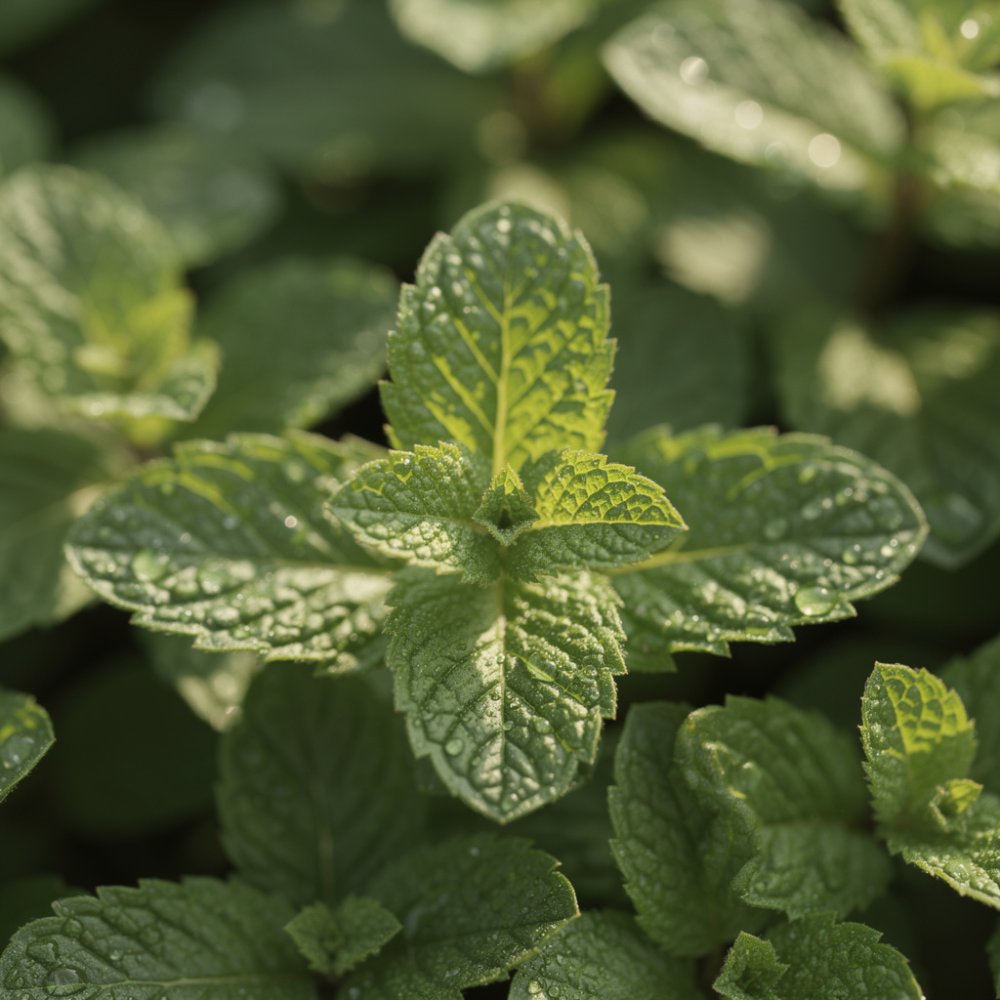
Overview of mint types and varieties
The world of mint is surprisingly diverse. Individual species differ in aroma, taste, size and leaf color. Here are the most interesting ones:
| Type / Variety | Latin name | Aroma and taste | Main use |
|---|---|---|---|
| Peppermint | Mentha x piperita | Strongly minty, cooling | Tea, medicinal preparations, inhalation |
| Spearmint | Mentha spicata | Sweeter, milder menthol | Mojito, chewing gum, yogurt |
| Chocolate mint | Mentha x piperita 'Chocolate' | Menthol with chocolate undertone | Desserts, ice cream, hot chocolate |
| Apple mint | Mentha suaveolens | Delicate, fruity, apple-like | Children's teas, fruit salads |
| Moroccan mint | Mentha spicata 'Moroccan' | Sweetly minty | Moroccan mint tea |
| Pineapple mint | Mentha suaveolens 'Variegata' | Fruity, tropical | Decoration, beverages |
| Lemon mint | Mentha x piperita 'Citrata' | Citrus-minty | Teas, summer lemonades |
Which mint is best for beginning growers?
If you are just starting out, go for peppermint or spearmint. Both are robust, readily available and universally useful. Spearmint excels in mixed drinks and cold cuisine, peppermint dominates in teas and medicinal preparations. Seeds of both species can be found in the Mint category.
Growing mint – step by step
Location
Mint is not fussy – it grows in full sun and partial shade. In warmer regions, it even prefers partial shade, which protects it from leaf scorch and premature flowering. The ideal location is one with morning sun exposure and afternoon shade, where the soil does not overheat.
Soil
Mint prefers moist, humus-rich soil with a pH of 6.0–7.0. However, it tolerates practically any garden substrate – from clay to sandy. The only thing it cannot tolerate is permanently waterlogged ground without drainage.
Sowing from seeds
- Timing: March–April (pre-growing on a windowsill) or from May directly outdoors
- Depth: Surface sowing – just lightly press seeds to the substrate, do not cover
- Germination temperature: 18–22 °C
- Germination time: 10–15 days
- Note: Some cultivars (chocolate, pineapple) are unreliably propagated from seed – in these cases it is better to obtain a seedling
Planting seedlings and division
A simpler and more reliable method is to buy a seedling or get a slip from a neighbor. Mint divides easily – in spring or autumn, dig up the clump, divide it into parts (each with roots and several shoots) and plant in a new location. Maintain spacing of 30–40 cm between seedlings.
Container growing – necessity, not choice
This is the most important piece of advice in the entire article: grow mint in containers. Mint spreads via underground runners (stolons) and in a single season can colonize a square meter or more. In an open garden bed you practically cannot keep it under control.
Proven containment methods:
- Pot sunk into the garden bed – sink a plastic pot (diameter 30 cm or more) into the soil up to the rim. Mint grows inside, roots cannot escape into surrounding soil.
- Window box on a balcony – ideal solution for balcony growers. A window box 60 x 20 cm is sufficient for 2–3 plants.
- Rhizome barrier – a plastic strip buried 30 cm deep around the mint bed. A more expensive solution, but aesthetically more acceptable for larger areas.
Watering and fertilizing
- Watering: Regular and abundant. Mint loves moisture – in summer water every day or every other day. In a pot the substrate dries out significantly faster than in a garden bed.
- Fertilizing: Compost in spring, supplemented with liquid fertilizer once a month during the growing season. Do not overdo it – in overly rich soil, mint may grow vigorously but produces fewer essential oils, and thus less aroma.
Pruning and maintenance
- In spring, prune old, woody shoots to the ground – the plant will regrow from the roots
- During the season, regularly pinch the growing tips – you promote branching and delay flowering
- Remove flower stalks if you do not want self-seeding
- Every 3–4 years, divide the plant and replant in a new location, which renews its vitality
Propagating mint
Mint propagates easily in three ways:
1. Clump division
The most reliable method. In spring or autumn, dig up the clump, divide it into 3–4 parts and plant. Each part with roots will establish without problems.
2. Cuttings (stem cuttings)
Cut off a 10–15 cm long branch, remove the lower leaves and place it in a glass of water. After 5–7 days roots will appear. Plant in substrate and keep moist until fully rooted.
3. Stolons (underground runners)
Uncover an underground runner with rootlets, cut it off and replant. This method works anytime during the growing season and is the quickest way to a new plant.
Harvesting mint
When to harvest
The best time to harvest is just before flowering (June–July), when the leaves contain the maximum amount of essential oils. However, you can harvest continuously from May until October.
How to harvest
- Continuous harvesting: Pick individual leaves or strip the growing tips in lengths of 10–15 cm. Always strip just above a pair of leaves – new shoots will emerge from the node.
- Large-scale harvesting: 2–3 times per season, trim the entire plant 5 cm above ground. Mint will regrow in 2–3 weeks.
- Timing during the day: Harvest in the morning, after the dew has dried – the concentration of essential oils in the leaves is highest at this time.
Drying and preservation
Air drying
- Tie branches into small bundles (5–8 stems)
- Hang upside down in a dark, airy space
- Temperature 20–30 °C, away from direct sun
- After 1–2 weeks they are dry – leaves detach easily from the stem
- Store in a dark, airtight container, preferably glass
Drying in a dehydrator
Spread leaves in a single layer on a dehydrator tray. Set the temperature to 35–40 °C and dry for 2–4 hours. This method best preserves color and aroma.
Freezing
- Ice cubes: Chop leaves, fill an ice cube tray, cover with water and freeze. Perfect for beverages – mint releases as the cube melts.
- Flat freezing: Spread whole leaves on a tray lined with parchment paper, freeze and transfer to a sealed bag.
Mint syrup
Pour hot sugar syrup (ratio 1:1 sugar and water) over a handful of fresh leaves, let steep for 30 minutes and strain. Keeps in the refrigerator for up to 2 weeks. Excellent for lemonades, cocktails and iced coffee.
Using mint in the kitchen
| Use | Recommended type | Note |
|---|---|---|
| Mint tea | Peppermint, Moroccan | Pour boiling water, steep 5–10 minutes |
| Mojito | Spearmint | Milder, sweeter taste – classic choice |
| Tabbouleh | Spearmint | Freshly chopped into salad |
| Yogurt sauce (raita) | Spearmint | Great accompaniment to Indian dishes |
| Chocolate desserts | Chocolate mint | Ice cream, mousse, brownies |
| Fruit salads | Apple mint | Delicate, suitable even for children |
| Summer lemonades | Lemon mint, spearmint | With lemon, cucumber and ice |
Medicinal use of mint
Peppermint is an official medicinal plant with scientifically proven effects:
- Digestion: Menthol relieves smooth muscle of the digestive tract – helps with bloating, cramps and nausea. Mint tea after a meal is a classic home remedy.
- Colds: Inhalation of mint tea vapor opens the respiratory tract. Menthol has a decongestive effect and relieves the feeling of a stuffy nose.
- Headache: Applying menthol solution to the temples and forehead (diluted mint oil) demonstrably alleviates tension headaches.
- Calming: Mint tea has mild sedative effects – can help with insomnia and nervousness.
Caution: Mint tea is not suitable for young children (under 3 years) or for people with gastroesophageal reflux – menthol relaxes the esophageal sphincter and can worsen symptoms.
Mint as a companion plant
Mint is a valuable garden helper not only for its aroma but also for its strong repellent effects:
- Repels: ants, mice, moths, whiteflies, aphids and cabbage white caterpillars
- Attracts: pollinators (bees, bumblebees) during flowering
- Good companions: cabbage, broccoli, tomatoes, peppers
- Poor companions: parsley (root competition) – otherwise mint is tolerant of most garden plants
Important: Even when using mint as a companion plant, grow it in a sunk container – without containment it will overgrow and suppress neighbors.
Common growing problems
Mint rust (Puccinia menthae)
Orange spots on the underside of leaves. Remove affected leaves, improve air circulation around plants and avoid watering leaves directly.
Aphids
They occasionally attack young shoots, especially at the beginning of the season. Spray vigorously with water or apply insecticidal soap – avoid chemical products on herbs intended for consumption.
Powdery mildew
White coating on leaves appears in damp, warm weather. Thin out the clump, improve ventilation and remove heavily affected parts.
Yellowing leaves
Most often caused by overwatering or lack of nutrients. Adjust watering frequency and fertilize with an appropriate herb fertilizer.
Frequently asked questions (FAQ)
How do I prevent mint from spreading across the garden?
Grow it in a pot sunk into the garden bed or in a window box. A plastic pot without drainage holes, sunk 25–30 cm into the soil, is the most effective and cheapest barrier. A rhizome barrier of plastic strip is an alternative for larger areas with a more aesthetic result.
Can mint grow indoors on a windowsill?
Yes, but it needs plenty of light – at least 4–6 hours daily. In winter, supplement with LED panels. Spearmint does better on a windowsill than peppermint, which requires a bit more sun.
How long does mint last?
Mint is a perennial that lasts for many years. Divide and replant it every 3–4 years – this rejuvenates the plant. Without division in one location, it gradually weakens and loses vitality.
Is it safe to drink mint tea every day?
For healthy adults, yes – 2–3 cups daily are safe. Avoid regular consumption if you have reflux, during pregnancy (in large quantities) and in young children.
Which mint varieties are the most fragrant?
Peppermint has the strongest minty aroma. Chocolate mint and lemon mint offer interesting aromatic variations. For everyday culinary use, spearmint is the most versatile.
Seasonal mint growing calendar
| Month | Activity |
|---|---|
| March | Pre-growing from seed on windowsill, clump division |
| April | Outdoor sowing (after warming), seedling planting |
| May | Beginning of harvest, establishing regular watering |
| June | Main harvest before flowering, syrup preparation |
| July | Second harvest, taking cuttings |
| August | Continuous harvesting, drying supplies for winter |
| September | Last major harvest, winter preparation |
| October | Cutting back above-ground parts, mulching |
| November–February | Growing period rest – mint rests underground |
Sources
- RHS – Growing Mint
- The Old Farmer's Almanac – How to Grow Mint
- Gardenary – The Ultimate Guide to Growing Mint
- Bylinky pro všechny – Máta peprná
- Pestik.cz – Mint seeds and seedlings