
 Our products
 Aromatherapy - essential oils
 Essential oils
 Aroma lamps
 Aroma Diffusers
 Seeds
 Vegetables
 Herbs and spices
 Ornamental Plant Seeds
 Grass mixtures
 Sprouts and microgreens
 Growing supplies
 Cultivation and Gardening Supplies
 Hydroponics and indoor growing
 Protective equipment and gardening tools
 Exotic plants
 Exotic Fruit and Vegetables
 Exotic herbs
 Exotic trees and shrubs
 Ornamental exotic plants
 Roasted coffee
 Espresso coffee
 Ecological coffee preparation
 Thermal mugs and coffee cups
 Aeropress
 Thermos flasks and thermal mugs for coffee and tea
 Moka pot
 Filter coffee
 Coffee blends
 Accessories for coffee makers
 Water filtration
 Coffee grinders
 Cleaning the Coffee Maker
 Ecological Cleaning of Coffee Machines
 Coffee makers
 Coffee Preparation
 Coffee Accessories
 Food products
 For wildlife and pets
 Chocolate and others
 Hemp food products
 Natural cosmetics
 Hemp cosmetics
 Smoking supplies
 Bongs - water pipes
 Blunts and tubes
 E-liquids with Terpenes and CBD
 Grinders and Mills
 Papers and filters
 Smoking accessories
 Vaporizers
 Air fresheners
 CBD and CBG products
 CBD sprays
 CBD and CBN crystals
 CBD body and facial care
 Weeds
 CBD suppositories and capsules
 CBD oils and drops
 CBG oils and drops
 House and garden
 Fashion and Decoration
 Kitchen essentials and cooking
 Christmas Decorations and Accessories
 Gift Sets
 Bird feeders
 Seasonal and Special Tools
Cedarwood essential oil is among the popular woody fragrances that can create a calm and harmonious home atmosphere. Its scent is gentle, warm and subtle, yet it lingers in the space for a long time.🌲In this article, you'll learn what cedarwood essential oil smells like, what it's good for, and how to use it safely at home.
In short: Two plants are sold as cedarwood oil: true cedar Cedrus atlantica and the juniper Juniperus virginiana, so check the botanical name. For skin use, dilute to 1 to 2 per cent, meaning 5 to 10 drops per 30 ml of carrier oil. In a diffuser, 2 to 4 drops for 20 to 30 minutes are enough.
| Skin dilution | 1–2 % (5–10 drops per 30 ml of carrier oil) |
|---|---|
| Diffuser dose | 2–4 drops for a standard room |
| Diffusion time | 20–30 minutes, then a break |
| Moth deterrent | a few drops on a wooden block or cotton sachet, refreshed about monthly |
| Extraction | steam distillation of wood, bark or roots |
Two different plants are sold as cedarwood oil. Cedrus atlantica is a true cedar and its main components are himachalenes; Juniperus virginiana is botanically a juniper and contains mainly cedrol and thujopsene. The aroma and the typical uses differ, so look for the full botanical name on the label rather than just the word cedar. Dilute to 1 or 2 per cent, meaning 5 to 10 drops per 30 ml of carrier oil. It is used in a diffuser for a grounding aroma, in scalp care and as a traditional moth deterrent in wardrobes.
Below you will find the differences between the species, the right dilution and the safety rules. This is not medical advice.
Table of Contents
- What is cedar essential oil
- How cedar oil smells
- Using cedar oil at home
- Cedar oil in aromatherapy
- Safe use
- Common mistakes
- FAQ – Frequently Asked Questions
- Conclusion
What is cedar essential oil
Cedar essential oil is obtained by steam distillation of the wood, bark or roots of cedar trees. In aromatherapy, you'll most commonly encounter oils from species such as Cedrus atlantica, Cedrus deodara or Juniperus virginiana (known as Virginia cedar).
The result is an oil with a distinctive woody fragrance, used primarily for scenting spaces and as part of aromatherapy blends. Cedar oil is valued for its "grounding" character and ability to create a calm, balanced atmosphere.
💡 Did you know that…
Cedar essential oil is among the fragrances that release slowly into the space and persist longer than many other oils. Thanks to this, it's often used as a base note in aromatherapy blends designed to create a stable and harmonious atmosphere in interiors.
How cedar oil smells
The scent of cedar essential oil is:
- dry and woody,
- warm and stable,
- slightly resinous,
- unobtrusive yet long-lasting.
Unlike fresh citrus oils, cedar doesn't create an invigorating impression, but rather a calm and balanced one. It's often used as a "base note" in blends intended to bring a sense of security, comfort and homely warmth.
The scent of cedar oil gradually develops in the space. Initially, it appears rather dry and clean, but after a while it unfolds into softer, warmer tones that linger in the room for a longer time. This particular quality makes it a popular oil for evening use or for creating a stable atmosphere at home.
Using Cedar Essential Oil at Home
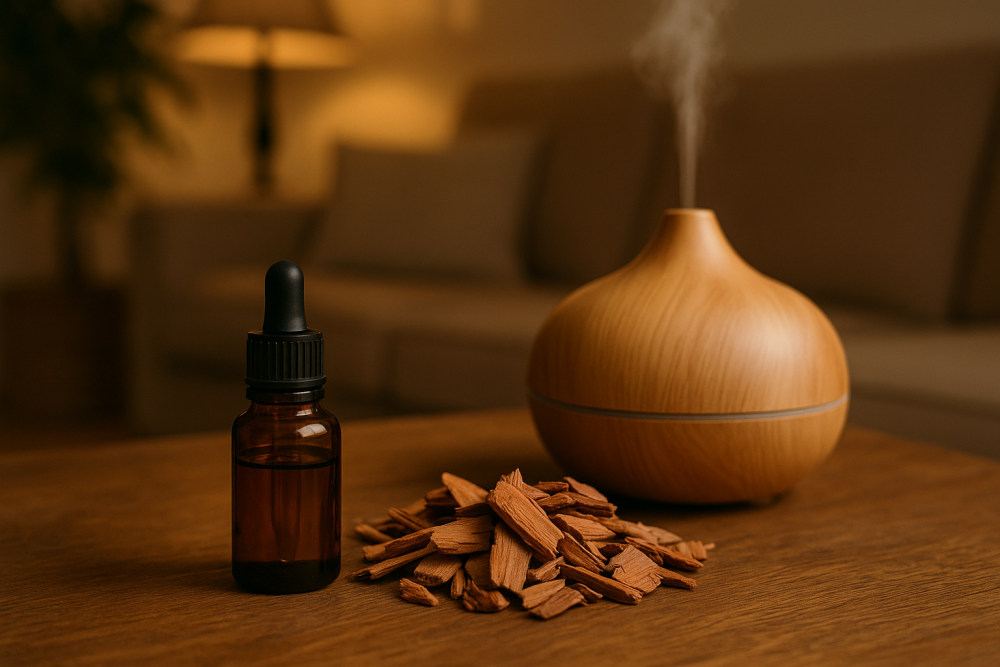
Cedar oil is an ideal choice for scenting interiors, especially during colder months or in the evening hours.
🌲Diffuser
The most common and simplest method of use. For a diffuser, you typically need:
- 2–4 drops of cedar oil for a standard room,
- diffuse for 20–30 minutes, then take a break.
The scent is released gradually and the space gains a gentle, natural character.
🌲Aroma Lamp
Cedar oil can also be used in an aroma lamp with water. Here too, the rule applies that less is more – the scent is quite intense and lasts a long time.
🌲Interior Scenting
Cedar is particularly suitable for:
- living rooms,
- studies,
- bedrooms (preferably in the evening),
- hallways and entrance areas.
🌲Atmosphere According to Time of Day
Cedar essential oil can be well adapted to the rhythm of the day. During the day, it's often used in combination with fresh or light oils that soften its woody character. In the evening, on the other hand, it excels on its own or combined with other deeper tones.
- During the day: cedar + citrus for a lighter, airier scent,
- Evening: cedar alone or with lavender for a calmer atmosphere,
- Colder period: cedar + frankincense or conifers.
Thanks to this versatility, cedar oil is a universal helper for different moods and seasons.
Cedar Oil in Aromatherapy
In aromatherapy, cedar oil is popular primarily for its calm, stable character. It's often used as a base for blends intended to have a balanced and harmonious effect.
Popular Combinations
Cedar oil combines well with other essential oils, for example:
- citrus (orange, mandarin) – softens the woody notes,
- lavender – creates a calm and gentle scent,
- frankincense – for a deeper, evening atmosphere,
- pine or fir – enhances the forest character.
Simple Diffuser Blend
- 2 drops of cedar
- 2 drops of orange
- 1 drop of lavender
Creates a pleasant, balanced scent suitable for evening relaxation.
💡 Tip: Cedar essential oil works beautifully not only in a diffuser but also in an aroma lamp. If you're not sure which type to choose, get inspired by our article Aroma Lamps for Essential Oils: How to Choose the Right One.
Safe Use of Cedar Essential Oil
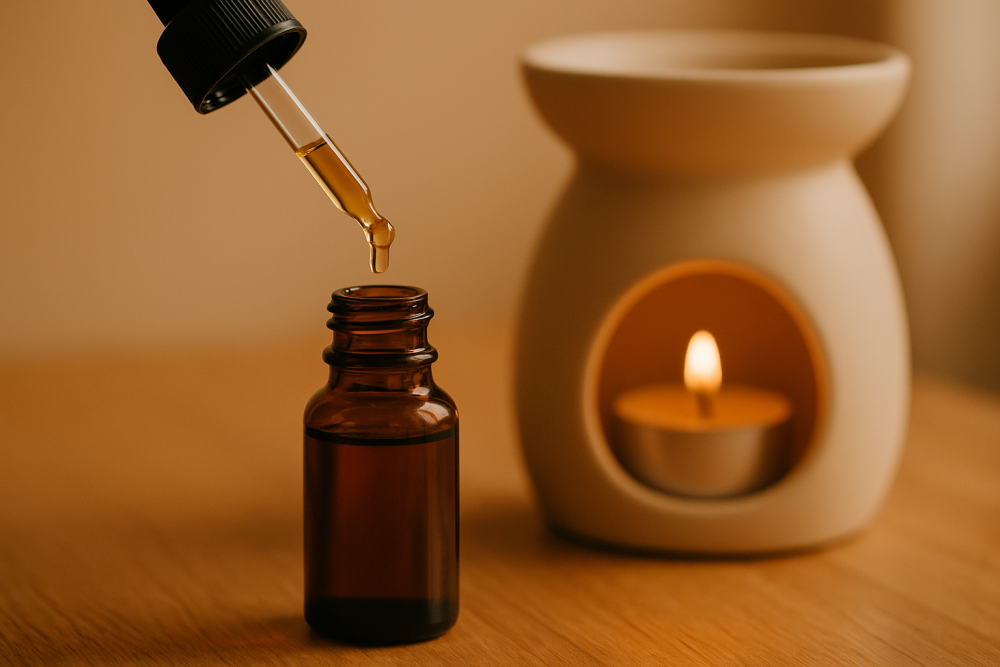
When using cedar oil, general rules for essential oils apply – it's always advisable to start with a smaller amount and observe how both the space and the people in it react to the scent. The intensity of the fragrance should be gentle and pleasant, not overpowering.
Basic principles of safe use:
- use only a small amount of oil,
- diffuse for shorter periods with breaks,
- do not apply undiluted essential oil directly to the skin,
- keep the oil out of reach of children,
- store in a cool, dark place, ideally in a well-sealed bottle.
Extra caution is advisable during pregnancy. During this sensitive period, it's recommended to use essential oils very sparingly, only for gentle room scenting, in short intervals and in a well-ventilated room. If you're unsure about the suitability of a particular scent or method of use, it's better to take a more cautious approach or avoid using the oil altogether.
Generally speaking, essential oils are not intended for internal use or undiluted application on the skin. They are primarily used for aromatherapy and home fragrance.
In case of doubt or specific health limitations, it is always advisable to consult a qualified aromatherapist, doctor or other specialist who can help you choose the appropriate method of use according to your individual situation.
💡 Would you like to learn more about using essential oils? In the article Safe Use of Essential Oils you will find an overview of basic rules and tips on how to use oils safely in the household
Most Common Mistakes When Using Cedarwood Oil
The most common mistakes include:
- too many drops in the diffuser,
- long-term, continuous diffusion,
- combining cedarwood with other heavy woody oils in large quantities,
- insufficient ventilation of the room.
The fragrance should always be subtle and pleasant, not dominant.
💡 Tip: A common mistake is expecting an immediate effect. Cedarwood essential oil works subtly and its magic lies in long-term, gentle scenting of the space, not in an intense aroma within a few minutes.
FAQ – Frequently Asked Questions
🌲 How often can I use cedarwood oil in a diffuser?
Cedarwood oil can be used regularly, but ideally in shorter intervals and with breaks. The fragrance should be subtle and it is advisable to ventilate the room regularly.
🌲 Is cedarwood oil suitable for the bedroom?
Yes, especially in the evening hours and in smaller amounts. If the fragrance is too strong, reduce the number of drops and shorten the diffusion time.
🌲 What does cedarwood oil blend best with?
It blends very well with citrus, lavender, frankincense or coniferous oils. For a balanced blend, try combining 1–2 "lighter" oils with cedarwood as the base note.
🌲 Can I use cedarwood oil in my home long-term?
Yes, as long as it's used moderately and doesn't continuously burden the space. Short diffusion sessions, regular ventilation and alternating with other essential oils are ideal.
Conclusion
Cedarwood essential oil is an excellent choice for anyone looking for a natural, calm and woody scent for their home. Thanks to its stable and warm fragrance, it's suitable both for gentle everyday scenting of interiors and for creating a pleasant evening atmosphere.
When using it, a simple rule applies – less is more. Gentle dosing, short diffusion sessions and regular ventilation will help keep the scent pleasant and harmonious.
🌿 Discover the world of 100% natural essential oils
If you want to scent your home gently and responsibly, choose quality 100% natural essential oils. In our range you'll find carefully selected oils suitable for everyday aromatherapy and creating a harmonious atmosphere in your interior.
Frequently asked questions
What is cedarwood oil used for?
In a diffuser for a warm, grounding scent, 3 to 5 drops per water reservoir. In hair care it goes into shampoo or a scalp massage blend. And in wardrobes against moths: a few drops on a wooden block or cotton sachet, refreshed about once a month.
What is the difference between Cedrus atlantica and Juniperus virginiana?
Cedrus atlantica is the true Atlas cedar with a sweeter, softer aroma. Juniperus virginiana is an American juniper, drier and sharper, with more cedrol. Atlas cedar is the more common choice for hair care, while both work as a moth deterrent.
How do you dilute cedarwood oil?
To 1 or 2 per cent, meaning 5 to 10 drops per 30 ml of carrier oil. Two per cent suits a scalp massage. It is not applied neat and it never goes straight into a bath: mix it with a spoonful of carrier oil or cream first.
Does cedarwood oil help hair growth?
It appears in scalp massage blends, usually alongside lavender and rosemary. Treat it as a complement to normal hair care rather than a treatment for hair loss; noticeable shedding belongs to a doctor.
When should you avoid it?
Use it in pregnancy or while breastfeeding only after speaking to a doctor, and patch test on a small area of the forearm first. As with every essential oil, it is never swallowed.