
 Our products
 Aromatherapy - essential oils
 Essential oils
 Aroma lamps
 Aroma Diffusers
 Seeds
 Vegetables
 Herbs and spices
 Ornamental Plant Seeds
 Grass mixtures
 Sprouts and microgreens
 Growing supplies
 Cultivation and Gardening Supplies
 Hydroponics and indoor growing
 Protective equipment and gardening tools
 Exotic plants
 Exotic Fruit and Vegetables
 Exotic herbs
 Exotic trees and shrubs
 Ornamental exotic plants
 Roasted coffee
 Espresso coffee
 Ecological coffee preparation
 Thermal mugs and coffee cups
 Aeropress
 Thermos flasks and thermal mugs for coffee and tea
 Moka pot
 Filter coffee
 Coffee blends
 Accessories for coffee makers
 Water filtration
 Coffee grinders
 Cleaning the Coffee Maker
 Ecological Cleaning of Coffee Machines
 Coffee makers
 Coffee Preparation
 Coffee Accessories
 Food products
 For wildlife and pets
 Chocolate and others
 Hemp food products
 Natural cosmetics
 Hemp cosmetics
 Smoking supplies
 Bongs - water pipes
 Blunts and tubes
 E-liquids with Terpenes and CBD
 Grinders and Mills
 Papers and filters
 Smoking accessories
 Vaporizers
 Air fresheners
 CBD and CBG products
 CBD sprays
 CBD and CBN crystals
 CBD body and facial care
 Weeds
 CBD suppositories and capsules
 CBD oils and drops
 CBG oils and drops
 House and garden
 Fashion and Decoration
 Kitchen essentials and cooking
 Christmas Decorations and Accessories
 Gift Sets
 Bird feeders
 Seasonal and Special Tools
Essential oils can create a pleasant home atmosphere, but in the presence of dogs and cats, it's important to approach them with respect. Animals perceive scents more sensitively than humans, and not every fragrance is suitable for them. 🐾 In this article, you'll learn how to use essential oils responsibly in households with pets, what the differences are between dogs and cats, and what to watch out for when using a diffuser.
In short: Around dogs, use essential oils only indirectly, in small amounts and briefly: 1–2 drops in a diffuser for 10–15 minutes in a ventilated room the animal can leave. Cats are more sensitive because their bodies cannot effectively break down certain aromatic compounds, so limit or avoid diffusing. Never apply oils to fur or skin.
Essential oils are a popular helper for creating a pleasant atmosphere at home. However, if you share your home with a dog or cat, it's important to approach their use with maximum caution. Animals have more sensitive sense of smell and their organism processes aromatic substances differently than the human body.
🐾 In this article, we'll focus on how to use essential oils responsibly in a household with animals, what the differences are between dogs and cats, and what to watch out for.
Table of Contents
- Why Increased Caution is Necessary
- Essential Oils in Households with Dogs
- Essential Oils and Cats: Maximum Vigilance
- Using a Diffuser in a Household with Animals
- Most Common Mistakes
- FAQ – Frequently Asked Questions
- Conclusion
Why Increased Caution is Necessary
Animals perceive scents much more intensely than humans because their sense of smell is significantly more sensitive. Some components of essential oils that are normally pleasant for humans may be perceived by animals as too strong or overwhelming.
An important role is also played by the different way animal organisms process aromatic substances. Reactions to scents can therefore vary not only between different species but also between individual animals.
- Dogs generally have higher tolerance to scents, but even for them, gentle and short-term use is necessary.
- Cats are very sensitive to essential oils because their organism cannot effectively break down certain aromatic substances.
For these reasons, it's important to approach aromatherapy in a household with animals cautiously and always monitor their behavior. Each pet may react differently and there is no universal rule that applies to all.
🐾 Important Notice
Essential oils are not intended for animal health care and serve exclusively for gentle room fragrancing. When using them, it is always necessary to respect the natural needs and sensitivity of domestic pets.
Essential Oils in Households with Dogs
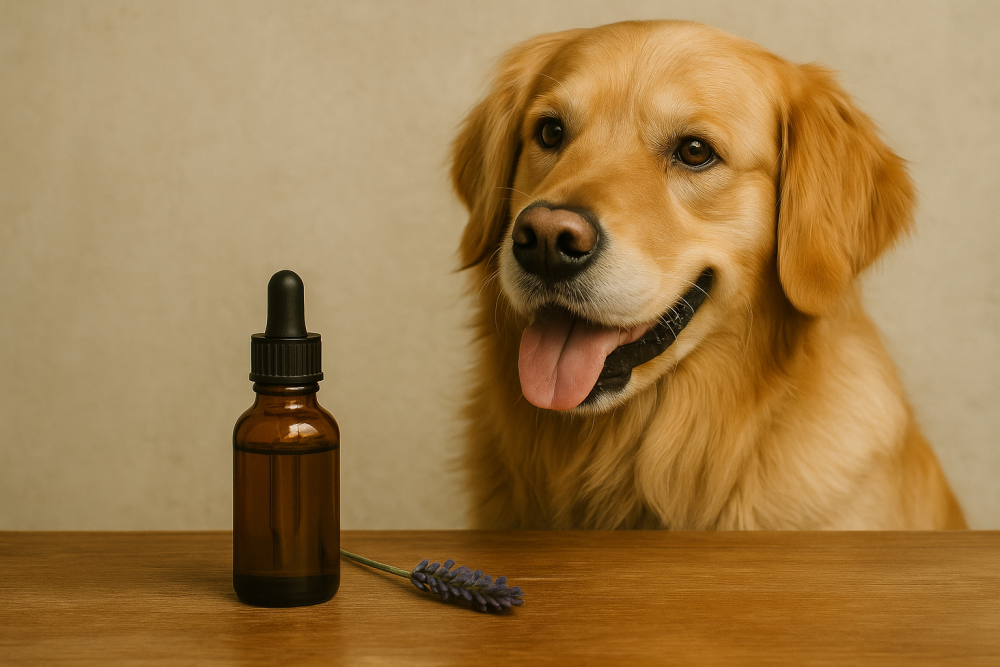
In dogs, certain scents are commonly mentioned as better tolerated when used indirectly and in very small amounts. However, it's important to keep in mind that each dog may react differently depending on their sensitivity, age, or current mood.
Generally, gentler scents that are often mentioned in environments with dogs include:
- lavender
- chamomile
- cedarwood
- frankincense
These essential oils are used exclusively for gentle room scenting and not for direct contact with the animal. It always applies that the scent intensity should be very low and usage short-term.
Safe usage guidelines:
- never apply essential oils directly on the dog, their coat, or on their bed or collar,
- use only very small amounts of oil in the air,
- diffuse briefly and in a well-ventilated space,
- always monitor the dog's reactions and respect their behavior and needs.
🐾 How to recognize when a scent doesn't suit your dog?
Each dog may react differently to scents. If you notice that the dog is trying to leave the room, appears restless, sneezes frequently, rubs their muzzle, or behaves differently than usual, it's advisable to immediately stop diffusing and ventilate the space.
The dog's reactions are always a good guide – if they actively seek out the scent, or conversely avoid it, it's appropriate to follow their behavior.
Essential oils and cats: maximum caution
Cats are exceptionally sensitive to essential oils and their reactions to scents differ significantly from the reactions of humans and dogs. The reason is their different metabolism – the feline organism cannot effectively process certain aromatic substances, which increases the risk of overload.
For this reason, when using aromatherapy in a household with a cat, it's necessary to proceed with maximum caution and always prioritize their well-being over scent intensity.
General recommendations:
- do not use diffusers in enclosed rooms where the cat regularly spends time,
- avoid long-term or repeated scenting of the space,
- never allow direct contact with essential oils.
Among essential oils that are often mentioned as problematic for cats are, for example, tea tree, eucalyptus, peppermint, or citrus oils. These scents can be too intense for cats even in very small amounts.
If you have a cat at home, it is safest to significantly limit diffusing or avoid it altogether, or use it only occasionally, briefly, and in a very well-ventilated space.
🐾 How to tell if the scent doesn't suit your cat?
Cats often show discomfort subtly. If the cat tries to avoid the room, moves to a different space, appears irritated, or changes its behaviour, it is advisable to stop the aromatherapy immediately and ventilate the room.
For cats, it is doubly true that their reaction is always the best indicator of whether the environment is pleasant for them.
Using a Diffuser in a Household with Pets
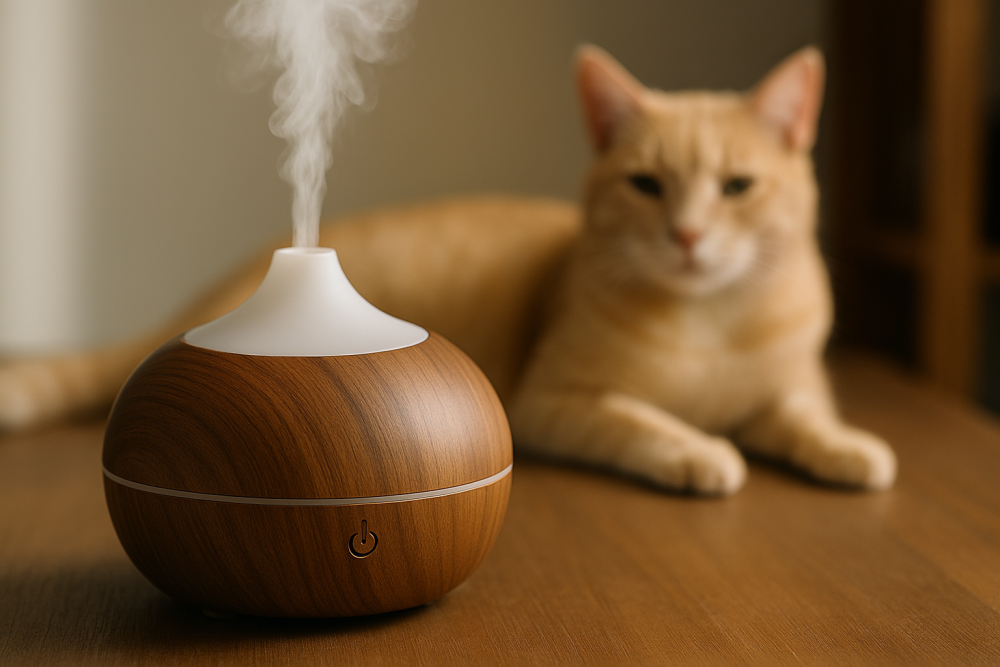
Diffusers are an excellent tool for gently scenting your home. When using essential oils in the presence of animals, however, it is important to follow several basic principles that ensure safe and effective use without negative impact on pets.
- Use a maximum of 1–2 drops of essential oil
The diffuser should emit only a gentle fragrance that doesn't overwhelm the space. Start with 1 to 2 drops of oil, and if you want a stronger scent, you can add a maximum of 1 extra drop. Too intense an aroma can be too strong and irritating for animals. - Diffuse for 10–15 minutes
Essential oils should not be diffused for long periods. It's sufficient to run the diffuser for 10 to 15 minutes to allow the scent to gently spread throughout the room. Long-term diffusing can cause the animal to feel uncomfortable or irritated. - Ensure regular ventilation
Even when using the diffuser in short intervals, it's always important to ventilate the room regularly. The scent can be intense, and fresh air ensures the space remains pleasant and fresh. It's also recommended to have a window or door open if weather permits. - The animal must be able to leave the room
Always ensure that the animal has the option to leave the room. If it doesn't like the scent or finds it too intense, it must have the opportunity to go to another space where it will feel comfortable. - Long-term diffusing or using a diffuser where the animal sleeps is inappropriate
The diffuser should never run all day or at night when the animal is sleeping. Sleep is very important for animals, and if the space is regularly scented, it can disrupt their rest. Always choose a location where the animal can comfortably move away if the aroma bothers them.
Most Common Mistakes
When using essential oils in a household with animals, similar mistakes are often repeated. They usually don't arise from inattention, but from the mistaken assumption that if something is natural, it's automatically safe for animals as well.
- Direct application of oils on the animal – essential oils should never be applied to fur, skin, paws, or collar. They are highly concentrated and the animal may also lick them.
- Using undiluted essential oils – even when diffusing, it's important to use very small amounts. Strong concentration of scent can be unpleasant and burdensome for animals.
- Long-term scenting of enclosed spaces – continuous diffusing without ventilation increases the intensity of the scent and limits the animal's ability to leave the environment.
- Ignoring signs of discomfort – restlessness, sneezing, leaving the room, hiding, or changes in behavior are clear signals that the scent doesn't suit the animal.
Animals show us their reaction very quickly – it's therefore important to perceive and respect their behavior.
🐾 How to proceed when there are signs of discomfort
If your pet shows signs of discomfort, stop using essential oils immediately, turn off the diffuser and thoroughly ventilate the room. When using again, always choose a smaller amount of oil or avoid aromatherapy in the presence of pets altogether.
FAQ – Frequently Asked Questions
🐾 Is it safe to use essential oils in a household with a dog?
Yes, if they are used indirectly, in small amounts, for short periods and the dog has the option to leave the room.
🐾 Can I use a diffuser when I have a cat at home?
Using a diffuser in a household with a cat requires great caution. It is generally recommended to significantly limit diffusion or avoid it altogether.
🐾 Why are cats more sensitive to essential oils than dogs?
Cats have a different metabolism and their bodies cannot effectively process certain aromatic compounds.
🐾 Can I apply essential oils to my pet's fur?
No. Essential oils should never be applied directly to pets' skin, fur or paws.
🐾 What to do when a pet reacts negatively to a scent?
Stop using the oil immediately, thoroughly ventilate the room and monitor the animal's behaviour.
Conclusion
Aromatherapy can be a pleasant addition to your home atmosphere and help create a calm and harmonious environment. However, in households with dogs or cats, it is necessary to approach essential oils with respect and increased caution.
The basis of responsible use is gentleness, short diffusion time and freedom of choice – the pet should always have the option to leave the room and indicate how it feels in that environment. Every pet reacts to scents individually, so it is always better to choose a more cautious approach than too intense scenting.
If you want to fragrance your home gently and responsibly, choose high-quality 100% natural essential oils and always use them with consideration for the sensitivity of animals.
🐾 Fragrance Your Home with Your Pets in Mind
Discover our range of quality essential oils that are suitable for gentle and responsible interior fragrancing. Choose scents thoughtfully and always use them with respect for the needs of animals.
👉 Browse essential oils