
 Our products
 Aromatherapy - essential oils
 Essential oils
 Aroma lamps
 Aroma Diffusers
 Seeds
 Vegetables
 Herbs and spices
 Ornamental Plant Seeds
 Grass mixtures
 Sprouts and microgreens
 Growing supplies
 Cultivation and Gardening Supplies
 Hydroponics and indoor growing
 Protective equipment and gardening tools
 Exotic plants
 Exotic Fruit and Vegetables
 Exotic herbs
 Exotic trees and shrubs
 Ornamental exotic plants
 Roasted coffee
 Espresso coffee
 Ecological coffee preparation
 Thermal mugs and coffee cups
 Aeropress
 Thermos flasks and thermal mugs for coffee and tea
 Moka pot
 Filter coffee
 Coffee blends
 Accessories for coffee makers
 Water filtration
 Coffee grinders
 Cleaning the Coffee Maker
 Ecological Cleaning of Coffee Machines
 Coffee makers
 Coffee Preparation
 Coffee Accessories
 Food products
 For wildlife and pets
 Chocolate and others
 Hemp food products
 Natural cosmetics
 Hemp cosmetics
 Smoking supplies
 Bongs - water pipes
 Blunts and tubes
 E-liquids with Terpenes and CBD
 Grinders and Mills
 Papers and filters
 Smoking accessories
 Vaporizers
 Air fresheners
 CBD and CBG products
 CBD sprays
 CBD and CBN crystals
 CBD body and facial care
 Weeds
 CBD suppositories and capsules
 CBD oils and drops
 CBG oils and drops
 House and garden
 Fashion and Decoration
 Kitchen essentials and cooking
 Christmas Decorations and Accessories
 Gift Sets
 Bird feeders
 Seasonal and Special Tools
Citronellol (2025) – a natural compound with a refreshing citrus scent, found in plants such as lemongrass, roses, and eucalyptus. It's valued for its use in natural insect protection, aromatherapy, and cosmetics. It offers a gentle alternative to chemical products and contributes to a pleasant atmosphere both indoors and outdoors. Discover how citronellol works and why it's gaining increasing popularity among natural care enthusiasts. 🌿
In short: Citronellol is a natural compound with a fresh citrus scent found in essential oils of lemongrass, rose, geranium, eucalyptus and lavender. It is used in insect-repelling sprays, candles, diffusers and natural cosmetics. For a simple spray, add 5–10 drops to 100 ml of water; before skin use, do a patch test and wait 24 hours.
| Natural sources | lemongrass, rose, geranium, eucalyptus, lavender |
|---|---|
| How it is obtained | steam distillation of essential oils |
| Simple spray | 5–10 drops in 100 ml of water |
| Skin patch test | apply diluted oil to the inner forearm, wait 24 hours |
| Suggested frequency | 2–3 times per week, diluted |
Looking for a gentle way to protect yourself from annoying insects? 🌿 You might be surprised, but nature itself offers a solution – a substance called citronellol. This natural component is known for its fresh citrus scent and its ability to help repel insects in a natural way. Citronellol occurs naturally in essential oils such as lemongrass, rose, lavender, or eucalyptus, and represents a gentle alternative to chemical products.
✨ Updated for 2025: Citronellol is gaining increasing popularity not only in natural cosmetics but also as part of aromatherapy and home care.
In this article, you'll learn how it works, where to find it, and how to use it safely in practice – both at home and outdoors.
Table of Contents
- What is citronellol and where can we find it
- Citronellol as natural protection against insects
- How citronellol differs from chemical repellents
- The scent of citronellol and its use in aromatherapy
- Common household uses
- What to watch out for: safety and sensitivity
- FAQ – your questions about citronellol
- Summary: Why give citronellol a chance
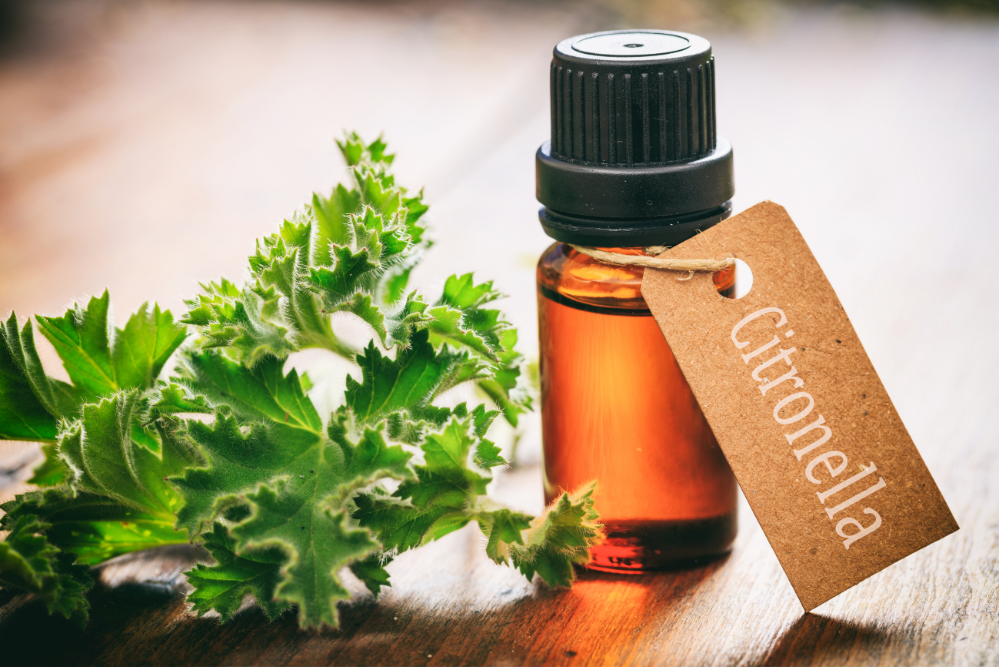
🌿 A bottle of citronella essential oil – a natural source of citronellol for gentle protection against insects.
What is citronellol and where to find it
Citronellol is a natural substance with a delicate, fresh scent reminiscent of citronella. 🌿It occurs naturally in plants such as lemongrass, rose, geranium, eucalyptus and lavender.
It is obtained through gentle steam distillation from essential oils and is among the popular ingredients in natural cosmetics and aromatherapy.
Its pleasant scent contributes to refreshing spaces and is part of products used for a feeling of cleanliness and freshness. Thanks to its plant origin, citronellol is often perceived as a gentle alternative to synthetic fragrances and repellent ingredients.
Citronellol as natural protection against insects
Citronellol belongs among natural substances that are traditionally used in products designed for outdoor activities.
Its fresh citrus scent helps create an environment that insects typically don't favor, and thanks to this, it can contribute to greater comfort during summer activities.
Unlike chemical repellents, citronellol is gentle to skin and the environment, which makes it a popular choice for fans of natural cosmetics and aromatherapy.
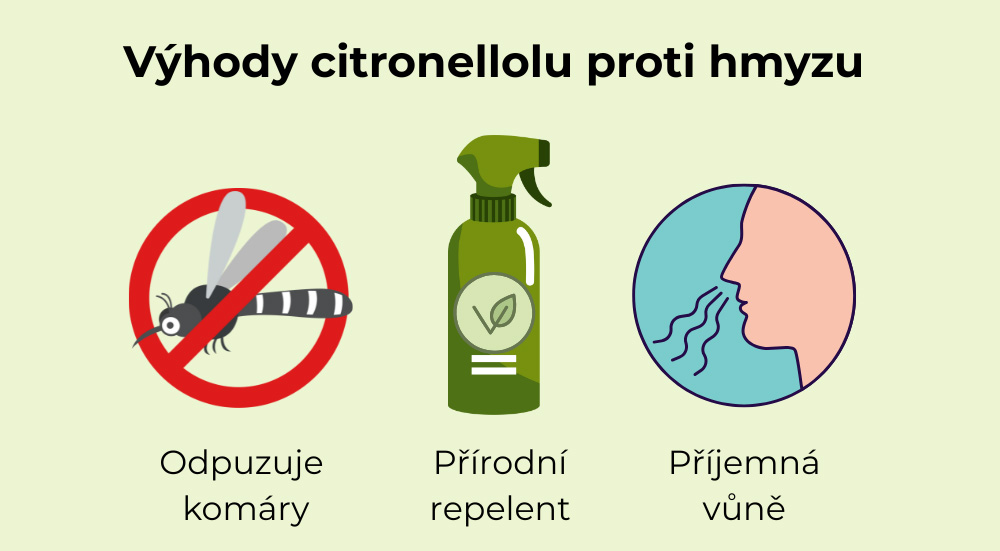
🌿 Benefits of citronellol – natural ingredient known for its fresh scent, often used in products for outdoor activities.
How citronellol differs from chemical repellents
On the market, you'll commonly find products containing chemical substances such as DEET, icaridin, or permethrin. While these work effectively, they can:
- burden the skin
- have a strong chemical odour
- or be unsuitable for children and pregnant women
Citronellol, on the other hand, represents a natural alternative with a gentler and fresher scent. Thanks to its plant origin, it tends to be gentler on the skin and the environment and is suitable for everyday use – especially for people with sensitive skin.

🌿 Woman applying natural spray containing essential oil – gentle skin care during summer days.
The scent of citronellol and its use in aromatherapy
Citronellol isn't just a plant component responsible for their fresh scent – in aromatherapy, it has gained popularity thanks to its refreshing and calming effect on the senses.
It's most commonly used for:
- air freshening and creating a clean atmosphere
- feeling of relaxation during stress or tension
- concentration support during work or study
- interior scenting and elimination of unwanted odors
Aroma diffusers, lamps or natural air fresheners containing citronellol help create a harmonious home environment with a light citrus scent.
💡 Try this: Add a few drops of essential oil with citronellol to a diffuser in the bedroom or study – it will promote a sense of calm and freshness throughout the day. The effects of essential oils may vary depending on individual sensitivity and health condition of each person.
Common Ways of Household Use
Citronellol has found its place not only in cosmetics, but also in everyday household use. You can use it in making scented candles, in air fresheners or diffusers or even natural cleaning products.
💡 Household inspiration: Add a few drops of essential oil with citronellol to a homemade candle or aroma lamp and create a pleasantly scented environment for evening relaxation.
| Form of Use | How to Use | Benefits |
|---|---|---|
| Skin spray | Mixture of citronellol, water and alcohol in a spray bottle | Easy to use, suitable for travel and summer evenings |
| Citronellol candle | Scented candle with added essential oil containing citronellol | Scents the space while repelling mosquitoes and other insects |
| Aroma diffuser | Water with a few drops of essential oil containing citronellol | Purifies air, calms the mind and repels insects |
| Homemade air freshener | Spray bottle with water, alcohol and essential oil containing citronellol | Natural fragrance without chemicals, refreshes interior |
| Cream or ointment with citronellol | Mixture of carrier oil (e.g. coconut) and a few drops of essential oil | Targeted skin application, suitable for children and sensitive individuals |
What to Watch Out For: Safety and Sensitivity
Even though citronellol is a natural ingredient, there are a few rules for safe use:
- Sensitivity test – Before first use on skin, perform a tolerance test – apply a small amount of diluted oil to the inner forearm and wait 24 hours.
- Avoid sun exposure after application – Citronellol may increase skin sensitivity to UV radiation. Therefore, avoid direct sunlight for at least a few hours after use.
- Caution with children and pregnant women – Essential oils (including those containing citronellol) should be consulted with a doctor before use – especially for pregnant women, nursing mothers and small children.
- Allergic reactions – More sensitive individuals may experience irritation. If redness or itching occurs, immediately rinse the area with water and discontinue use.
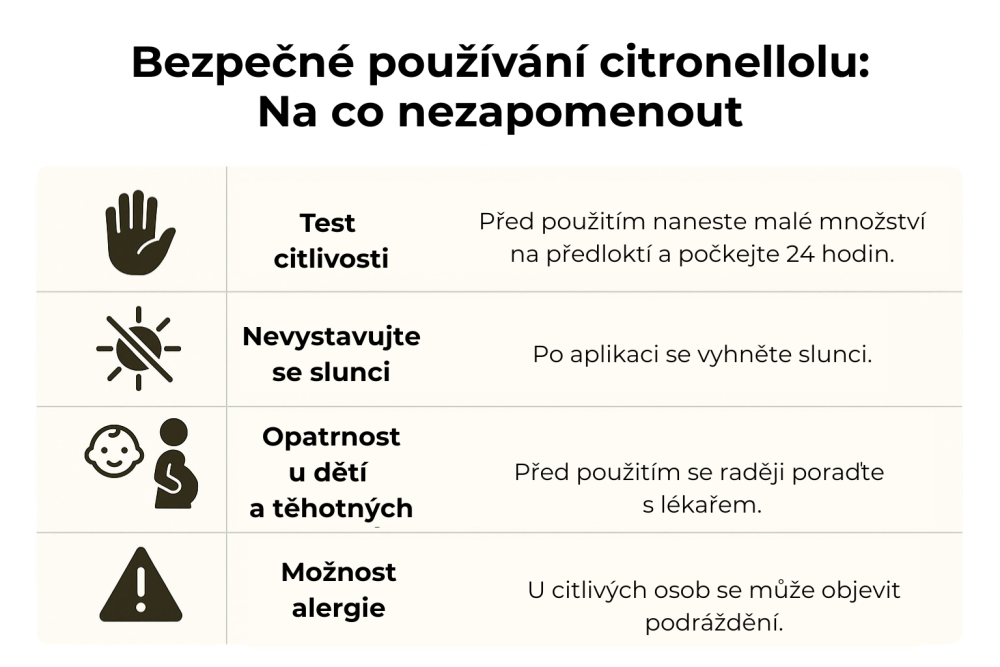
🌿 Safe use of citronellol – basic rules for home use.
If adverse effects occur, discontinue citronellol immediately and contact a doctor.
FAQ – your questions about citronellol
We've prepared an overview of the most common questions our customers ask about its use and safety 👇
💧 Can I use citronellol every day?
We recommend using citronellol in small amounts and diluted, for example 2–3 times per week. Daily application directly on skin may be irritating for more sensitive skin types – ideally use it in a spray or diffuser.
🌸 What scents does citronellol combine well with?
Citronellol pairs beautifully with citronella, eucalyptus, lavender or peppermint. The combination of these essential oils brings a refreshing summer scent that evokes a feeling of cleanliness.
🕯️ Can I use citronellol in ways other than on the skin?
Yes – it's excellent for scented candles, aroma lamps or homemade cleaning products. It provides a fresh fragrance and helps maintain a pleasant atmosphere indoors.
Summary: Why Give Citronellol a Chance
Citronellol isn't just a fragrance component – it's a natural helper that finds application in aromatherapy, natural cosmetics and home care.
Thanks to its fresh scent and ability to contribute to a pleasant atmosphere, it's gaining increasing popularity even in 2025. It's an ideal choice for everyone who prefers natural alternatives over chemical products.
Why you'll love it:
• fresh fragrance instead of strong chemical odours
• gentle composition suitable even for more sensitive individuals
• simple and versatile use in household and cosmetics
Try incorporating citronellol into your routine – whether as part of a homemade candle, air freshener or diffuser.
👉 Discover essential oils containing citronellol in our range and treat yourself to natural freshness and harmony of nature every day.